# Aplicación de la IA en el aula. Idiomas

# 1. Introducción a la Inteligencia Artificial en la enseñanza de idiomas

# Introducción a la Inteligencia Artificial en la enseñanza de lenguas

<span style="font-size: 11pt; font-family: Arial,sans-serif; color: #000000; background-color: transparent; font-weight: 400; font-style: normal; font-variant: normal; text-decoration: none; vertical-align: baseline; white-space: pre-wrap;">En los últimos años, la Inteligencia Artificial ha comenzado a transformar profundamente cómo aprendemos y enseñamos lenguas. No se trata solo de añadir herramientas nuevas a lo que ya hacíamos, sino de un cambio de paradigma que modifica cómo entendemos el aprendizaje, cómo interactúa el alumnado con el contenido y qué papel desempeñamos como docentes.</span>

<span style="font-size: 11pt; font-family: Arial,sans-serif; color: #000000; background-color: transparent; font-weight: 400; font-style: normal; font-variant: normal; text-decoration: none; vertical-align: baseline; white-space: pre-wrap;">Tradicionalmente, el aprendizaje asistido por ordenador (CALL, por sus siglas en inglés: Computer-Assisted Language Learning) ofrecía ejercicios fijos, actividades repetitivas y un apoyo muy limitado. Los programas educativos de las décadas de los 80 y 90 presentaban baterías de ejercicios de opción múltiple, rellenar huecos o asociación de palabras, con respuestas programadas de antemano. El ordenador podía señalar si una respuesta era correcta o incorrecta, pero carecía de flexibilidad para entender por qué un estudiante había cometido ese error específico o para adaptar su explicación al estilo de aprendizaje individual. La retroalimentación era binaria: "correcto" o "incorrecto", sin matices ni contexto personalizado.</span>

<span style="font-size: 11pt; font-family: Arial,sans-serif; color: #000000; background-color: transparent; font-weight: 400; font-style: normal; font-variant: normal; text-decoration: none; vertical-align: baseline; white-space: pre-wrap;">Hoy, en cambio, los modelos de IA generativa pueden producir textos, diálogos, explicaciones y actividades adaptadas en segundos. Estos sistemas han sido entrenados con enormes cantidades de texto en múltiples idiomas, lo que les permite no solo reconocer patrones lingüísticos, sino también generar contenido original, coherente y contextualmente apropiado. A diferencia de los sistemas CALL tradicionales que operaban con bases de datos cerradas de respuestas predefinidas, los modelos actuales pueden comprender el contexto de una pregunta, detectar el nivel aproximado del estudiante a partir de su producción lingüística, y ofrecer explicaciones graduadas que se ajustan dinámicamente a las necesidades del momento.</span>

<span style="font-size: 11pt; font-family: Arial,sans-serif; color: #000000; background-color: transparent; font-weight: 400; font-style: normal; font-variant: normal; text-decoration: none; vertical-align: baseline; white-space: pre-wrap;">Esto abre posibilidades que antes parecían impensables: práctica personalizada que se adapta al ritmo individual de cada estudiante, retroalimentación instantánea que no requiere esperar nuestra corrección, y materiales ajustados al nivel exacto de cada estudiante sin necesidad de invertir horas en su preparación. Imaginemos, por ejemplo, una estudiante de nivel B1 que quiere practicar el vocabulario relacionado con viajes: la IA puede generar al instante un diálogo de reserva de hotel, una descripción de un destino turístico o incluso un juego de rol interactivo, todo calibrado específicamente para ese nivel del Marco Común Europeo de Referencia (MCER). Y si la estudiante comete errores, la IA puede explicarle no solo qué ha fallado, sino por qué, ofreciendo ejemplos comparativos y reformulaciones alternativas.</span>

### <span style="font-size: 13.999999999999998pt; font-family: Arial,sans-serif; color: #000000; background-color: transparent; font-weight: bold; font-style: normal; font-variant: normal; text-decoration: none; vertical-align: baseline; white-space: pre-wrap;">De la escasez a la sobreabundancia.</span>

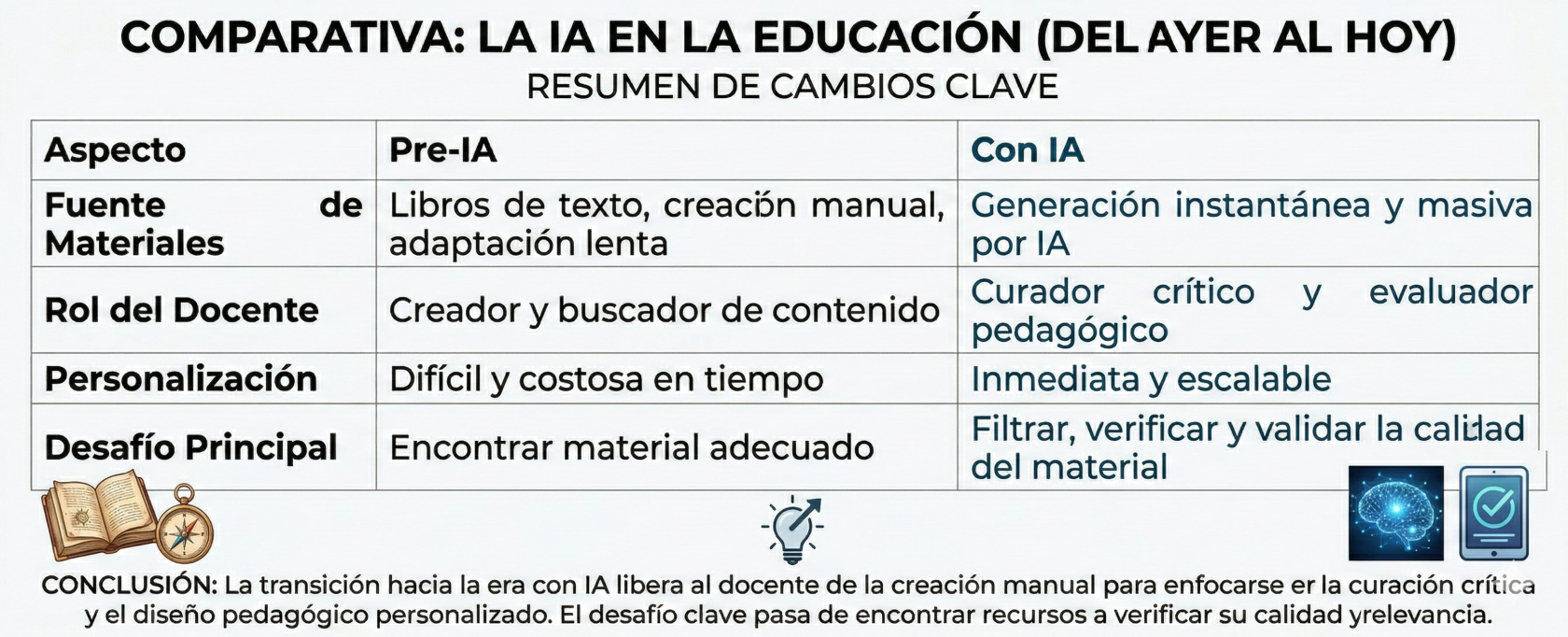
<span style="font-size: 11pt; font-family: Arial,sans-serif; color: #000000; background-color: transparent; font-weight: 400; font-style: normal; font-variant: normal; text-decoration: none; vertical-align: baseline; white-space: pre-wrap;">Uno de los cambios más disruptivos introducidos por la IA generativa es el paso de una economía de la escasez a una de la abundancia en el diseño de materiales didácticos. Como docentes, antes invertíamos horas en la búsqueda, adaptación o creación de textos adecuados para niveles específicos o necesidades particulares.</span>

<span style="font-size: 11pt; font-family: Arial,sans-serif; color: #000000; background-color: transparent; font-weight: 400; font-style: normal; font-variant: normal; text-decoration: none; vertical-align: baseline; white-space: pre-wrap;">Hoy, la problemática se invierte: la cuestión no es cómo generar contenido, sino cómo gestionarlo. En segundos, podemos obtener múltiples variaciones de un texto sobre un mismo tema, cada uno ajustado a diferentes niveles de dificultad o enfoques gramaticales. Esta abundancia nos impone una nueva exigencia profesional: el desarrollo de un criterio pedagógico agudo para seleccionar, validar y contextualizar pedagógicamente entre miles de posibilidades generadas automáticamente.</span>

[![Gemini_Generated_Image_53e8c753e8c753e8.png](https://libros.catedu.es/uploads/images/gallery/2026-03/scaled-1680-/gemini-generated-image-53e8c753e8c753e8.png)](https://libros.catedu.es/uploads/images/gallery/2026-03/gemini-generated-image-53e8c753e8c753e8.png)

(Javier Orna + GEMINI Nano Banana)

# ¿Cómo afecta la IA a nuestra práctica docente?

<span style="font-size: 11pt; font-family: Arial,sans-serif; color: #000000; background-color: transparent; font-weight: 400; font-style: normal; font-variant: normal; text-decoration: none; vertical-align: baseline; white-space: pre-wrap;">En un contexto en el que la IA es utilizada principalmente por el profesorado, es fundamental comprender cómo esta tecnología transforma concretamente nuestro trabajo diario y nuestras competencias profesionales.</span>

<span style="font-size: 13.999999999999998pt; font-family: Arial,sans-serif; color: #000000; background-color: transparent; font-weight: bold; font-style: normal; font-variant: normal; text-decoration: none; vertical-align: baseline; white-space: pre-wrap;">Transformación de la preparación de clases y materiales</span>

<span style="font-size: 11pt; font-family: Arial,sans-serif; color: #000000; background-color: transparent; font-weight: 400; font-style: normal; font-variant: normal; text-decoration: none; vertical-align: baseline; white-space: pre-wrap;">La IA nos permite generar en minutos lo que antes requería horas de trabajo. Podemos solicitar a la IA que produzca diez versiones diferentes de una actividad de aula, tres textos de lectura sobre el mismo tema con diferentes niveles de dificultad, o una batería completa de preguntas de comprensión lectora calibradas, por ejemplo, para 4º de ESO.</span>

<span style="font-size: 11pt; font-family: Arial,sans-serif; color: #000000; background-color: transparent; font-weight: 400; font-style: normal; font-variant: normal; text-decoration: none; vertical-align: baseline; white-space: pre-wrap;">Sin embargo, esta aceleración viene acompañada de una responsabilidad crucial: la IA genera abundancia, pero no garantiza calidad pedagógica. Debemos desarrollar habilidades de curación crítica con el fin de evaluar rápidamente si el contenido generado es lingüísticamente natural, culturalmente apropiado, pedagógicamente efectivo y adecuado para nuestro alumnado específico.</span>

<span style="font-size: 11pt; font-family: Arial,sans-serif; color: #000000; background-color: transparent; font-weight: 400; font-style: normal; font-variant: normal; text-decoration: none; vertical-align: baseline; white-space: pre-wrap;">Esto requiere preguntarnos sistemáticamente:</span>

- <span style="font-size: 11pt; font-family: Arial,sans-serif; color: #000000; background-color: transparent; font-weight: 400; font-style: normal; font-variant: normal; text-decoration: none; vertical-align: baseline; white-space: pre-wrap;">¿Es este lenguaje auténtico o suena artificial?</span>
- <span style="font-size: 11pt; font-family: Arial,sans-serif; color: #000000; background-color: transparent; font-weight: 400; font-style: normal; font-variant: normal; text-decoration: none; vertical-align: baseline; white-space: pre-wrap;">¿El nivel de dificultad está realmente calibrado correctamente?</span>
- <span style="font-size: 11pt; font-family: Arial,sans-serif; color: #000000; background-color: transparent; font-weight: 400; font-style: normal; font-variant: normal; text-decoration: none; vertical-align: baseline; white-space: pre-wrap;">¿Hay sesgos culturales, de género o dialectales que debo corregir?</span>
- <span style="font-size: 11pt; font-family: Arial,sans-serif; color: #000000; background-color: transparent; font-weight: 400; font-style: normal; font-variant: normal; text-decoration: none; vertical-align: baseline; white-space: pre-wrap;">¿Este material generará oportunidades genuinas de aprendizaje o es solo "relleno"?</span>
- <span style="font-size: 11pt; font-family: Arial,sans-serif; color: #000000; background-color: transparent; font-weight: 400; font-style: normal; font-variant: normal; text-decoration: none; vertical-align: baseline; white-space: pre-wrap;">¿Se ajusta a los objetivos específicos de mi programación didáctica?</span>

### <span style="font-size: 13.999999999999998pt; font-family: Arial,sans-serif; color: #000000; background-color: transparent; font-weight: bold; font-style: normal; font-variant: normal; text-decoration: none; vertical-align: baseline; white-space: pre-wrap;">Personalización escalable del apoyo al estudiante</span>

<span style="font-size: 11pt; font-family: Arial,sans-serif; color: #000000; background-color: transparent; font-weight: 400; font-style: normal; font-variant: normal; text-decoration: none; vertical-align: baseline; white-space: pre-wrap;">Tradicionalmente, personalizar el apoyo pedagógico para cada estudiante era un ideal inalcanzable en grupos numerosos. Conocemos las necesidades individuales de nuestro alumnado, pero crear materiales diferenciados individualmente es materialmente imposible dentro de una carga docente razonable.</span>

<span style="font-size: 11pt; font-family: Arial,sans-serif; color: #000000; background-color: transparent; font-weight: 400; font-style: normal; font-variant: normal; text-decoration: none; vertical-align: baseline; white-space: pre-wrap;">Con la IA, podemos generar rápidamente materiales específicos para necesidades individuales. Si detectamos que tres estudiantes tienen dificultades particulares con algún aspecto puntual de lo trabajado en clase, podemos pedirle a la IA que genere una batería de actividades específicamente sobre ese punto, con ejemplos contextualizados y niveles graduados de dificultad. Si un estudiante avanza más rápido que el resto del grupo, podemos proporcionarle materiales de extensión apropiados sin invertir horas en su preparación.</span>

<span style="font-size: 11pt; font-family: Arial,sans-serif; color: #000000; background-color: transparent; font-weight: 400; font-style: normal; font-variant: normal; text-decoration: none; vertical-align: baseline; white-space: pre-wrap;">Esto permite una personalización escalable: mantener la atención a la diversidad de niveles y necesidades dentro del aula sin que el coste en tiempo de preparación sea prohibitivo.</span>

### <span style="font-size: 13.999999999999998pt; font-family: Arial,sans-serif; color: #000000; background-color: transparent; font-weight: bold; font-style: normal; font-variant: normal; text-decoration: none; vertical-align: baseline; white-space: pre-wrap;">Desarrollo de nuevas competencias profesionales</span>

<span style="font-size: 11pt; font-family: Arial,sans-serif; color: #000000; background-color: transparent; font-weight: 400; font-style: normal; font-variant: normal; text-decoration: none; vertical-align: baseline; white-space: pre-wrap;">La integración de la IA requiere que desarrollemos competencias que hasta ahora no eran centrales en nuestra formación:</span>

<span style="font-size: 11pt; font-family: Arial,sans-serif; color: #000000; background-color: transparent; font-weight: bold; font-style: normal; font-variant: normal; text-decoration: none; vertical-align: baseline; white-space: pre-wrap;">Elaboración de prompts eficaces</span>

<span style="font-size: 11pt; font-family: Arial,sans-serif; color: #000000; background-color: transparent; font-weight: 400; font-style: normal; font-variant: normal; text-decoration: none; vertical-align: baseline; white-space: pre-wrap;">Para obtener los resultados que necesitamos debemos aprender a comunicarnos efectivamente con la IA. Esto incluye:</span>

- <span style="font-size: 11pt; font-family: Arial,sans-serif; color: #000000; background-color: transparent; font-weight: 400; font-style: normal; font-variant: normal; text-decoration: none; vertical-align: baseline; white-space: pre-wrap;">Ser específicos sobre el nivel lingüístico (MCER), la variedad dialectal deseada, el contexto de uso</span>
- <span style="font-size: 11pt; font-family: Arial,sans-serif; color: #000000; background-color: transparent; font-weight: 400; font-style: normal; font-variant: normal; text-decoration: none; vertical-align: baseline; white-space: pre-wrap;">Proporcionar ejemplos del tipo de output que buscamos</span>
- <span style="font-size: 11pt; font-family: Arial,sans-serif; color: #000000; background-color: transparent; font-weight: 400; font-style: normal; font-variant: normal; text-decoration: none; vertical-align: baseline; white-space: pre-wrap;">Iterar y refinar las instrucciones según los resultados obtenidos</span>
- <span style="font-size: 11pt; font-family: Arial,sans-serif; color: #000000; background-color: transparent; font-weight: 400; font-style: normal; font-variant: normal; text-decoration: none; vertical-align: baseline; white-space: pre-wrap;">Anticipar y prevenir sesgos mediante instrucciones explícitas</span>

<span style="font-size: 11pt; font-family: Arial,sans-serif; color: #000000; background-color: transparent; font-weight: bold; font-style: normal; font-variant: normal; text-decoration: none; vertical-align: baseline; white-space: pre-wrap;">Verificación sistemática de información</span>

<span style="font-size: 11pt; font-family: Arial,sans-serif; color: #000000; background-color: transparent; font-weight: 400; font-style: normal; font-variant: normal; text-decoration: none; vertical-align: baseline; white-space: pre-wrap;">Como la IA puede generar "alucinaciones" (información falsa presentada con apariencia de autoridad), debemos desarrollar hábitos rigurosos de verificación:</span>

- <span style="font-size: 11pt; font-family: Arial,sans-serif; color: #000000; background-color: transparent; font-weight: 400; font-style: normal; font-variant: normal; text-decoration: none; vertical-align: baseline; white-space: pre-wrap;">Contrastar reglas gramaticales con gramáticas de referencia</span>
- <span style="font-size: 11pt; font-family: Arial,sans-serif; color: #000000; background-color: transparent; font-weight: 400; font-style: normal; font-variant: normal; text-decoration: none; vertical-align: baseline; white-space: pre-wrap;">Verificar datos culturales o históricos con fuentes fiables</span>
- <span style="font-size: 11pt; font-family: Arial,sans-serif; color: #000000; background-color: transparent; font-weight: 400; font-style: normal; font-variant: normal; text-decoration: none; vertical-align: baseline; white-space: pre-wrap;">Comprobar que las referencias bibliográficas existen realmente</span>
- <span style="font-size: 11pt; font-family: Arial,sans-serif; color: #000000; background-color: transparent; font-weight: 400; font-style: normal; font-variant: normal; text-decoration: none; vertical-align: baseline; white-space: pre-wrap;">Validar que el vocabulario y las colocaciones son idiomáticas y de uso frecuente</span>

<span style="font-size: 11pt; font-family: Arial,sans-serif; color: #000000; background-color: transparent; font-weight: bold; font-style: normal; font-variant: normal; text-decoration: none; vertical-align: baseline; white-space: pre-wrap;">Alfabetización crítica en IA</span>

<span style="font-size: 11pt; font-family: Arial,sans-serif; color: #000000; background-color: transparent; font-weight: 400; font-style: normal; font-variant: normal; text-decoration: none; vertical-align: baseline; white-space: pre-wrap;">Comprender las limitaciones estructurales de estos sistemas para poder compensarlas:</span>

- <span style="font-size: 11pt; font-family: Arial,sans-serif; color: #000000; background-color: transparent; font-weight: 400; font-style: normal; font-variant: normal; text-decoration: none; vertical-align: baseline; white-space: pre-wrap;">Reconocer sesgos lingüísticos hacia variedades estándar y el inglés</span>
- <span style="font-size: 11pt; font-family: Arial,sans-serif; color: #000000; background-color: transparent; font-weight: 400; font-style: normal; font-variant: normal; text-decoration: none; vertical-align: baseline; white-space: pre-wrap;">Identificar estereotipos culturales y de género en contenidos e imágenes generadas</span>
- <span style="font-size: 11pt; font-family: Arial,sans-serif; color: #000000; background-color: transparent; font-weight: 400; font-style: normal; font-variant: normal; text-decoration: none; vertical-align: baseline; white-space: pre-wrap;">Entender qué tareas son apropiadas para la IA y cuáles requieren insustituiblemente juicio humano</span>
- <span style="font-size: 11pt; font-family: Arial,sans-serif; color: #000000; background-color: transparent; font-weight: 400; font-style: normal; font-variant: normal; text-decoration: none; vertical-align: baseline; white-space: pre-wrap;">Modelar para nuestro alumnado un uso crítico y reflexivo de la tecnología</span>

### <span style="font-size: 13.999999999999998pt; font-family: Arial,sans-serif; color: #000000; background-color: transparent; font-weight: bold; font-style: normal; font-variant: normal; text-decoration: none; vertical-align: baseline; white-space: pre-wrap;">Gestión del riesgo de dependencia tecnológica</span>

<span style="font-size: 11pt; font-family: Arial,sans-serif; color: #000000; background-color: transparent; font-weight: 400; font-style: normal; font-variant: normal; text-decoration: none; vertical-align: baseline; white-space: pre-wrap;">Existe un riesgo real de que la facilidad de generar contenidos con IA nos vuelva menos reflexivos sobre el diseño pedagógico. La tentación de simplemente "dejar que la IA lo haga" sin ejercer criterio crítico puede resultar en materiales genéricos, pedagógicamente pobres, o culturalmente inapropiados.</span>

<span style="font-size: 11pt; font-family: Arial,sans-serif; color: #000000; background-color: transparent; font-weight: 400; font-style: normal; font-variant: normal; text-decoration: none; vertical-align: baseline; white-space: pre-wrap;">Como docentes, debemos recordar constantemente que la tecnología es el medio, no el fin. Nuestras decisiones sobre qué contenidos usar, cómo secuenciarlos, qué tipo de interacciones promover, cómo evaluar el progreso, deben seguir guiadas por:</span>

- <span style="font-size: 11pt; font-family: Arial,sans-serif; color: #000000; background-color: transparent; font-weight: 400; font-style: normal; font-variant: normal; text-decoration: none; vertical-align: baseline; white-space: pre-wrap;">Nuestro conocimiento de las teorías de adquisición de segundas lenguas</span>
- <span style="font-size: 11pt; font-family: Arial,sans-serif; color: #000000; background-color: transparent; font-weight: 400; font-style: normal; font-variant: normal; text-decoration: none; vertical-align: baseline; white-space: pre-wrap;">Nuestra comprensión de las necesidades específicas de nuestro alumnado</span>
- <span style="font-size: 11pt; font-family: Arial,sans-serif; color: #000000; background-color: transparent; font-weight: 400; font-style: normal; font-variant: normal; text-decoration: none; vertical-align: baseline; white-space: pre-wrap;">Nuestra responsabilidad ética con la diversidad, la inclusión y la equidad</span>

<span style="font-size: 11pt; font-family: Arial,sans-serif; color: #000000; background-color: transparent; font-weight: 400; font-style: normal; font-variant: normal; text-decoration: none; vertical-align: baseline; white-space: pre-wrap;">La IA es una herramienta poderosísima, pero solo en manos de docentes que mantenemos claridad sobre nuestros propósitos educativos y ejercemos continuamente nuestro juicio profesional informado.</span>

# Marco ético, sesgos y pensamiento crítico digital.

<span style="font-size: 11pt; font-family: Arial,sans-serif; color: #000000; background-color: transparent; font-weight: 400; font-style: normal; font-variant: normal; text-decoration: none; vertical-align: baseline; white-space: pre-wrap;">La implementación de la IA exige un compromiso ético riguroso. La tecnología no es neutra; es un ecosistema cargado de valores y limitaciones que requiere que actuemos como mediadores críticos y responsables. Nuestro papel no se limita a seleccionar herramientas, sino que, como ya hemos comentado previamente, implica analizar los sesgos lingüísticos y culturales que la IA puede reproducir, evaluar la fiabilidad de los contenidos generados y garantizar un uso alineado con principios de equidad, inclusión y protección de datos. La toma de decisiones pedagógicas debe seguir siendo humana, consciente y contextualizada, de modo que la IA funcione como un apoyo al aprendizaje y no como un sustituto acrítico de nuestro criterio profesional docente.</span>

### <span style="font-size: 13.999999999999998pt; font-family: Arial,sans-serif; color: #000000; background-color: transparent; font-weight: bold; font-style: normal; font-variant: normal; text-decoration: none; vertical-align: baseline; white-space: pre-wrap;">Principio de Supervisión ("Teacher-in-the-loop")</span>

<span style="font-size: 11pt; font-family: Arial,sans-serif; color: #000000; background-color: transparent; font-weight: 400; font-style: normal; font-variant: normal; text-decoration: none; vertical-align: baseline; white-space: pre-wrap;">El enfoque Teacher-in-the-Loop implica que la inteligencia artificial actúa como una herramienta de apoyo al proceso educativo, sin sustituir nuestro criterio profesional. En este modelo, los sistemas de IA pueden generar sugerencias, análisis o propuestas didácticas, pero somos nosotros quienes revisamos críticamente esos resultados, los interpretamos a la luz del contexto del aula y decidimos de qué manera se incorporan a nuestra práctica educativa. Esta intervención humana resulta esencial para garantizar que el uso de la IA sea pedagógicamente adecuado, éticamente responsable y coherente con los objetivos de aprendizaje, la diversidad del alumnado y los principios de equidad e inclusión. De este modo, la IA se integra como un recurso al servicio de la enseñanza, reforzando nuestra autonomía profesional y manteniendo la responsabilidad última en la toma de decisiones educativas.</span>

### <span style="font-size: 13.999999999999998pt; font-family: Arial,sans-serif; color: #000000; background-color: transparent; font-weight: bold; font-style: normal; font-variant: normal; text-decoration: none; vertical-align: baseline; white-space: pre-wrap;">Privacidad y Protección de Datos</span>

<span style="font-size: 11pt; font-family: Arial,sans-serif; color: #000000; background-color: transparent; font-weight: 400; font-style: normal; font-variant: normal; text-decoration: none; vertical-align: baseline; white-space: pre-wrap;">El uso de herramientas de inteligencia artificial, especialmente aquellas de carácter gratuito, implica con frecuencia el intercambio de datos que pueden ser utilizados para el entrenamiento o la mejora de los sistemas. Por este motivo, resulta imprescindible establecer criterios claros que garanticen la protección de la privacidad y el cumplimiento de la normativa vigente en materia de protección de datos.</span>

<span style="font-size: 11pt; font-family: Arial,sans-serif; color: #000000; background-color: transparent; font-weight: 400; font-style: normal; font-variant: normal; text-decoration: none; vertical-align: baseline; white-space: pre-wrap;">Una de las principales líneas rojas es la anonimización de la información. En ningún caso debemos introducir en estas herramientas nombres reales, datos personales o cualquier información que permita identificar directa o indirectamente al alumnado. Para facilitar su aplicación en nuestra práctica docente, se recomienda adoptar un protocolo sencillo y sistemático, como sustituir los nombres propios por etiquetas genéricas (por ejemplo, "Estudiante A", "Estudiante B") y eliminar referencias a centros educativos, localidades u otros elementos contextuales antes de solicitar correcciones, adaptaciones o análisis a la IA. Este procedimiento reduce significativamente los riesgos asociados al tratamiento indebido de datos personales.</span>

<span style="font-size: 11pt; font-family: Arial,sans-serif; color: #000000; background-color: transparent; font-weight: 400; font-style: normal; font-variant: normal; text-decoration: none; vertical-align: baseline; white-space: pre-wrap;">Asimismo, la transparencia constituye un principio fundamental en el uso educativo de la inteligencia artificial. Informar al alumnado y, cuando proceda, a las familias sobre el empleo de estas herramientas en el proceso de enseñanza-aprendizaje contribuye a generar un clima de confianza y corresponsabilidad. Esta comunicación abierta no solo refuerza la protección de los derechos digitales, sino que también favorece el desarrollo de una competencia crítica y responsable en el uso de la tecnología, alineada con los valores educativos y éticos que deben guiar nuestra práctica docente.</span>

### <span style="font-size: 13.999999999999998pt; font-family: Arial,sans-serif; color: #000000; background-color: transparent; font-weight: bold; font-style: normal; font-variant: normal; text-decoration: none; vertical-align: baseline; white-space: pre-wrap;">Equidad y Brecha Digital</span>

<span style="font-size: 11pt; font-family: Arial,sans-serif; color: #000000; background-color: transparent; font-weight: 400; font-style: normal; font-variant: normal; text-decoration: none; vertical-align: baseline; white-space: pre-wrap;">La incorporación de herramientas de inteligencia artificial en el ámbito educativo debe realizarse desde un enfoque de equidad, evitando que la tecnología contribuya a ampliar desigualdades ya existentes entre el alumnado. En este sentido, nuestro papel es clave para asegurar que el uso de la IA no genere ventajas injustas derivadas del acceso desigual a recursos tecnológicos.</span>

<span style="font-size: 11pt; font-family: Arial,sans-serif; color: #000000; background-color: transparent; font-weight: 400; font-style: normal; font-variant: normal; text-decoration: none; vertical-align: baseline; white-space: pre-wrap;">Uno de los principales riesgos es el acceso diferencial a las herramientas digitales. Proponer tareas o actividades que requieran el uso de plataformas de pago, cuentas personales o dispositivos específicos fuera del entorno escolar puede favorecer a aquellos estudiantes con mayores recursos económicos o tecnológicos, situando en desventaja a quienes no disponen de ellos. Por ello, se recomienda evitar la externalización del uso de la IA al ámbito doméstico cuando no se pueda garantizar un acceso equitativo.</span>

<span style="font-size: 11pt; font-family: Arial,sans-serif; color: #000000; background-color: transparent; font-weight: 400; font-style: normal; font-variant: normal; text-decoration: none; vertical-align: baseline; white-space: pre-wrap;">Como estrategia de equidad, resulta especialmente adecuado que seamos nosotros, como profesorado, quienes utilicemos la inteligencia artificial para la creación, adaptación o diversificación de materiales didácticos destinados a todo el grupo, asegurando que el beneficio de la tecnología alcance a la totalidad del alumnado. Asimismo, cuando planteemos actividades que impliquen la interacción directa con sistemas de IA, estas deberían desarrollarse preferentemente dentro del aula o en contextos controlados por el centro educativo, donde pueda garantizarse un acceso igualitario a los dispositivos y a las herramientas necesarias. De este modo, la IA se integra como un recurso inclusivo al servicio del aprendizaje, y no como un factor adicional de desigualdad.</span>

### <span style="font-size: 13.999999999999998pt; font-family: Arial,sans-serif; color: #000000; background-color: transparent; font-weight: bold; font-style: normal; font-variant: normal; text-decoration: none; vertical-align: baseline; white-space: pre-wrap;">Sesgos Culturales y Estereotipos Visuales</span>

<span style="font-size: 11pt; font-family: Arial,sans-serif; color: #000000; background-color: transparent; font-weight: 400; font-style: normal; font-variant: normal; text-decoration: none; vertical-align: baseline; white-space: pre-wrap;">Más allá del lenguaje, los sistemas de inteligencia artificial también reproducen sesgos culturales que simplifican y reducen la complejidad de las realidades sociales, a menudo mediante la repetición de estereotipos. Este fenómeno es especialmente visible en la generación de imágenes y contenidos visuales, donde la IA tiende a recurrir a representaciones prototípicas y culturalmente dominantes.</span>

<span style="font-size: 11pt; font-family: Arial,sans-serif; color: #000000; background-color: transparent; font-weight: 400; font-style: normal; font-variant: normal; text-decoration: none; vertical-align: baseline; white-space: pre-wrap;">Por ejemplo, al solicitar imágenes de "médicos", "científicos" o "expertos", los resultados suelen mostrar mayoritariamente hombres blancos de contextos occidentales, invisibilizando la diversidad de género, origen y perfiles profesionales existentes en la realidad. Del mismo modo, cuando se generan imágenes asociadas a culturas específicas, es frecuente que se recurra a representaciones folclóricas, exóticas o ancladas en el pasado, que no reflejan la contemporaneidad ni la pluralidad de la cultura meta que pretendemos enseñar.</span>

<span style="font-size: 11pt; font-family: Arial,sans-serif; color: #000000; background-color: transparent; font-weight: 400; font-style: normal; font-variant: normal; text-decoration: none; vertical-align: baseline; white-space: pre-wrap;">Ante estos riesgos, nuestro papel vuelve a ser central. Debemos utilizar la IA como un punto de partida para el análisis crítico, no como una fuente incuestionable de representación cultural. Revisar, contextualizar y problematizar los contenidos generados nos permite transformar estas limitaciones en oportunidades educativas para trabajar la diversidad lingüística y cultural desde una perspectiva reflexiva y consciente.</span>

# Conclusión

<span style="font-size: 11pt; font-family: Arial,sans-serif; color: #000000; background-color: transparent; font-weight: 400; font-style: normal; font-variant: normal; text-decoration: none; vertical-align: baseline; white-space: pre-wrap;">La inteligencia artificial generativa representa un cambio de paradigma en la enseñanza de lenguas. Hemos pasado de la escasez a la abundancia de materiales, de sistemas rígidos a herramientas flexibles que permiten personalización escalable y retroalimentación contextualizada. Estas posibilidades transforman radicalmente nuestra práctica docente: el tiempo se redistribuye, las competencias profesionales evolucionan, y el aula puede centrarse en aquello que solo la interacción humana puede ofrecer.</span>

<span style="font-size: 11pt; font-family: Arial,sans-serif; color: #000000; background-color: transparent; font-weight: 400; font-style: normal; font-variant: normal; text-decoration: none; vertical-align: baseline; white-space: pre-wrap;">Sin embargo, esta transformación tecnológica exige responsabilidades éticas que no podemos eludir. La IA reproduce sesgos lingüísticos y culturales, puede generar contenidos pedagógicamente inadecuados, y plantea riesgos relacionados con la equidad y la privacidad. Por ello, el principio de supervisión humana es fundamental: la IA debe permanecer como herramienta al servicio de objetivos pedagógicos definidos por nosotros, nunca como sustituto de nuestro juicio profesional contextualizado.</span>

<span style="font-size: 11pt; font-family: Arial,sans-serif; color: #000000; background-color: transparent; font-weight: 400; font-style: normal; font-variant: normal; text-decoration: none; vertical-align: baseline; white-space: pre-wrap;">Como docentes, debemos desarrollar nuevas competencias —ingeniería de prompts, curación crítica, verificación sistemática, alfabetización en IA— y mantener siempre en el centro nuestro criterio pedagógico, el compromiso con la equidad y el respeto por la diversidad lingüística y cultural. La tecnología es poderosa, pero solo en manos de profesionales que ejercemos continuamente nuestra responsabilidad educativa.</span>

<span style="font-size: 11pt; font-family: Arial,sans-serif; color: #000000; background-color: transparent; font-weight: 400; font-style: normal; font-variant: normal; text-decoration: none; vertical-align: baseline; white-space: pre-wrap;">Este marco inicial nos prepara para profundizar en los temas siguientes, donde exploraremos aplicaciones concretas, estrategias específicas y herramientas prácticas que nos permitirán integrar la IA de manera crítica, reflexiva y pedagógicamente fundamentada en nuestra enseñanza de lenguas.</span>

# Cuestionario

# 2. Introducción a la metodología bilingüe con IA

# Introducción

<span id="bkmrk-este-bloque-ofrece-e-1" style="font-size: 12pt; font-family: Arial,sans-serif; color: #000000; background-color: transparent; font-weight: 400; font-style: normal; font-variant: normal; text-decoration: none; vertical-align: baseline; white-space: pre-wrap;">Este bloque ofrece el marco conceptual, metodológico y legal para integrar de forma natural la Inteligencia Artificial (IA) en el aula de lenguas y en entornos AICLE (Aprendizaje Integrado de Contenidos y Lengua Extranjera). La IA se concibe como un asistente metodológico al servicio del enfoque competencial, ayudando a cumplir la normativa bilingüe de Aragón y la LOMLOE sin añadir más carga burocrática, sino facilitando propuestas didácticas más inclusivas, rigurosas y motivadoras.</span>

# Normativa vigente en el aula bilingüe y nuevo perfil competencial

<span style="font-size: 12pt; font-family: Arial,sans-serif; color: #000000; background-color: transparent; font-weight: 400; font-style: normal; font-variant: normal; text-decoration: none; vertical-align: baseline; white-space: pre-wrap;">La integración de la IA en los programas bilingües de Aragón se apoya, por un lado, en los reales decretos y órdenes relativos a los currículum y características de evaluación relativas a las diferentes etapas de enseñanza LOMLOE y, por otro, en la Orden ECD/823/2018, de 18 de mayo, que regula el Modelo BRIT-Aragón para el desarrollo de la competencia lingüística de y en lenguas extranjeras.</span>

<span style="font-size: 12pt; font-family: Arial,sans-serif; color: #000000; background-color: transparent; font-weight: 400; font-style: normal; font-variant: normal; text-decoration: none; vertical-align: baseline; white-space: pre-wrap;">Este marco normativo impulsa un enfoque competencial en el que la Competencia Plurilingüe y la Competencia Digital se conciben como competencias transversales, y donde la IA, además de su obvia conexión con la competencia digital, puede actuar como mediadora lingüística y cognitiva al servicio de los itinerarios bilingües del modelo BRIT-Aragón.</span>

<span style="font-size: 12pt; font-family: Arial,sans-serif; color: #000000; background-color: transparent; font-weight: 400; font-style: normal; font-variant: normal; text-decoration: none; vertical-align: baseline; white-space: pre-wrap;">En este contexto, la IA no se plantea como una herramienta de sustitución, sino como un agente de mediación lingüística y cognitiva. El Volumen Complementario del MCER (2020) define la mediación como la capacidad de facilitar la comunicación y el acceso al conocimiento usando de forma coordinada el repertorio plurilingüe del alumnado y recursos multimodales; la IA encaja en este papel al permitir ajustar el registro, la complejidad del lenguaje y la reformulación de ideas entre L1 y L2 sin rebajar el rigor cognitivo. Así, a modo de ejemplo, el alumnado que no haya alcanzado un nivel de competencia lingüística requerido en la lengua meta puede beneficiarse de las posibilidades de adaptación de materiales que ofrece la IA; del mismo modo, la IA facilita una adaptación multimodal de un contenido dado, ayudando a una mejor comprensión e adquisición de la L2.</span>

<span style="font-size: 12pt; font-family: Arial,sans-serif; color: #000000; background-color: transparent; font-weight: 400; font-style: normal; font-variant: normal; text-decoration: none; vertical-align: baseline; white-space: pre-wrap;">La relación entre IA y Perfil de Salida se concreta en que la normativa exige que el alumnado haga un uso crítico y responsable de las herramientas digitales para comunicarse, aprender y resolver problemas. La IA se configura, por tanto, como un recurso que fomenta la autonomía, la reflexión, la colaboración y la capacidad de mediación, siempre que se integre de forma guiada y coherente con los objetivos curriculares y con un enfoque ético.</span>

<span style="font-size: 12pt; font-family: Arial,sans-serif; color: #000000; background-color: transparent; font-weight: 400; font-style: normal; font-variant: normal; text-decoration: none; vertical-align: baseline; white-space: pre-wrap;">La privacidad y la ética (RGPD) constituyen un pilar imprescindible en el uso educativo de la IA. El Reglamento General de Protección de Datos obliga a minimizar el uso de datos personales, especialmente cuando se trabaja con menores, lo que orienta la elección de soluciones que no requieran registro del alumnado o que permitan la participación anónima. Desde la práctica docente, esto implica priorizar herramientas seguras, transparentes y compatibles con la protección de datos, así como revisar críticamente posibles sesgos lingüísticos o culturales que puedan aparecer en las respuestas generadas por IA.</span>

# Metodologías activas y andamiaje digital (Scaffolding)

<span style="font-size: 12pt; font-family: Arial,sans-serif; color: #000000; background-color: transparent; font-weight: 400; font-style: normal; font-variant: normal; text-decoration: none; vertical-align: baseline; white-space: pre-wrap;">La normativa aragonesa apuesta por metodologías activas como el Aprendizaje Basado en Proyectos (ABP) y el AICLE, que sitúan al alumnado en el centro del proceso y lo implican en situaciones auténticas de comunicación. El modelo AICLE requiere equilibrar las 4Cs de Coyle: Contenido, Comunicación, Cognición y Cultura, de modo que el aprendizaje de la lengua y del contenido disciplinar avancen de forma integrada.</span>

<span style="font-size: 12pt; font-family: Arial,sans-serif; color: #000000; background-color: transparent; font-weight: 400; font-style: normal; font-variant: normal; text-decoration: none; vertical-align: baseline; white-space: pre-wrap;">El principal reto suele estar en la brecha lingüística: el alumnado dispone de capacidad cognitiva para comprender conceptos complejos, pero no siempre cuenta con el repertorio lingüístico necesario en la lengua meta para expresarlos con precisión. La IA puede ayudar a salvar esa brecha mediante un andamiaje digital (scaffolding) que mantenga alta la exigencia cognitiva a la vez que ajusta la demanda lingüística, ofreciendo apoyos como glosarios instantáneos, esquemas de lectura guiada, reformulaciones graduadas, traducción guiada o modelos de lenguaje contextualizados. De esta forma, la Cognición y el aprendizaje del contenido no se ven mermados por las dificultades de Comunicación, y se mantiene el equilibrio entre Contenido y Lengua dentro del modelo AICLE.</span>

<span style="font-size: 12pt; font-family: Arial,sans-serif; color: #000000; background-color: transparent; font-weight: 400; font-style: normal; font-variant: normal; text-decoration: none; vertical-align: baseline; white-space: pre-wrap;">El andamiaje digital mediante IA también se aplica a la enseñanza/aprendizaje de la L2 en sí, donde el alumnado puede beneficiarse de adaptaciones de textos orales o escritos, apoyos multimodales, adaptación a las necesidades especiales, creación de rutas de aprendizaje personalizadas, gamificación del aprendizaje, etc.</span>

# Herramientas de IA al servicio de metodologías activas

<span style="font-size: 12pt; font-family: Arial,sans-serif; color: #000000; background-color: transparent; font-weight: 400; font-style: normal; font-variant: normal; text-decoration: none; vertical-align: baseline; white-space: pre-wrap;">Para que la metodología sea realmente activa, la tecnología debe ser casi invisible: la herramienta no puede convertirse en el centro de la sesión; el protagonismo ha de ser del alumnado, de sus interacciones y de las tareas de aprendizaje. Por ello, la selección se centra en herramientas gratuitas, alineadas con el RGPD y preferentemente de origen europeo o con políticas de privacidad claras, que permitan un uso seguro con menores y faciliten el trabajo AICLE y de lenguas extranjeras. Para que el profesorado de lenguas extranjeras integre la IA de manera profesional, organizamos las herramientas en tres bloques funcionales. Cada uno responde a una necesidad concreta del día a día docente: crear materiales, planificar y evaluar. En los bloques 3 y 4 de esta formación se detallará de manera más exhaustiva el uso y potencialidades de estas y otras herramientas de IA aplicadas a la enseñanza de lenguas extranjeras.</span>

<span style="font-size: 12pt; font-family: Arial,sans-serif; color: #000000; background-color: transparent; font-weight: 400; font-style: normal; font-variant: normal; text-decoration: none; vertical-align: baseline; white-space: pre-wrap;">[![ia_idiomas.png](https://libros.catedu.es/uploads/images/gallery/2026-03/scaled-1680-/ia-idiomas.png)](https://libros.catedu.es/uploads/images/gallery/2026-03/ia-idiomas.png)</span>

## <span style="font-size: 12pt; font-family: Arial, sans-serif; color: rgb(0, 0, 0); background-color: rgb(255, 255, 255); font-style: normal; font-variant: normal; text-decoration: none; vertical-align: baseline; white-space: pre-wrap;">(Minerva Rodríguez + Gemini + Hailou AI)</span>

## <span style="font-size: 12pt; font-family: Arial, sans-serif; color: rgb(0, 0, 0); background-color: rgb(255, 255, 255); font-weight: bold; font-style: normal; font-variant: normal; text-decoration: none; vertical-align: baseline; white-space: pre-wrap;">Plataformas educativas especializadas</span>

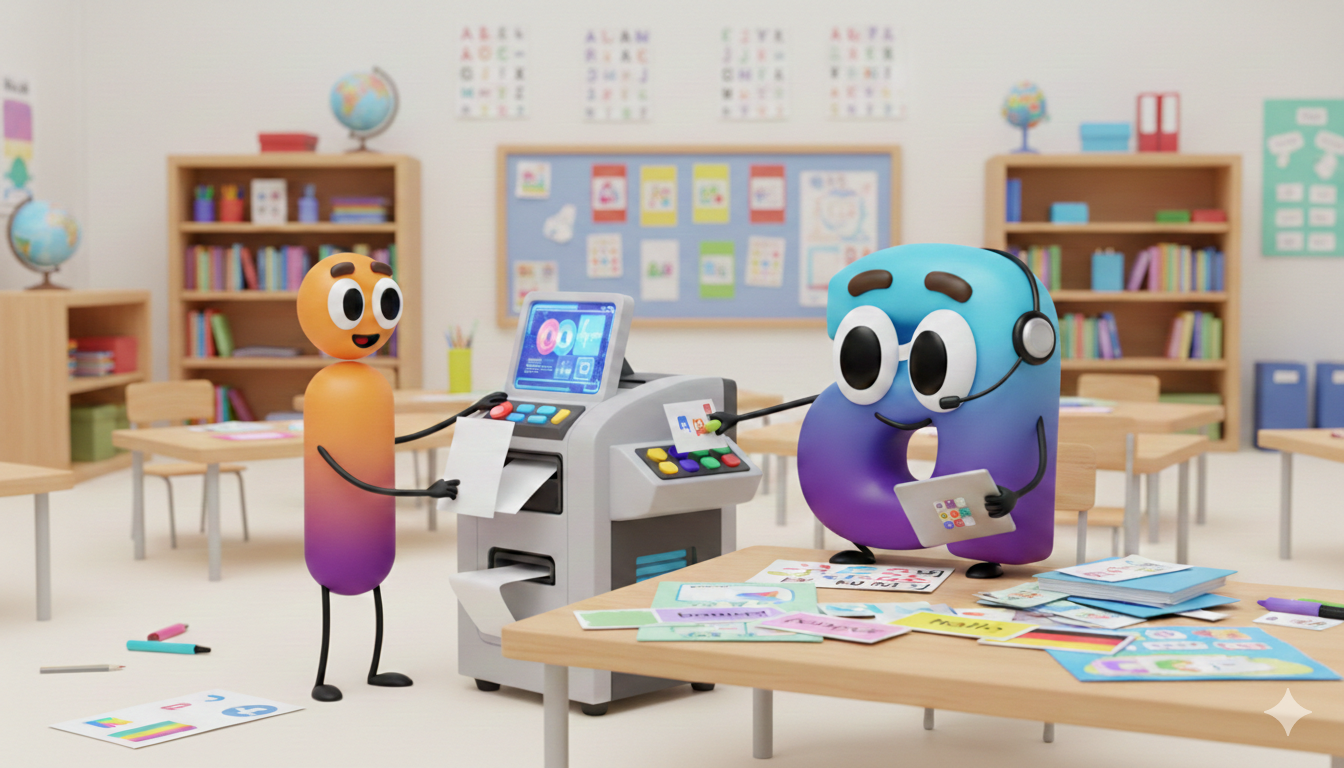
<span style="font-size: 12pt; font-family: Arial,sans-serif; color: #000000; background-color: transparent; font-weight: 400; font-style: normal; font-variant: normal; text-decoration: none; vertical-align: baseline; white-space: pre-wrap;">Plataformas como Twee, MagicSchool o Diffit funcionan como talleres digitales donde el profesorado genera en minutos recursos listos para el aula. Pegar un texto, vídeo o tema produce automáticamente ejercicios de comprensión, vocabulario, gramática o conversación adaptados a niveles del MCER.</span>

<span style="font-size: 12pt; font-family: Arial,sans-serif; color: #000000; background-color: transparent; font-weight: 400; font-style: normal; font-variant: normal; text-decoration: none; vertical-align: baseline; white-space: pre-wrap;">El valor está en el tiempo que ahorra: en lugar de construir fichas desde cero, el docente selecciona, ajusta y enriquece lo que la herramienta propone. Por ejemplo, partir de un artículo de prensa para obtener tres versiones diferenciadas (A2, B1, B2) con tareas coherentes para cada grupo.</span>

<span style="font-size: 12pt; font-family: Arial,sans-serif; color: #000000; background-color: transparent; font-weight: bold; font-style: normal; font-variant: normal; text-decoration: none; vertical-align: baseline; white-space: pre-wrap;">Twee (https://twee.com)</span><span style="font-size: 12pt; font-family: Arial,sans-serif; color: #000000; background-color: transparent; font-weight: 400; font-style: normal; font-variant: normal; text-decoration: none; vertical-align: baseline; white-space: pre-wrap;"> permite transformar vídeos de YouTube en unidades didácticas completas con transcripciones, ejercicios de huecos, vocabulario clave y preguntas de comprensión. Es especialmente útil para trabajar con contenidos auténticos en AICLE: un vídeo científico o histórico se convierte en material andamiado que respeta la autenticidad del input. Por ejemplo, un docente puede tomar un vídeo TED-Ed sobre cambio climático (nivel B2), introducir la URL en Twee, seleccionar nivel B1, y obtener en 5 minutos: transcripción completa, 10 ejercicios de rellenar huecos, glosario de 20 términos clave y 5 preguntas de comprensión, ahorrando aproximadamente 90 minutos de preparación tradicional.</span>

<span style="font-size: 12pt; font-family: Arial,sans-serif; color: #000000; background-color: transparent; font-weight: bold; font-style: normal; font-variant: normal; text-decoration: none; vertical-align: baseline; white-space: pre-wrap;">MagicSchool AI (https://magicschool.ai)</span><span style="font-size: 12pt; font-family: Arial,sans-serif; color: #000000; background-color: transparent; font-weight: 400; font-style: normal; font-variant: normal; text-decoration: none; vertical-align: baseline; white-space: pre-wrap;"> es una plataforma con más de 60 herramientas específicas para docentes: generador de rúbricas, creador de situaciones de aprendizaje, adaptador de textos, diseñador de actividades. Centraliza múltiples funciones en una sola plataforma y genera documentos alineados con terminología educativa estándar (MCER, taxonomías, competencias). Los outputs son borradores editables que el docente personaliza según su contexto específico.</span>

<span style="font-size: 12pt; font-family: Arial,sans-serif; color: #000000; background-color: transparent; font-weight: bold; font-style: normal; font-variant: normal; text-decoration: none; vertical-align: baseline; white-space: pre-wrap;">Diffit (https://diffit.me)</span><span style="font-size: 12pt; font-family: Arial,sans-serif; color: #000000; background-color: transparent; font-weight: 400; font-style: normal; font-variant: normal; text-decoration: none; vertical-align: baseline; white-space: pre-wrap;"> simplifica o amplía textos para ajustarlos a diferentes niveles lectores. Introduce un texto y genera hasta 5 versiones diferenciadas, cada una con resumen, vocabulario y preguntas. Es esencial para aulas multinivel: permite trabajar el mismo tema con todo el grupo respetando la zona de desarrollo próximo de cada estudiante, manteniendo el rigor cognitivo (conceptos complejos) mientras ajusta la demanda lingüística.</span>

## <span style="color: rgb(0, 0, 0);">**<span style="background-color: rgb(255, 255, 255);"><span style="font-size: 12pt; font-family: Arial, sans-serif; font-style: normal; font-variant: normal; text-decoration: none; vertical-align: baseline; white-space: pre-wrap; background-color: rgb(255, 255, 255);">Modelos de lenguaje como asistentes pedagógicos</span></span>**</span>

<span style="font-size: 12pt; font-family: Arial,sans-serif; color: #000000; background-color: transparent; font-weight: 400; font-style: normal; font-variant: normal; text-decoration: none; vertical-align: baseline; white-space: pre-wrap;">Los grandes modelos conversacionales (Perplexity, ChatGPT, Claude, Gemini) actúan como colaboradores reflexivos del profesorado. No se trata de copiar respuestas, sino de dialogar con ellos para prototipar ideas: "¿Cómo convertiría este tema en una secuencia de tareas comunicativas?" o "¿Qué rúbrica oral propondrías para un debate B1?"</span>

<span style="font-size: 12pt; font-family: Arial,sans-serif; color: #000000; background-color: transparent; font-weight: 400; font-style: normal; font-variant: normal; text-decoration: none; vertical-align: baseline; white-space: pre-wrap;">Aquí el foco es metodológico. Ayudan a diseñar unidades completas, generar bancos de role plays, reformular consignas complejas o explorar cómo secuenciar actividades por destrezas. Siempre con revisión crítica del docente, que es quien conoce a su alumnado y los objetivos curriculares.</span>

<span style="font-size: 12pt; font-family: Arial,sans-serif; color: #000000; background-color: transparent; font-weight: 400; font-style: normal; font-variant: normal; text-decoration: none; vertical-align: baseline; white-space: pre-wrap;">Un ejemplo de diálogo productivo: el docente necesita diseñar una situación de aprendizaje sobre "Daily routines" para 1º ESO (A1-A2), que debe incluir las 4 destrezas, durar 8 sesiones y culminar en una producción oral. Pregunta a ChatGPT cómo estructurarla. La IA propone una secuencia: Sesiones 1-2 para introducción de vocabulario (listening + reading), Sesiones 3-4 para práctica controlada (grammar + speaking drills), Sesiones 5-6 para producción escrita (My day diary), Sesiones 7-8 para presentación oral con evaluación entre pares. El docente responde: "Me gusta pero quiero que la producción oral sea más motivadora. ¿Qué alternativa hay a una presentación tradicional?" La IA propone: "Routine swap" — estudiantes graban vídeo describiendo su rutina, luego intercambian con compañero y cada uno vive un día con la rutina del otro, comparando diferencias. Este diálogo iterativo permite al docente explorar posibilidades pedagógicas sin comprometerse inmediatamente con una única opción.</span>

<span style="font-size: 12pt; font-family: Arial,sans-serif; color: #000000; background-color: transparent; font-weight: bold; font-style: normal; font-variant: normal; text-decoration: none; vertical-align: baseline; white-space: pre-wrap;">Perplexity (https://perplexity.ai)</span><span style="font-size: 12pt; font-family: Arial,sans-serif; color: #000000; background-color: transparent; font-weight: 400; font-style: normal; font-variant: normal; text-decoration: none; vertical-align: baseline; white-space: pre-wrap;"> es un buscador potenciado con IA que sintetiza información de múltiples fuentes y proporciona respuestas contextualizadas con referencias. Es especialmente útil para investigación pedagógica actualizada y para fundamentar programaciones con evidencias. Por ejemplo, buscar "Latest research on CLIL effectiveness in secondary education" no solo encuentra estudios, sino que sintetiza hallazgos principales, identifica consensos y divergencias, y proporciona enlaces a fuentes académicas verificables.</span>

## <span style="font-size: 12pt; font-family: Arial, sans-serif; color: rgb(0, 0, 0); background-color: transparent; font-weight: bold; font-style: normal; font-variant: normal; text-decoration: none; vertical-align: baseline; white-space: pre-wrap;">Herramientas para evaluación y feedback lingüístico</span>

<span style="font-size: 12pt; font-family: Arial,sans-serif; color: #000000; background-color: transparent; font-weight: 400; font-style: normal; font-variant: normal; text-decoration: none; vertical-align: baseline; white-space: pre-wrap;">DeepL Write, Grammarly Education, Quillbot o Write&amp;Improve (Cambridge) analizan textos y sugieren mejoras en corrección, registro, cohesión y léxico. El profesorado las usa para elaborar comentarios modelo, crear escalas descriptivas o diseñar actividades de autoevaluación guiada.</span>

<span style="font-size: 12pt; font-family: Arial,sans-serif; color: #000000; background-color: transparent; font-weight: 400; font-style: normal; font-variant: normal; text-decoration: none; vertical-align: baseline; white-space: pre-wrap;">La ventaja es doble: acelera la evaluación formativa y enriquece el feedback que damos al alumnado. Por ejemplo, partir de cinco redacciones reales (anonimizadas) para que la herramienta detecte errores frecuentes y genere un banco de comentarios listos para personalizar.</span>

<span style="font-size: 12pt; font-family: Arial,sans-serif; color: #000000; background-color: transparent; font-weight: bold; font-style: normal; font-variant: normal; text-decoration: none; vertical-align: baseline; white-space: pre-wrap;">LanguageTool (https://languagetool.org)</span><span style="font-size: 12pt; font-family: Arial,sans-serif; color: #000000; background-color: transparent; font-weight: 400; font-style: normal; font-variant: normal; text-decoration: none; vertical-align: baseline; white-space: pre-wrap;"> es un corrector ortográfico y gramatical multilingüe con servidores en la UE (cumple RGPD). Detecta no solo errores ortográficos sino también calcos de L1, problemas de registro y coherencia textual. El docente NO acepta todas las sugerencias automáticamente; en su lugar, convierte las sugerencias de la IA en preguntas pedagógicas: si IA detecta "I have 15 years", el docente comenta "¿Cómo expresamos la edad en inglés? Revisa verbo BE vs HAVE"; si detecta "Very very good", comenta "¿Conoces sinónimos más precisos? Consulta apartado vocabulario unidad 3". Principio pedagógico: la IA detecta, el docente guía.</span>

<span style="font-size: 12pt; font-family: Arial,sans-serif; color: #000000; background-color: transparent; font-weight: bold; font-style: normal; font-variant: normal; text-decoration: none; vertical-align: baseline; white-space: pre-wrap;">Write&amp;Improve (https://writeandimprove.com)</span><span style="font-size: 12pt; font-family: Arial,sans-serif; color: #000000; background-color: transparent; font-weight: 400; font-style: normal; font-variant: normal; text-decoration: none; vertical-align: baseline; white-space: pre-wrap;"> es una herramienta gratuita de Cambridge que evalúa automáticamente textos escritos, asigna nivel MCER y proporciona feedback específico. El alumnado recibe feedback inmediato, puede revisar y mejorar antes de entregar al docente. La herramienta subraya errores por colores, proporciona sugerencias específicas y permite comparar versiones para ver progreso. El docente recibe textos ya revisados una o dos veces, facilitando la evaluación final.</span>

# Casos prácticos

## <span style="font-size: 12pt; font-family: Arial,sans-serif; color: #000000; background-color: transparent; font-weight: bold; font-style: normal; font-variant: normal; text-decoration: none; vertical-align: baseline; white-space: pre-wrap;">Caso práctico desde la planificación docente (SECUNDARIA) </span>

<span style="font-size: 12pt; font-family: Arial,sans-serif; color: #000000; background-color: transparent; font-weight: 400; font-style: normal; font-variant: normal; text-decoration: none; vertical-align: baseline; white-space: pre-wrap;">Imagina preparar una unidad sobre "sostenibilidad" en inglés B1. Con Twee generas la batería de actividades base (lectura, discusión, escritura). Un LLM conversacional te ayuda a secuenciarlas en una SdA coherente con rúbrica incluida. Finalmente, DeepL Write afina las instrucciones y prepara ejemplos de feedback para las producciones del alumnado.</span>

<span style="font-size: 12pt; font-family: Arial,sans-serif; color: #000000; background-color: transparent; font-weight: 400; font-style: normal; font-variant: normal; text-decoration: none; vertical-align: baseline; white-space: pre-wrap;">Hay que recordar que la IA siempre debe quedar en segundo plano: es el profesorado quien decide la secuencia final, adapta a su contexto y evalúa críticamente cada propuesta, manteniendo siempre el control pedagógico y el respeto a la normativa de datos.</span>

### <span style="font-size: 12pt; font-family: Arial,sans-serif; color: #000000; background-color: transparent; font-weight: bold; font-style: normal; font-variant: normal; text-decoration: none; vertical-align: baseline; white-space: pre-wrap;">Flujo de trabajo detallado (ejemplo práctico 4º ESO):</span>

<span style="font-size: 12pt; font-family: Arial,sans-serif; color: #000000; background-color: transparent; font-weight: 400; font-style: italic; font-variant: normal; text-decoration: none; vertical-align: baseline; white-space: pre-wrap;">Contexto: </span><span style="font-size: 12pt; font-family: Arial,sans-serif; color: #000000; background-color: transparent; font-weight: 400; font-style: normal; font-variant: normal; text-decoration: none; vertical-align: baseline; white-space: pre-wrap;">El docente debe preparar una unidad de 6 sesiones sobre sostenibilidad, integrando las 4 destrezas, con evaluación final mediante presentación oral. Tiempo disponible para preparación: 2 horas.</span>

<span style="font-size: 12pt; font-family: Arial,sans-serif; color: #000000; background-color: transparent; font-weight: bold; font-style: normal; font-variant: normal; text-decoration: none; vertical-align: baseline; white-space: pre-wrap;">PASO 1 - Búsqueda de materiales auténticos (15 min): </span><span style="font-size: 12pt; font-family: Arial,sans-serif; color: #000000; background-color: transparent; font-weight: 400; font-style: normal; font-variant: normal; text-decoration: none; vertical-align: baseline; white-space: pre-wrap;">Usa Perplexity para buscar "Best TED-Ed videos about sustainability for B1 level English learners". Encuentra 3 vídeos apropiados. Con Twee, transforma el mejor en unidad didáctica: transcripción completa, 10 ejercicios de rellenar huecos, glosario de 20 términos clave, 5 preguntas de comprensión.</span>

<span style="font-size: 12pt; font-family: Arial,sans-serif; color: #000000; background-color: transparent; font-weight: bold; font-style: normal; font-variant: normal; text-decoration: none; vertical-align: baseline; white-space: pre-wrap;">PASO 2 - Diseño de secuencia didáctica (30 min): </span><span style="font-size: 12pt; font-family: Arial,sans-serif; color: #000000; background-color: transparent; font-weight: 400; font-style: normal; font-variant: normal; text-decoration: none; vertical-align: baseline; white-space: pre-wrap;">Conversa con ChatGPT: "Diseña secuencia de 6 sesiones sobre sostenibilidad (B1) usando este vídeo como input inicial. Debe incluir listening (vídeo Twee), reading (artículo), speaking (debate) y writing (carta formal). Dame estructura sesión a sesión." La IA propone estructura completa que el docente ajusta según su contexto, características del alumnado y recursos disponibles.</span>

<span style="font-size: 12pt; font-family: Arial,sans-serif; color: #000000; background-color: transparent; font-weight: bold; font-style: normal; font-variant: normal; text-decoration: none; vertical-align: baseline; white-space: pre-wrap;">PASO 3 - Diferenciación de materiales (30 min): </span><span style="font-size: 12pt; font-family: Arial,sans-serif; color: #000000; background-color: transparent; font-weight: 400; font-style: normal; font-variant: normal; text-decoration: none; vertical-align: baseline; white-space: pre-wrap;">Encuentra artículo de National Geographic sobre cambio climático (nivel C1). Lo sube a Diffit y obtiene 3 versiones: A2 para alumnado NEAE, B1 para grupo estándar, B2 para alumnado avanzado. Todos leen sobre el mismo tema con textos apropiados a su nivel, manteniendo el rigor conceptual.</span>

<span style="font-size: 12pt; font-family: Arial,sans-serif; color: #000000; background-color: transparent; font-weight: bold; font-style: normal; font-variant: normal; text-decoration: none; vertical-align: baseline; white-space: pre-wrap;">PASO 4 - Diseño de rúbrica de evaluación (20 min): </span><span style="font-size: 12pt; font-family: Arial,sans-serif; color: #000000; background-color: transparent; font-weight: 400; font-style: normal; font-variant: normal; text-decoration: none; vertical-align: baseline; white-space: pre-wrap;">Usa MagicSchool AI para generar rúbrica de presentación oral en inglés. Introduce criterios: fluidez, pronunciación, vocabulario específico sobre sostenibilidad, estructura argumentativa. La IA genera rúbrica de 4 niveles (Insuficiente, Suficiente, Notable, Excelente) con descriptores específicos que el docente personaliza añadiendo aspectos específicos del proyecto.</span>

<span style="font-size: 12pt; font-family: Arial,sans-serif; color: #000000; background-color: transparent; font-weight: bold; font-style: normal; font-variant: normal; text-decoration: none; vertical-align: baseline; white-space: pre-wrap;">PASO 5 - Preparación de feedback automático (25 min): </span><span style="font-size: 12pt; font-family: Arial,sans-serif; color: #000000; background-color: transparent; font-weight: 400; font-style: normal; font-variant: normal; text-decoration: none; vertical-align: baseline; white-space: pre-wrap;">Configura actividad en Write&amp;Improve para que alumnado practique escritura de carta formal sobre sostenibilidad antes de entregar versión final. Prepara documento compartido con LanguageTool activado para revisión de borradores, facilitando el proceso de autocorrección y mejora iterativa.</span>

<span style="font-size: 12pt; font-family: Arial,sans-serif; color: #000000; background-color: transparent; font-weight: bold; font-style: normal; font-variant: normal; text-decoration: none; vertical-align: baseline; white-space: pre-wrap;">Resultado: </span><span style="font-size: 12pt; font-family: Arial,sans-serif; color: #000000; background-color: transparent; font-weight: 400; font-style: normal; font-variant: normal; text-decoration: none; vertical-align: baseline; white-space: pre-wrap;">Unidad completa en 2 horas (frente a 6-8 horas con metodología tradicional). Materiales diferenciados por niveles, evaluación clara con rúbrica detallada, feedback estructurado. El docente ha dedicado su tiempo a decisiones pedagógicas (qué enseñar, cómo secuenciar, qué evaluar, cómo motivar), no a tareas mecánicas como transcribir vídeos o adaptar textos manualmente palabra por palabra.</span>

### <span style="font-size: 12pt; font-family: Arial,sans-serif; color: #000000; background-color: transparent; font-weight: bold; font-style: normal; font-variant: normal; text-decoration: none; vertical-align: baseline; white-space: pre-wrap;">Integración en el flujo de trabajo docente</span>

<span style="font-size: 12pt; font-family: Arial,sans-serif; color: #000000; background-color: transparent; font-weight: 400; font-style: normal; font-variant: normal; text-decoration: none; vertical-align: baseline; white-space: pre-wrap;">La clave para una integración efectiva de la IA no es usar todas las herramientas posibles, sino identificar los puntos críticos del flujo docente donde la IA puede tener mayor impacto con menor fricción. Algunos principios para una integración sostenible:</span>

<span style="font-size: 12pt; font-family: Arial,sans-serif; color: #000000; background-color: transparent; font-weight: bold; font-style: normal; font-variant: normal; text-decoration: none; vertical-align: baseline; white-space: pre-wrap;">Empezar pequeño: </span><span style="font-size: 12pt; font-family: Arial,sans-serif; color: #000000; background-color: transparent; font-weight: 400; font-style: normal; font-variant: normal; text-decoration: none; vertical-align: baseline; white-space: pre-wrap;">No intentar usar todas las herramientas a la vez. Elegir 2-3 que ataquen los mayores "puntos de dolor" del docente. Por ejemplo, si se dedica mucho tiempo a corregir redacciones, empezar por LanguageTool + Write&amp;Improve antes de explorar otras opciones.</span>

<span style="font-size: 12pt; font-family: Arial,sans-serif; color: #000000; background-color: transparent; font-weight: bold; font-style: normal; font-variant: normal; text-decoration: none; vertical-align: baseline; white-space: pre-wrap;">Automatizar lo repetitivo, personalizar lo único: </span><span style="font-size: 12pt; font-family: Arial,sans-serif; color: #000000; background-color: transparent; font-weight: 400; font-style: normal; font-variant: normal; text-decoration: none; vertical-align: baseline; white-space: pre-wrap;">Usar IA para tareas mecánicas (transcripciones, adaptaciones de nivel, generación de ejercicios base). Dedicar tiempo docente a decisiones pedagógicas únicas (qué enseñar específicamente a este grupo, cómo motivar a este estudiante en particular, cómo evaluar comprensión profunda más allá de respuestas memorizadas).</span>

<span style="font-size: 12pt; font-family: Arial,sans-serif; color: #000000; background-color: transparent; font-weight: bold; font-style: normal; font-variant: normal; text-decoration: none; vertical-align: baseline; white-space: pre-wrap;">Crear biblioteca de prompts efectivos: </span><span style="font-size: 12pt; font-family: Arial,sans-serif; color: #000000; background-color: transparent; font-weight: 400; font-style: normal; font-variant: normal; text-decoration: none; vertical-align: baseline; white-space: pre-wrap;">Guardar los prompts que funcionan bien para reutilizarlos. Ejemplo: "Genera 10 preguntas de comprensión para texto nivel B1 sobre \[tema\], incluyendo 5 literales y 5 inferenciales". Refinarlos progresivamente según resultados.</span>

<span style="font-size: 12pt; font-family: Arial,sans-serif; color: #000000; background-color: transparent; font-weight: bold; font-style: normal; font-variant: normal; text-decoration: none; vertical-align: baseline; white-space: pre-wrap;">Revisar siempre críticamente: </span><span style="font-size: 12pt; font-family: Arial,sans-serif; color: #000000; background-color: transparent; font-weight: 400; font-style: normal; font-variant: normal; text-decoration: none; vertical-align: baseline; white-space: pre-wrap;">La IA propone, el docente decide. Ningún output de IA debe llegar al alumnado sin revisión docente previa. La IA puede tener sesgos culturales, errores factuales, o propuestas pedagógicamente inapropiadas para el contexto específico.</span>

<span style="font-size: 12pt; font-family: Arial,sans-serif; color: #000000; background-color: transparent; font-weight: bold; font-style: normal; font-variant: normal; text-decoration: none; vertical-align: baseline; white-space: pre-wrap;">Compartir con compañeros del departamento: </span><span style="font-size: 12pt; font-family: Arial,sans-serif; color: #000000; background-color: transparent; font-weight: 400; font-style: normal; font-variant: normal; text-decoration: none; vertical-align: baseline; white-space: pre-wrap;">Las herramientas y prompts efectivos son transferibles entre docentes del mismo departamento. Crear un banco común de recursos IA-generados (revisados y validados), evitando que cada docente reinvente la rueda constantemente.</span>

## **<span style="font-size: 12pt; font-family: Arial, sans-serif; color: rgb(0, 0, 0); background-color: transparent; font-style: normal; font-variant: normal; text-decoration: none; vertical-align: baseline; white-space: pre-wrap;">Caso práctico desde la planificación docente (PRIMARIA):</span>**

<span style="font-size: 12pt; font-family: Arial,sans-serif; color: #000000; background-color: transparent; font-weight: 400; font-style: normal; font-variant: normal; text-decoration: none; vertical-align: baseline; white-space: pre-wrap;">  
Imagina preparar una unidad sobre **“Our school spaces and routines”** en inglés para 4.º de Primaria. Con Twee generas la batería de actividades base a partir de un vídeo breve y muy visual sobre rutinas escolares. </span>

<span style="font-size: 12pt; font-family: Arial,sans-serif; color: #000000; background-color: transparent; font-weight: 400; font-style: normal; font-variant: normal; text-decoration: none; vertical-align: baseline; white-space: pre-wrap;">Un LLM conversacional te ayuda a secuenciarlas en una situación de aprendizaje coherente de 5 sesiones, con tareas breves, progresivas y andamiadas. </span><span style="font-size: 12pt; font-family: Arial,sans-serif; color: #000000; background-color: transparent; font-weight: 400; font-style: normal; font-variant: normal; text-decoration: none; vertical-align: baseline; white-space: pre-wrap;">Después, Diffit te permite crear versiones con distinto nivel de apoyo, y MagicSchool AI te ayuda a redactar una lista de cotejo sencilla y plantillas de producción oral y escrita. Finalmente, DeepL Write te sirve para pulir instrucciones, simplificar formulaciones y revisar la claridad lingüística de los modelos que va a usar el alumnado. Esta forma de trabajo encaja bien con el enfoque de Primaria porque mantiene el control docente, parte de una situación cercana al alumnado y diseña desde el inicio apoyos visuales, lingüísticos y de participación.</span>

<span style="font-size: 12pt; font-family: Arial,sans-serif; color: #000000; background-color: transparent; font-weight: 400; font-style: normal; font-variant: normal; text-decoration: none; vertical-align: baseline; white-space: pre-wrap;">**Flujo de trabajo detallado (ejemplo práctico 5.º de Primaria)**  
**Contexto:** la docente debe preparar una unidad de 5 sesiones sobre espacios y rutinas del colegio, integrando comprensión oral, lectura breve, interacción guiada y producción oral sencilla. El producto final será un mini póster por parejas sobre un espacio del centro con normas y rutinas básicas, acompañado de una explicación oral breve. Tiempo disponible para preparación: 2 horas. La clase es heterogénea y requiere materiales con apoyos diferenciados. </span>

<span style="font-size: 12pt; font-family: Arial,sans-serif; color: #000000; background-color: transparent; font-weight: 400; font-style: normal; font-variant: normal; text-decoration: none; vertical-align: baseline; white-space: pre-wrap;">**PASO 1. Búsqueda de input auténtico y generación de materiales base (15 min):**  
Usa Perplexity o YouTube para localizar un vídeo breve, muy visual y adecuado para A1–A2 sobre rutinas escolares o normas en el colegio. Por ejemplo: “School rules and routines for kids”. Introduce la URL en Twee y genera automáticamente una unidad base con transcripción, ejercicios de huecos, glosario visual básico y preguntas de comprensión muy simples. </span>

<span style="font-size: 12pt; font-family: Arial,sans-serif; color: #000000; background-color: transparent; font-weight: 400; font-style: normal; font-variant: normal; text-decoration: none; vertical-align: baseline; white-space: pre-wrap;">**PASO 2. Diseño de la secuencia didáctica (25 min):**  
Conversas con ChatGPT o Gemini para secuenciar la unidad. Prompt orientativo: “Diseña una secuencia de 5 sesiones para 5.º de Primaria, inglés A1–A2, sobre ‘Our school spaces and routines’, usando ese vídeo inicial como input. Debe incluir producción y recepción de textos orales y escritos, mediation e interacion El producto final será un mini póster por parejas con 3 normas o rutinas de un espacio del colegio y una breve explicación oral. Aplica DUA desde el inicio y usa tareas cortas, concretas y progresivas”. La IA propone una estructura que la docente revisa y ajusta según su grupo, sus tiempos y el contexto real del centro.   
</span>

<span style="font-size: 12pt; font-family: Arial,sans-serif; color: #000000; background-color: transparent; font-weight: 400; font-style: normal; font-variant: normal; text-decoration: none; vertical-align: baseline; white-space: pre-wrap;">**PASO 3. Diferenciación de materiales y apoyos (30 min):**  
Con el texto o la transcripción generados en Twee, la docente utiliza Diffit para obtener tres versiones del material: una versión con mucho apoyo visual y frases muy cortas para alumnado que necesita más andamiaje, una versión estándar para el grupo base y una versión ampliada con algo más de vocabulario o una pregunta de reflexión adicional para quien pueda ir más allá. Después, usa MagicSchool AI para generar opciones de respuesta variadas, apoyos visuales sugeridos y pequeñas plantillas de producción como “In the library we…”, “We must…”, “We can…”.   
</span>

<span style="font-size: 12pt; font-family: Arial,sans-serif; color: #000000; background-color: transparent; font-weight: 400; font-style: normal; font-variant: normal; text-decoration: none; vertical-align: baseline; white-space: pre-wrap;">**PASO 4. Preparación del producto final y evaluación sencilla (20 min):**  
La docente utiliza MagicSchool AI para obtener un primer borrador de lista de cotejo o rúbrica muy simple para el producto final. Introduce criterios como vocabulario básico del tema, pronunciación comprensible, participación en la explicación oral, uso de estructuras trabajadas y claridad visual del póster. Después simplifica y personaliza los descriptores para que sean comprensibles y útiles en Primaria. También se puede pedir a la IA plantillas de autoevaluación muy breves del tipo “I can name school spaces”, “I can say one rule”, “I can speak with my partner”.   
</span>

<span style="font-size: 12pt; font-family: Arial,sans-serif; color: #000000; background-color: transparent; font-weight: 400; font-style: normal; font-variant: normal; text-decoration: none; vertical-align: baseline; white-space: pre-wrap;">**PASO 5. Revisión lingüística y preparación del feedback (20 min):**  
Antes de llevar los materiales al aula, la docente usa DeepL Write para pulir instrucciones, simplificar el lenguaje de los modelos y revisar que las frases de ejemplo sean claras y naturales para un nivel A1–A2. Después, puede preparar con el LLM pequeños modelos de feedback oral o escrito para la producción final, por ejemplo: “Good use of school vocabulary”, “Try to say the sentence more slowly”, “You used must very well”, “Add one more rule”.   
</span>

<span style="font-size: 12pt; font-family: Arial,sans-serif; color: #000000; background-color: transparent; font-weight: 400; font-style: normal; font-variant: normal; text-decoration: none; vertical-align: baseline; white-space: pre-wrap;">**Resultado:**  
La docente obtiene en unas 2 horas una sesión completa con input auténtico transformado en materiales accesibles, secuencia didáctica clara, diferenciación por niveles de apoyo, producto final manipulativo y evaluación sencilla. La IA ha ayudado a acelerar tareas repetitivas como transcribir, simplificar, generar variantes o redactar borradores, mientras que las decisiones verdaderamente pedagógicas siguen en manos del profesorado: qué enseñar, cómo secuenciar, qué apoyos ofrecer, qué exigir y cómo acompañar al grupo. </span>

# Consideraciones éticas y de privacidad

<span style="font-size: 12pt; font-family: Arial,sans-serif; color: #000000; background-color: transparent; font-weight: 400; font-style: normal; font-variant: normal; text-decoration: none; vertical-align: baseline; white-space: pre-wrap;">La integración de IA en el aula no es solo una cuestión técnica o metodológica, sino profundamente ética y legal. El uso con menores requiere atención especial a privacidad, transparencia, equidad y desarrollo del pensamiento crítico.</span>

<span style="font-size: 12pt; font-family: Arial,sans-serif; color: #000000; background-color: transparent; font-weight: bold; font-style: normal; font-variant: normal; text-decoration: none; vertical-align: baseline; white-space: pre-wrap;">RGPD y protección de datos de menores: </span><span style="font-size: 12pt; font-family: Arial,sans-serif; color: #000000; background-color: transparent; font-weight: 400; font-style: normal; font-variant: normal; text-decoration: none; vertical-align: baseline; white-space: pre-wrap;">Principio fundamental es minimizar el tratamiento de datos personales de alumnado, especialmente menores de 14 años. Priorizar herramientas que no requieran registro, o que permitan uso anónimo.</span>

- <span style="font-size: 12pt; font-family: Arial,sans-serif; color: #000000; background-color: transparent; font-weight: 400; font-style: normal; font-variant: normal; text-decoration: none; vertical-align: baseline; white-space: pre-wrap;">Verificar política de privacidad antes de usar una herramienta. ¿Dónde se almacenan los datos? ¿Se usan para entrenar modelos? ¿Cuánto tiempo se conservan? Preferir herramientas europeas o con servidores en la UE.</span>
- <span style="font-size: 12pt; font-family: Arial,sans-serif; color: #000000; background-color: transparent; font-weight: 400; font-style: normal; font-variant: normal; text-decoration: none; vertical-align: baseline; white-space: pre-wrap;">No subir datos sensibles. Nunca introducir nombres completos, DNI, direcciones o información sensible en herramientas IA. Anonimizar textos de estudiantes antes de analizarlos ("Estudiante A" en lugar de "María García López").</span>
- <span style="font-size: 12pt; font-family: Arial,sans-serif; color: #000000; background-color: transparent; font-weight: 400; font-style: normal; font-variant: normal; text-decoration: none; vertical-align: baseline; white-space: pre-wrap;">Informar al alumnado sobre qué herramientas se usan y por qué. Ejemplo: "Vamos a usar LanguageTool para revisar vuestros textos. Esta herramienta analiza gramática pero no guarda vuestros datos personales." La transparencia genera confianza.</span>
- <span style="font-size: 12pt; font-family: Arial,sans-serif; color: #000000; background-color: transparent; font-weight: 400; font-style: normal; font-variant: normal; text-decoration: none; vertical-align: baseline; white-space: pre-wrap;">Si una herramienta requiere crear cuentas de estudiantes, informar a familias y obtener consentimiento. Para menores de 14 años, el consentimiento paterno es obligatorio según LOPDGDD artículo 7.</span>
- <span style="font-size: 12pt; font-family: Arial,sans-serif; color: #000000; background-color: transparent; font-weight: 400; font-style: normal; font-variant: normal; text-decoration: none; vertical-align: baseline; white-space: pre-wrap;">Configurar opciones de privacidad. Muchas herramientas permiten deshabilitar almacenamiento de datos o uso para entrenamiento. ChatGPT, por ejemplo, permite desactivar el historial de conversaciones. Activar siempre estas opciones cuando sea posible.</span>

<span style="font-size: 12pt; font-family: Arial,sans-serif; color: #000000; background-color: transparent; font-weight: bold; font-style: normal; font-variant: normal; text-decoration: none; vertical-align: baseline; white-space: pre-wrap;">Transparencia y alfabetización en IA: </span><span style="font-size: 12pt; font-family: Arial,sans-serif; color: #000000; background-color: transparent; font-weight: 400; font-style: normal; font-variant: normal; text-decoration: none; vertical-align: baseline; white-space: pre-wrap;">El alumnado debe saber cuándo está interactuando con IA, cómo funciona a nivel básico, y cuáles son sus limitaciones. No ocultar el uso de IA bajo apariencia de "magia tecnológica". Al introducir IA en el aula, dedicar 15-20 minutos a explicar: "La IA es un programa que ha aprendido de millones de textos. Puede ayudarnos a escribir mejor, pero no entiende realmente lo que dice. Puede cometer errores. Siempre debemos revisar críticamente sus sugerencias."</span>

<span style="font-size: 12pt; font-family: Arial,sans-serif; color: #000000; background-color: transparent; font-weight: bold; font-style: normal; font-variant: normal; text-decoration: none; vertical-align: baseline; white-space: pre-wrap;">Integridad académica: </span><span style="font-size: 12pt; font-family: Arial,sans-serif; color: #000000; background-color: transparent; font-weight: 400; font-style: normal; font-variant: normal; text-decoration: none; vertical-align: baseline; white-space: pre-wrap;">La IA puede facilitar el plagio sofisticado. La solución no es intentar "detectar" IA (los detectores fallan frecuentemente con falsos positivos y negativos), sino rediseñar tareas para que copiar de IA sea poco útil o evidente: evaluar proceso no solo producto (pedir borradores intermedios, diarios de aprendizaje), personalizar tareas (usar datos locales difíciles para IA generalista), incluir producción oral complementaria, y hablar abiertamente con alumnado pactando uso ético: "Podéis usar IA para ayudaros, pero el texto final debe ser VUESTRO".</span>

# Tarea

# 3. Asistentes, generación y adaptación de materiales multimodales (inclusión y DUA)

# Introducción

<span id="bkmrk-este-bloque-te-va-a--1" style="font-size: 11pt; font-family: Arial,sans-serif; color: #000000; background-color: transparent; font-weight: 400; font-style: normal; font-variant: normal; text-decoration: none; vertical-align: baseline; white-space: pre-wrap;">Este bloque te va a mostrar cómo la IA puede convertirse en tu asistente más eficiente para crear, adaptar y transformar materiales didácticos en inglés, francés y alemán, desde Primaria hasta Bachillerato. Pero antes de lanzarnos a explorar herramientas concretas, necesitamos entender </span><span style="font-size: 11pt; font-family: Arial,sans-serif; color: #000000; background-color: transparent; font-weight: bold; font-style: normal; font-variant: normal; text-decoration: none; vertical-align: baseline; white-space: pre-wrap;">por qué</span><span style="font-size: 11pt; font-family: Arial,sans-serif; color: #000000; background-color: transparent; font-weight: 400; font-style: normal; font-variant: normal; text-decoration: none; vertical-align: baseline; white-space: pre-wrap;"> funciona este enfoque. No se trata solo de hacer las cosas más rápido, sino de hacerlas </span><span style="font-size: 11pt; font-family: Arial,sans-serif; color: #000000; background-color: transparent; font-weight: bold; font-style: normal; font-variant: normal; text-decoration: none; vertical-align: baseline; white-space: pre-wrap;">mejor:</span><span style="font-size: 11pt; font-family: Arial,sans-serif; color: #000000; background-color: transparent; font-weight: 400; font-style: normal; font-variant: normal; text-decoration: none; vertical-align: baseline; white-space: pre-wrap;"> más personalizadas, más inclusivas, más adaptadas a la diversidad real de nuestras aulas. La IA no sustituye tu criterio pedagógico; lo potencia. Te libera de las tareas mecánicas (transcribir, adaptar palabra por palabra, buscar imágenes durante horas) para que puedas dedicarte a lo que realmente importa: diseñar experiencias de aprendizaje significativas que conecten con tu alumnado.</span>

# Los fundamentos pedagógicos: por qué funciona este enfoque

<span style="font-size: 11pt; font-family: Arial,sans-serif; color: #000000; background-color: transparent; font-weight: 400; font-style: normal; font-variant: normal; text-decoration: none; vertical-align: baseline; white-space: pre-wrap;">Antes de sumergirnos en las herramientas específicas y sus aplicaciones prácticas, es fundamental comprender los principios pedagógicos que sustentan el uso de la IA en la creación de materiales para el aula de idiomas. No estamos hablando de tecnología por tecnología, sino de cómo la IA nos permite aplicar mejor lo que ya sabemos que funciona en la enseñanza de lenguas.</span>

## <span style="font-size: 13pt; font-family: Arial,sans-serif; color: #000000; background-color: transparent; font-weight: bold; font-style: normal; font-variant: normal; text-decoration: none; vertical-align: baseline; white-space: pre-wrap;">La teoría del input comprensible (Krashen)</span>

<span style="font-size: 11pt; font-family: Arial,sans-serif; color: #000000; background-color: transparent; font-weight: 400; font-style: normal; font-variant: normal; text-decoration: none; vertical-align: baseline; white-space: pre-wrap;">En 1985, el lingüista Stephen Krashen formuló una de las hipótesis más influyentes en la didáctica de lenguas extranjeras: la hipótesis del input comprensible. Según Krashen, adquirimos una lengua cuando comprendemos mensajes que están ligeramente por encima de nuestro nivel actual de competencia. Lo expresó mediante la fórmula i+1, donde "i" representa el nivel actual del estudiante (de "interlanguage", su sistema lingüístico en desarrollo) y "+1" simboliza ese pequeño paso adelante, ese escalón alcanzable pero desafiante.</span>

<span style="font-size: 11pt; font-family: Arial,sans-serif; color: #000000; background-color: transparent; font-weight: 400; font-style: normal; font-variant: normal; text-decoration: none; vertical-align: baseline; white-space: pre-wrap;">El problema práctico de esta teoría siempre ha sido encontrar o crear materiales en ese nivel exacto para cada estudiante. En un aula con 25 alumnos, podemos tener fácilmente 5 o 6 niveles diferentes. ¿Cómo preparamos materiales i+1 para cada uno sin dedicar 20 horas semanales solo a adaptaciones? Aquí es donde entra la IA: herramientas como Diffit nos permiten generar versiones A2, B1 y B2 del mismo contenido en cuestión de minutos. No estamos inventando nada nuevo pedagógicamente; estamos haciendo posible lo que Krashen nos dijo hace décadas que deberíamos hacer.</span>

## <span style="font-size: 13pt; font-family: Arial,sans-serif; color: #000000; background-color: transparent; font-weight: bold; font-style: normal; font-variant: normal; text-decoration: none; vertical-align: baseline; white-space: pre-wrap;">El Diseño Universal para el Aprendizaje (DUA)</span>

<span style="font-size: 11pt; font-family: Arial,sans-serif; color: #000000; background-color: transparent; font-weight: 400; font-style: normal; font-variant: normal; text-decoration: none; vertical-align: baseline; white-space: pre-wrap;">El marco DUA, desarrollado por CAST (Center for Applied Special Technology), propone que diseñemos desde el principio para la diversidad, no que adaptemos después. Se basa en tres principios fundamentales:</span>

- <span style="font-size: 11pt; font-family: Arial,sans-serif; color: #000000; background-color: transparent; font-weight: 400; font-style: normal; font-variant: normal; text-decoration: none; vertical-align: baseline; white-space: pre-wrap;">Múltiples formas de representación: La información debe presentarse en diversos formatos: texto escrito, audio, visual, vídeo. No todos procesamos la información de la misma manera.</span>
- <span style="font-size: 11pt; font-family: Arial,sans-serif; color: #000000; background-color: transparent; font-weight: 400; font-style: normal; font-variant: normal; text-decoration: none; vertical-align: baseline; white-space: pre-wrap;">Múltiples formas de acción y expresión: Los estudiantes deben poder demostrar lo que saben de diferentes maneras: escribiendo, hablando, dibujando, creando vídeos. No hay una única forma válida de mostrar aprendizaje.</span>
- <span style="font-size: 11pt; font-family: Arial,sans-serif; color: #000000; background-color: transparent; font-weight: 400; font-style: normal; font-variant: normal; text-decoration: none; vertical-align: baseline; white-space: pre-wrap;">Múltiples formas de implicación: Debemos conectar con los intereses y motivaciones diversas del alumnado. Lo que motiva a uno puede aburrir a otro.</span>

<span style="font-size: 11pt; font-family: Arial,sans-serif; color: #000000; background-color: transparent; font-weight: 400; font-style: normal; font-variant: normal; text-decoration: none; vertical-align: baseline; white-space: pre-wrap;">[![dua.png](https://libros.catedu.es/uploads/images/gallery/2026-03/scaled-1680-/dua.png)](https://libros.catedu.es/uploads/images/gallery/2026-03/dua.png)</span>

(Minerva Rodríguez + Gemini + Hailou AI)

<span style="font-size: 11pt; font-family: Arial,sans-serif; color: #000000; background-color: transparent; font-weight: 400; font-style: normal; font-variant: normal; text-decoration: none; vertical-align: baseline; white-space: pre-wrap;">Tradicionalmente, implementar DUA era laborioso. Crear un texto + su versión audio + apoyos visuales + opciones de respuesta variadas podía consumir horas. La IA lo convierte en algo asumible: ElevenLabs genera el audio del texto en 2 minutos, Canva con IA crea los apoyos visuales en 5, y herramientas como MagicSchool te ayudan a diseñar las opciones de respuesta. El resultado: materiales que desde el origen son accesibles para más estudiantes, no solo para la "media" inexistente.</span>

## <span style="font-size: 13pt; font-family: Arial,sans-serif; color: #000000; background-color: transparent; font-weight: bold; font-style: normal; font-variant: normal; text-decoration: none; vertical-align: baseline; white-space: pre-wrap;">La zona de desarrollo próximo (Vygotsky)</span>

<span style="font-size: 11pt; font-family: Arial,sans-serif; color: #000000; background-color: transparent; font-weight: 400; font-style: normal; font-variant: normal; text-decoration: none; vertical-align: baseline; white-space: pre-wrap;">Lev Vygotsky introdujo el concepto de Zona de Desarrollo Próximo (ZDP): el espacio entre lo que un estudiante puede hacer solo y lo que puede hacer con ayuda. El aprendizaje efectivo ocurre precisamente en esa zona, con el apoyo adecuado (lo que Vygotsky llamaba "andamiaje" o scaffolding).</span>

<span style="font-size: 11pt; font-family: Arial,sans-serif; color: #000000; background-color: transparent; font-weight: 400; font-style: normal; font-variant: normal; text-decoration: none; vertical-align: baseline; white-space: pre-wrap;">La IA actúa como andamiaje digital que podemos ajustar según necesidades individuales. Un texto B2 con glosario visual generado por IA, versión audio a velocidad reducida, y preguntas guía se convierte en accesible para un estudiante B1. El mismo texto sin adaptaciones sería frustrantemente difícil; demasiado simplificado sería aburrido. La IA nos permite encontrar ese punto óptimo para cada estudiante o grupo de estudiantes.</span>

  
<span style="font-size: 11pt; font-family: Arial,sans-serif; color: #000000; background-color: transparent; font-weight: bold; font-style: normal; font-variant: normal; text-decoration: none; vertical-align: baseline; white-space: pre-wrap;">Ahora que entendemos el porqué, veamos el cómo.</span><span style="font-size: 11pt; font-family: Arial,sans-serif; color: #000000; background-color: transparent; font-weight: 400; font-style: normal; font-variant: normal; text-decoration: none; vertical-align: baseline; white-space: pre-wrap;"> Los siguientes apartados te mostrarán herramientas concretas y procesos prácticos para crear materiales que apliquen estos principios pedagógicos en tu día a día, desde Primaria (A1) hasta Bachillerato (B2-C1), en inglés, francés o alemán. Todo enfocado al aprendizaje de lengua extranjera, con ejemplos prácticos y aplicables a tu realidad docente.</span>

# Creación de textos, audios, vídeos e infografías por niveles

<span style="font-size: 11pt; font-family: Arial,sans-serif; color: #000000; background-color: transparent; font-weight: 400; font-style: normal; font-variant: normal; text-decoration: none; vertical-align: baseline; white-space: pre-wrap;">El primer desafío que enfrentamos en el aula de idiomas es la diversidad de niveles. En un mismo grupo podemos tener estudiantes A2 que luchan con el vocabulario básico, B1 que van tirando, y algún B2 que se aburre si no le retas. Tradicionalmente, esto nos obligaba a elegir: o preparamos material para el nivel medio (dejando atrás a unos y aburriendo a otros) o dedicamos horas a crear múltiples versiones. La IA nos ofrece una tercera vía: generar múltiples versiones del mismo contenido de forma eficiente, manteniendo el tema y los conceptos clave, pero ajustando la complejidad lingüística. Vamos a explorar cómo hacerlo con cada tipo de material.</span>

## <span style="font-size: 13pt; font-family: Arial,sans-serif; color: #000000; background-color: transparent; font-weight: bold; font-style: normal; font-variant: normal; text-decoration: none; vertical-align: baseline; white-space: pre-wrap;">Adaptación multinivel de textos escritos</span>

<span style="font-size: 11pt; font-family: Arial,sans-serif; color: #000000; background-color: transparent; font-weight: 400; font-style: normal; font-variant: normal; text-decoration: none; vertical-align: baseline; white-space: pre-wrap;">Imagina que encuentras un artículo fascinante sobre cambio climático en The Guardian. Está perfectamente escrito, el contenido es relevante, los datos son actuales... pero está en nivel C1. Tu grupo de 4º ESO tiene niveles mixtos A2-B1-B2. ¿Qué haces? Tradicionalmente tendrías tres opciones poco satisfactorias: usar el texto original y perder a la mitad del grupo, simplificarlo tú mismo (invirtiendo una hora o más), o buscar otro texto más sencillo pero menos interesante. Con herramientas como Diffit (https://diffit.me), el proceso cambia radicalmente.</span>

<span style="font-size: 11pt; font-family: Arial,sans-serif; color: #000000; background-color: transparent; font-weight: bold; font-style: italic; font-variant: normal; text-decoration: none; vertical-align: baseline; white-space: pre-wrap;">Diffit</span><span style="font-size: 11pt; font-family: Arial,sans-serif; color: #000000; background-color: transparent; font-weight: 400; font-style: normal; font-variant: normal; text-decoration: none; vertical-align: baseline; white-space: pre-wrap;"> funciona como un equipo de adaptadores lingüísticos trabajando para ti. Copias el artículo del Guardian, lo pegas en la plataforma, seleccionas los niveles que necesitas (A2, B1, B2), y en aproximadamente 30 segundos obtienes tres versiones del mismo artículo. Cada versión incluye el texto adaptado, un resumen ejecutivo, un glosario con las palabras clave, y preguntas de comprensión ajustadas al nivel. Pero, ¿qué significa realmente "adaptado"? No es simplemente usar palabras más cortas; es ajustar la complejidad sintáctica, la densidad léxica, la estructura argumental, manteniendo siempre el rigor conceptual.</span>

<span style="font-size: 11pt; font-family: Arial,sans-serif; color: #000000; background-color: transparent; font-weight: 400; font-style: normal; font-variant: normal; text-decoration: none; vertical-align: baseline; white-space: pre-wrap;">La versión A2 usa frases cortas (10-15 palabras), vocabulario básico del nivel, presente simple mayoritariamente, y explica conceptos con ejemplos cotidianos. La versión B1 aumenta la longitud de las frases (15-20 palabras), introduce vocabulario estándar con algunos términos técnicos que luego explica, varía los tiempos verbales, y asume cierto conocimiento previo. La versión B2 permite frases complejas, usa vocabulario rico sin simplificaciones, emplea estructuras subordinadas, y da por hecho que el estudiante puede inferir significados del contexto.</span>

<span style="font-size: 11pt; font-family: Arial,sans-serif; color: #000000; background-color: transparent; font-weight: 400; font-style: normal; font-variant: normal; text-decoration: none; vertical-align: baseline; white-space: pre-wrap;">Pero aquí viene el truco pedagógico: no uses las tres versiones como si fueran tres grupos separados que no interactúan. Una estrategia más potente es usar la versión A2 como "lectura previa" para todo el grupo (activa conocimientos, familiariza con vocabulario básico), la B1 como texto principal de trabajo en clase, y la B2 como "ampliación" para quienes terminen antes o quieran profundizar. Así todo el grupo trabaja el mismo tema, puede discutir juntos, pero cada uno recibe el andamiaje apropiado a su nivel.</span>

## <span style="font-size: 13pt; font-family: Arial,sans-serif; color: #000000; background-color: transparent; font-weight: bold; font-style: normal; font-variant: normal; text-decoration: none; vertical-align: baseline; white-space: pre-wrap;">Generación de audios personalizados</span>

<span style="font-size: 11pt; font-family: Arial,sans-serif; color: #000000; background-color: transparent; font-weight: 400; font-style: normal; font-variant: normal; text-decoration: none; vertical-align: baseline; white-space: pre-wrap;">Crear materiales de listening comprehension siempre ha sido un dolor de cabeza. Puedes usar audios auténticos (podcasts, noticias, vídeos), pero suelen ser demasiado rápidos, con acentos variados, vocabulario impredecible. O puedes grabar tú mismo, lo cual consume tiempo, requiere equipamiento decente, y la calidad puede ser variable. La síntesis de voz con IA soluciona este dilema ofreciendo un término medio fascinante: tú escribes el texto exacto que quieres que tu alumnado escuche, controlando vocabulario, estructuras gramaticales y complejidad, y la IA lo convierte en audio con voces naturales, acentos a elegir (británico, americano, australiano), y velocidad ajustable.</span>

<span style="font-size: 11pt; font-family: Arial,sans-serif; color: #000000; background-color: transparent; font-weight: bold; font-style: italic; font-variant: normal; text-decoration: none; vertical-align: baseline; white-space: pre-wrap;">ElevenLabs</span><span style="font-size: 11pt; font-family: Arial,sans-serif; color: #000000; background-color: transparent; font-weight: 400; font-style: normal; font-variant: normal; text-decoration: none; vertical-align: baseline; white-space: pre-wrap;"> (https://elevenlabs.io) es probablemente la herramienta más potente en este ámbito. La versión gratuita te da 10.000 caracteres al mes, suficiente para generar 15-20 audios de práctica. La calidad de las voces sintéticas es impresionante; sin que les digas nada, la mayoría del alumnado no identifica que es IA. Pero, y esto es crucial, debes explicarles que están escuchando una voz sintética. No se trata de "engañarles", sino de ser transparentes sobre las herramientas que usamos. Y, por supuesto, estos audios sintéticos deben complementar, no sustituir, la exposición a voces reales con toda su gloriosa variedad de acentos, velocidades y registros.</span>

<span style="font-size: 11pt; font-family: Arial,sans-serif; color: #000000; background-color: transparent; font-weight: 400; font-style: normal; font-variant: normal; text-decoration: none; vertical-align: baseline; white-space: pre-wrap;">Los usos prácticos son múltiples. Puedes crear listening controlado por nivel: escribes un diálogo A2 sobre "En el restaurante" con exactamente el vocabulario de comida que estás trabajando, los tiempos verbales objetivo (presente simple y presente continuo), estructuras de petición educada. ElevenLabs lo convierte en audio en 3 minutos. Tu alumnado practica listening con contenido perfectamente alineado con vuestros objetivos de aprendizaje. Puedes hacer diferenciación por velocidad: generas el mismo audio dos veces, uno a 120 palabras por minuto para A2 y otro a 150 palabras por minuto (velocidad más natural) para B1. O puedes crear audiolibros simplificados: adaptas un cuento clásico a nivel B1 (500 palabras), generas el audio, y tienes un audiolibro perfecto para lectura extensiva con apoyo auditivo simultáneo.</span>

## <span style="font-size: 13pt; font-family: Arial,sans-serif; color: #000000; background-color: transparent; font-weight: bold; font-style: normal; font-variant: normal; text-decoration: none; vertical-align: baseline; white-space: pre-wrap;">Creación de vídeos educativos con IA</span>

<span style="font-size: 11pt; font-family: Arial,sans-serif; color: #000000; background-color: transparent; font-weight: bold; font-style: italic; font-variant: normal; text-decoration: none; vertical-align: baseline; white-space: pre-wrap;">Lumen5</span><span style="font-size: 11pt; font-family: Arial,sans-serif; color: #000000; background-color: transparent; font-weight: 400; font-style: normal; font-variant: normal; text-decoration: none; vertical-align: baseline; white-space: pre-wrap;"> es una herramienta que convierte textos en vídeos automáticamente. Introduces un guion o artículo, la IA selecciona imágenes y clips de vídeo relevantes de su biblioteca de stock, los organiza según el texto, añade transiciones, y te genera un vídeo presentable en minutos. Es especialmente útil cuando quieres crear contenido visual para Flipped Classroom pero no tienes tiempo para editar vídeo manualmente.</span>

<span style="font-size: 11pt; font-family: Arial,sans-serif; color: #000000; background-color: transparent; font-weight: 400; font-style: normal; font-variant: normal; text-decoration: none; vertical-align: baseline; white-space: pre-wrap;">Por ejemplo, si estás trabajando una unidad sobre "British Culture", puedes escribir un texto de 300 palabras sobre tradiciones británicas (afternoon tea, Sunday roast, etc.), introducirlo en Lumen5, y obtener un vídeo de 2-3 minutos con imágenes ilustrativas, tu texto convertido en subtítulos o voiceover, música de fondo. Luego lo subes a Edpuzzle para añadir las preguntas interactivas. El alumnado lo ve en casa, llega a clase preparado para discusión o actividades más complejas.</span>

## <span style="font-size: 13pt; font-family: Arial,sans-serif; color: #000000; background-color: transparent; font-weight: bold; font-style: normal; font-variant: normal; text-decoration: none; vertical-align: baseline; white-space: pre-wrap;">Transformación de vídeos existentes en interactivos</span>

<span style="font-size: 11pt; font-family: Arial,sans-serif; color: #000000; background-color: transparent; font-weight: 400; font-style: normal; font-variant: normal; text-decoration: none; vertical-align: baseline; white-space: pre-wrap;">Ya hemos mencionado </span><span style="font-size: 11pt; font-family: Arial,sans-serif; color: #000000; background-color: transparent; font-weight: bold; font-style: italic; font-variant: normal; text-decoration: none; vertical-align: baseline; white-space: pre-wrap;">Edpuzzle</span><span style="font-size: 11pt; font-family: Arial,sans-serif; color: #000000; background-color: transparent; font-weight: 400; font-style: normal; font-variant: normal; text-decoration: none; vertical-align: baseline; white-space: pre-wrap;"> en el Bloque 2, pero vale la pena profundizar en cómo lo usas específicamente para materiales multinivel. Edpuzzle te permite tomar cualquier vídeo de YouTube, Vimeo, Khan Academy o TED-Ed, y convertirlo en una experiencia interactiva. Puedes recortar el vídeo (eliminar partes demasiado complejas o irrelevantes), añadir preguntas en momentos clave que pausan automáticamente el vídeo hasta que el estudiante responde, grabar tu propia voz encima explicando en la lengua meta conceptos difíciles, e incluso asignar diferentes versiones del mismo vídeo a diferentes estudiantes según nivel.</span>

<span style="font-size: 11pt; font-family: Arial,sans-serif; color: #000000; background-color: transparent; font-weight: 400; font-style: normal; font-variant: normal; text-decoration: none; vertical-align: baseline; white-space: pre-wrap;">Imagina que encuentras un vídeo TED-Ed de 5 minutos sobre corrientes oceánicas, nivel B2. Para tu grupo A2-B1, recortas los primeros 3 minutos (eliminas la sección más técnica del final), añades 5 preguntas intercaladas (3 literales, 2 inferenciales), grabas 30 segundos de introducción en inglés sencillo activando vocabulario previo, y asignas el vídeo con plazo de una semana. El alumnado lo completa a su ritmo, puede pausar, repetir, activar subtítulos si están disponibles. Tú ves quién lo ha completado, cuántas veces repitió cada sección, qué preguntas fallaron más. Esta información te dice exactamente qué necesitas repasar en clase.</span>

## <span style="font-size: 13pt; font-family: Arial,sans-serif; color: #000000; background-color: transparent; font-weight: bold; font-style: normal; font-variant: normal; text-decoration: none; vertical-align: baseline; white-space: pre-wrap;">Diseño de infografías y apoyos visuales</span>

<span style="font-size: 11pt; font-family: Arial,sans-serif; color: #000000; background-color: transparent; font-weight: 400; font-style: normal; font-variant: normal; text-decoration: none; vertical-align: baseline; white-space: pre-wrap;">Las infografías son oro puro para el aprendizaje de idiomas porque combinan texto y visual, facilitan la comprensión para estudiantes que procesan mejor información gráfica y son especialmente útiles para alumnado con dislexia, TDAH o simplemente estilos de aprendizaje más visuales. El problema tradicional es que crear infografías decentes requiere habilidades de diseño gráfico o mucho tiempo trasteando con programas complejos. </span><span style="font-size: 11pt; font-family: Arial,sans-serif; color: #000000; background-color: transparent; font-weight: bold; font-style: italic; font-variant: normal; text-decoration: none; vertical-align: baseline; white-space: pre-wrap;">Canva </span><span style="font-size: 11pt; font-family: Arial,sans-serif; color: #000000; background-color: transparent; font-weight: 400; font-style: normal; font-variant: normal; text-decoration: none; vertical-align: baseline; white-space: pre-wrap;">con IA integrada democratiza esto completamente. La versión para educación es gratuita y te da acceso a plantillas, elementos diseñados profesionalmente y lo más interesante: un generador de IA que crea iconos, ilustraciones e incluso layouts completos según tus instrucciones.</span>

<span style="font-size: 11pt; font-family: Arial,sans-serif; color: #000000; background-color: transparent; font-weight: 400; font-style: normal; font-variant: normal; text-decoration: none; vertical-align: baseline; white-space: pre-wrap;">Pero hay algo incluso mejor: hacer que tu alumnado cree las infografías. Les das una plantilla base de Canva, les enseñas en 10 minutos cómo usar la IA para generar iconos, y les propones: "Resumid el tema de hoy (sistema digestivo, ciclo del agua, fotosíntesis...) en una infografía con máximo 100 palabras y 5 imágenes". De repente combinas producción escrita (tienen que sintetizar), competencia digital (aprenden herramienta útil), creatividad (decisiones de diseño), y refuerzo de contenido (para resumir bien tienen que haber entendido). Una sola tarea, múltiples competencias activadas.</span>

## <span style="font-size: 13pt; font-family: Arial,sans-serif; color: #000000; background-color: transparent; font-weight: bold; font-style: normal; font-variant: normal; text-decoration: none; vertical-align: baseline; white-space: pre-wrap;">Creación de materiales de práctica interactivos</span>

<span style="font-size: 11pt; font-family: Arial,sans-serif; color: #000000; background-color: transparent; font-weight: 400; font-style: normal; font-variant: normal; text-decoration: none; vertical-align: baseline; white-space: pre-wrap;">Herramienta: </span><span style="font-size: 11pt; font-family: Arial,sans-serif; color: #000000; background-color: transparent; font-weight: bold; font-style: italic; font-variant: normal; text-decoration: none; vertical-align: baseline; white-space: pre-wrap;">Quizlet </span><span style="font-size: 11pt; font-family: Arial,sans-serif; color: #000000; background-color: transparent; font-weight: 400; font-style: normal; font-variant: normal; text-decoration: none; vertical-align: baseline; white-space: pre-wrap;">con funciones de IA </span>

<span style="font-size: 11pt; font-family: Arial,sans-serif; color: #000000; background-color: transparent; font-weight: 400; font-style: normal; font-variant: normal; text-decoration: none; vertical-align: baseline; white-space: pre-wrap;">Quizlet no es nuevo, pero sus funciones de IA sí lo son relativamente. Ahora puedes crear sets de flashcards de forma semiautomática. Si tienes una lista de vocabulario en un documento, Quizlet puede generar definiciones, ejemplos de uso e incluso preguntas de práctica automáticamente. Pero más útil aún: puedes tomar un texto cualquiera, subirlo y Quizlet identifica las palabras clave, genera las tarjetas y crea múltiples modos de práctica (flashcards, tests, match, etc.) todo automáticamente.</span>

<span style="font-size: 11pt; font-family: Arial,sans-serif; color: #000000; background-color: transparent; font-weight: 400; font-style: normal; font-variant: normal; text-decoration: none; vertical-align: baseline; white-space: pre-wrap;">Esto es especialmente potente cuando trabajas con textos auténticos. Has usado Diffit para adaptar un artículo a B1, ahora quieres que practiquen el vocabulario clave. Copias el texto adaptado, lo pegas en Quizlet, la IA identifica las 20-30 palabras más relevantes, genera las definiciones en inglés sencillo, crea frases ejemplo, y produce el set completo en 2 minutos. Tu alumnado puede practicar ese vocabulario con el móvil en el bus, en casa antes de dormir, cuando tenga 5 minutos libres. El aprendizaje se extiende más allá de las 50 minutos de clase.</span>

# Reestructuración de materiales tradicionales

<span style="font-size: 11pt; font-family: Arial,sans-serif; color: #000000; background-color: transparent; font-weight: 400; font-style: normal; font-variant: normal; text-decoration: none; vertical-align: baseline; white-space: pre-wrap;">Todos tenemos ese armario (físico o digital, o ambos) lleno de fichas, fotocopias, PDFs que hemos ido acumulando durante años de docencia. Algunos son joyas que funcionan perfectamente; otros... digamos que tienen potencial pero necesitan actualización. Quizá el diseño es anticuado, o el contenido habla de cassettes y VHS, o simplemente está en un único nivel cuando ahora trabajas con grupos mucho más diversos. La tentación es descartar todo y empezar desde cero, pero eso sería desperdiciar años de experiencia destilada en esos materiales. La IA te ofrece una tercera vía: rescatar, actualizar y transformar esos materiales tradicionales en recursos modernos, interactivos y multinivel, con una inversión de tiempo razonable.</span>

## <span style="font-size: 13pt; font-family: Arial,sans-serif; color: #000000; background-color: transparent; font-weight: bold; font-style: normal; font-variant: normal; text-decoration: none; vertical-align: baseline; white-space: pre-wrap;">2.1. De ficha PDF estática a material interactivo multinivel</span>

<span style="font-size: 11pt; font-family: Arial,sans-serif; color: #000000; background-color: transparent; font-weight: 400; font-style: normal; font-variant: normal; text-decoration: none; vertical-align: baseline; white-space: pre-wrap;">Imagina que tienes una ficha sobre Past Simple que has usado durante 10 años. Funciona razonablemente bien: explicación clara, ejemplos decentes, ejercicios efectivos. Pero tiene problemas: es una ficha de papel (o PDF), está en un solo nivel (B1) y es aburrida visualmente. La mitad del grupo la encuentra muy fácil; la otra mitad lucha. El proceso de transformación con IA podría ser el siguiente.</span>

<span style="font-size: 11pt; font-family: Arial,sans-serif; color: #000000; background-color: transparent; font-weight: 400; font-style: normal; font-variant: normal; text-decoration: none; vertical-align: baseline; white-space: pre-wrap;">Primer paso: si la ficha es papel, necesitas digitalizarla. Foto con el móvil, pasas por </span><span style="font-size: 11pt; font-family: Arial,sans-serif; color: #000000; background-color: transparent; font-weight: bold; font-style: italic; font-variant: normal; text-decoration: none; vertical-align: baseline; white-space: pre-wrap;">Google Lens</span><span style="font-size: 11pt; font-family: Arial,sans-serif; color: #000000; background-color: transparent; font-weight: 400; font-style: normal; font-variant: normal; text-decoration: none; vertical-align: baseline; white-space: pre-wrap;"> o cualquier OCR (reconocimiento óptico de caracteres) y extraes el texto. Ya lo tienes en formato editable. Segundo paso: abres </span><span style="font-size: 11pt; font-family: Arial,sans-serif; color: #000000; background-color: transparent; font-weight: bold; font-style: italic; font-variant: normal; text-decoration: none; vertical-align: baseline; white-space: pre-wrap;">Diffit</span><span style="font-size: 11pt; font-family: Arial,sans-serif; color: #000000; background-color: transparent; font-weight: 400; font-style: normal; font-variant: normal; text-decoration: none; vertical-align: baseline; white-space: pre-wrap;"> o </span><span style="font-size: 11pt; font-family: Arial,sans-serif; color: #000000; background-color: transparent; font-weight: bold; font-style: italic; font-variant: normal; text-decoration: none; vertical-align: baseline; white-space: pre-wrap;">MagicSchool AI,</span><span style="font-size: 11pt; font-family: Arial,sans-serif; color: #000000; background-color: transparent; font-weight: 400; font-style: normal; font-variant: normal; text-decoration: none; vertical-align: baseline; white-space: pre-wrap;"> pegas el contenido de tu ficha y solicitas "Crear tres versiones de este material: A2 (simplificado), B1 (original), B2 (ampliado)". La IA adapta no solo el vocabulario sino también la complejidad de los ejercicios. Los ejercicios A2 son más guiados (fill in the blanks con banco de palabras), los B1 requieren más autonomía, los B2 añaden matices (diferencia entre Past Simple y Present Perfect, por ejemplo).</span>

<span style="font-size: 11pt; font-family: Arial,sans-serif; color: #000000; background-color: transparent; font-weight: 400; font-style: normal; font-variant: normal; text-decoration: none; vertical-align: baseline; white-space: pre-wrap;">Tercer paso: añades un elemento interactivo. Copias los ejercicios adaptados y los subes a Quizizz, Wordwall o Google Forms. Ahora son autocorrectivos; el alumnado recibe feedback inmediato, tú no tienes que corregir 75 fichas a mano, y puedes ver exactamente qué ejercicios están causando más problemas. Cuarto paso: añades apoyo multimodal. Con ElevenLabs generas audio de las frases de ejemplo ("Yesterday I went to the cinema", "Last week she visited her grandparents"), lo subes a SoundCloud o similar, generas un código QR que vinculas en la versión digital de la ficha. Ahora tienen apoyo auditivo para la pronunciación.</span>

<span style="font-size: 11pt; font-family: Arial,sans-serif; color: #000000; background-color: transparent; font-weight: 400; font-style: normal; font-variant: normal; text-decoration: none; vertical-align: baseline; white-space: pre-wrap;">Resultado: tu ficha clásica de Past Simple ahora existe en tres niveles, tiene ejercicios autocorrectivos online, incluye audio de apoyo, puedes trackear quién la ha completado y con qué resultados. Inversión de tiempo: aproximadamente 20-30 minutos. Vida útil del material renovado: otros 10 años, porque ahora es adaptable a diferentes grupos y necesidades.</span>

## <span style="font-size: 13pt; font-family: Arial,sans-serif; color: #000000; background-color: transparent; font-weight: bold; font-style: normal; font-variant: normal; text-decoration: none; vertical-align: baseline; white-space: pre-wrap;">2.2. Actualización de contenidos culturalmente obsoletos</span>

<span style="font-size: 11pt; font-family: Arial,sans-serif; color: #000000; background-color: transparent; font-weight: 400; font-style: normal; font-variant: normal; text-decoration: none; vertical-align: baseline; white-space: pre-wrap;">Otro problema común con materiales antiguos es la desconexión cultural. Tus textos de reading hablan de escribir "cartas" (¿qué es eso, abuelo?), usar "teléfonos fijos", ir a "videoclub" a alquilar películas, o eventos de hace 15 años que para tu alumnado actual son prehistoria. Es contenido perfectamente válido gramaticalmente, pero no conecta. Tu alumnado de 2026 vive en un mundo de WhatsApp, streaming, TikTok, no de cartas y videoclubs.</span>

<span style="font-size: 11pt; font-family: Arial,sans-serif; color: #000000; background-color: transparent; font-weight: 400; font-style: normal; font-variant: normal; text-decoration: none; vertical-align: baseline; white-space: pre-wrap;">Aquí es donde modelos de lenguaje como ChatGPT, Claude o Gemini brillan. No necesitas reescribir todo desde cero; le pides a la IA: "Tengo este texto sobre medios de comunicación que menciona 'cartas', 'teléfonos fijos' y 'televisión'. Es nivel B1, Past Simple principalmente, 200 palabras. Actualízalo para hablar de redes sociales, streaming y mensajería instantánea, manteniendo exactamente el mismo nivel gramatical y longitud." La IA reescribe el texto con vocabulario 2026, mantiene las estructuras gramaticales objetivo (ese Past Simple que querías practicar), conserva la longitud aproximada. Tú revisas, ajustas algún detalle si es necesario, listo.</span>

<span style="font-size: 11pt; font-family: Arial,sans-serif; color: #000000; background-color: transparent; font-weight: 400; font-style: normal; font-variant: normal; text-decoration: none; vertical-align: baseline; white-space: pre-wrap;">El principio clave aquí es que no estás pidiendo a la IA que invente contenido desde cero, sino que transforme contenido que ya funciona pero necesita actualización cultural. Sigues teniendo el control pedagógico (tú decides qué mantener, qué cambiar), la IA solo acelera el proceso mecánico de reescritura.</span>

# Diseño de materiales reales contextualizados

<span style="font-size: 11pt; font-family: Arial,sans-serif; color: #000000; background-color: transparent; font-weight: 400; font-style: normal; font-variant: normal; text-decoration: none; vertical-align: baseline; white-space: pre-wrap;">Una de las claves del aprendizaje significativo, eso que distingue memorización mecánica de comprensión real, es que los materiales conecten con la realidad del alumnado. Nada de diálogos inventados tipo "Hello, my name is John. I am from London. I have a cat." cuando tu alumnado vive en Zaragoza, no conoce a ningún John, y lo más cerca que han estado de Londres es ver el Big Ben en Instagram. La autenticidad importa, pero no se trata solo de usar materiales "reales" (artículos de periódico, vídeos auténticos); se trata de usar materiales relevantes, que conecten con su contexto geográfico, cultural, sus intereses, su vida. La IA nos ayuda a crear esa relevancia de forma eficiente.</span>

## <span style="font-size: 13pt; font-family: Arial,sans-serif; color: #000000; background-color: transparent; font-weight: bold; font-style: normal; font-variant: normal; text-decoration: none; vertical-align: baseline; white-space: pre-wrap;">Contextualización geográfica y cultural</span>

<span style="font-size: 11pt; font-family: Arial,sans-serif; color: #000000; background-color: transparent; font-weight: 400; font-style: normal; font-variant: normal; text-decoration: none; vertical-align: baseline; white-space: pre-wrap;">Pensemos en una unidad clásica de nivel A2: "Giving directions" (dar indicaciones). El enfoque tradicional usa un mapa genérico de una ciudad inventada, con calles sin nombre real y edificios estereotipados: "the post office", "the library", "the hospital". Los diálogos son igualmente genéricos: "Excuse me, how do I get to the train station?" Funciona, técnicamente enseña las estructuras necesarias (turn left, go straight, it's on your right), pero no conecta emocionalmente. El alumnado está mentalmente en una ciudad que no existe, hablando sobre lugares que nunca visitará.</span>

<span style="font-size: 11pt; font-family: Arial,sans-serif; color: #000000; background-color: transparent; font-weight: 400; font-style: normal; font-variant: normal; text-decoration: none; vertical-align: baseline; white-space: pre-wrap;">Ahora imagina el mismo contenido contextualizado. Usas Google Maps para capturar tu barrio o ciudad real. Si estás en Zaragoza, capturas el centro: Plaza del Pilar, Calle Alfonso, Parque Grande. Le pides a ChatGPT o Claude: "Genera cinco diálogos nivel A2 sobre cómo dar indicaciones en Zaragoza. Usa lugares reales: cómo llegar desde IES Miguel Servet hasta Plaza del Pilar, desde Estación Delicias hasta Parque Grande, desde Mercado Central hasta Basílica del Pilar." La IA genera diálogos usando exactamente las mismas estructuras gramaticales (turn left, go straight) pero con referencias que tu alumnado reconoce inmediatamente.</span>

<span style="font-size: 11pt; font-family: Arial,sans-serif; color: #000000; background-color: transparent; font-weight: 400; font-style: normal; font-variant: normal; text-decoration: none; vertical-align: baseline; white-space: pre-wrap;">Añades fotos reales de esos lugares (Google Images con licencia libre, o tus propias fotos), imprimes o proyectas el mapa real. Resultado: el alumnado practica "giving directions" para llegar a sitios que conocen, usando mapas de calles que han caminado. Cuando practiquen el diálogo en parejas, estarán visualizando el recorrido real en sus cabezas: "Desde aquí hasta el Pilar... sí, giras a la izquierda en Alfonso y sigues recto..." La memoria espacial, el reconocimiento visual, la conexión emocional con su ciudad, todo eso refuerza el aprendizaje lingüístico. No es magia, es psicología educativa básica: aprendemos mejor lo que conecta con nuestra experiencia vivida.</span>

## <span style="font-size: 13pt; font-family: Arial,sans-serif; color: #000000; background-color: transparent; font-weight: bold; font-style: normal; font-variant: normal; text-decoration: none; vertical-align: baseline; white-space: pre-wrap;">Uso de noticias y eventos actuales</span>

<span style="font-size: 11pt; font-family: Arial,sans-serif; color: #000000; background-color: transparent; font-weight: 400; font-style: normal; font-variant: normal; text-decoration: none; vertical-align: baseline; white-space: pre-wrap;">Otro ángulo de contextualización es la temporalidad. Usar noticias actuales, eventos que están sucediendo ahora, temas que son trending topic. Aquí la combinación Perplexity + Diffit es tremendamente potente. Perplexity (https://perplexity.ai) es un buscador potenciado con IA que no solo encuentra información sino que la sintetiza y proporciona fuentes verificables. A diferencia de ChatGPT o Claude que tienen fecha de corte de conocimiento, Perplexity accede a información actual.</span>

<span style="font-size: 11pt; font-family: Arial,sans-serif; color: #000000; background-color: transparent; font-weight: 400; font-style: normal; font-variant: normal; text-decoration: none; vertical-align: baseline; white-space: pre-wrap;">El flujo de trabajo sería: buscas en Perplexity "Recent news about climate change relevant for Spanish teenagers". Te devuelve síntesis de noticias actuales, con enlaces a fuentes originales. Encuentras que España acaba de batir récord en energías renovables (ejemplo hipotético pero plausible). Accedes a la noticia original, la copias, la pegas en Diffit, adaptas a nivel B1. En menos de 10 minutos tienes material de reading sobre tema absolutamente actual, relevante específicamente para España (no es "el cambio climático en general" sino "lo que España está haciendo ahora"), nivel lingüísticamente apropiado.</span>

<span style="font-size: 11pt; font-family: Arial,sans-serif; color: #000000; background-color: transparent; font-weight: 400; font-style: normal; font-variant: normal; text-decoration: none; vertical-align: baseline; white-space: pre-wrap;">El alumnado no está trabajando con "un texto más de inglés". Está trabajando con información real, actual, que podría leer ese mismo día en el periódico español. Puedes enlazar con debate en clase: "¿Creéis que España está haciendo suficiente?" "¿Qué más podríamos hacer?" De repente, la clase de inglés no es solo práctica de idioma; es espacio de reflexión crítica sobre temas que importan.</span>

## <span style="font-size: 13pt; font-family: Arial,sans-serif; color: #000000; background-color: transparent; font-weight: bold; font-style: normal; font-variant: normal; text-decoration: none; vertical-align: baseline; white-space: pre-wrap;">Creación de situaciones comunicativas auténticas</span>

<span style="font-size: 11pt; font-family: Arial,sans-serif; color: #000000; background-color: transparent; font-weight: 400; font-style: normal; font-variant: normal; text-decoration: none; vertical-align: baseline; white-space: pre-wrap;">En lugar de role-plays genéricos sin contexto real, podemos crear situaciones que tu alumnado podría enfrentar realmente. No "algún día, quizá, si viajas", sino situaciones plausibles para un adolescente español de 2026. Algunos ejemplos concretos: hacer pedido en restaurante de cadena internacional. No uses menú inventado; descarga PDF del menú real de Burger King, McDonald's, o Starbucks (todos tienen versiones en inglés online). La IA te ayuda a crear diálogos nivel A2 basados en ese menú real, con precios aproximados reales, usando el vocabulario que realmente verían en el establecimiento.</span>

<span style="font-size: 11pt; font-family: Arial,sans-serif; color: #000000; background-color: transparent; font-weight: 400; font-style: normal; font-variant: normal; text-decoration: none; vertical-align: baseline; white-space: pre-wrap;">O reservar hotel para viaje de fin de curso. Buscas hoteles reales en Londres, Dublín o Malta (destinos típicos de viajes escolares). Pides a IA: "Genera email formal B1 para reservar habitaciones en \[nombre hotel real\]. Incluye: fechas del viaje (junio 2026), número de estudiantes (30), tipo de habitaciones necesarias (triples preferiblemente), preguntar sobre desayuno incluido y cancelación gratuita." La IA genera email usando información del hotel real (que sacaste de su web), precios aproximados reales, políticas reales. El alumnado no está escribiendo a un hotel imaginario; está practicando para una situación que podrían necesitar en 3 meses.</span>

<span style="font-size: 11pt; font-family: Arial,sans-serif; color: #000000; background-color: transparent; font-weight: 400; font-style: normal; font-variant: normal; text-decoration: none; vertical-align: baseline; white-space: pre-wrap;">O comprar ropa online: usas web real de Zara o H&amp;M en inglés (ambas tienen versión internacional). La IA genera diálogo B1 sobre "I'm looking for...", "What size is this?", "Do you have it in blue?", "How much does it cost?" usando productos y precios reales que están en la web ese día. Incluso puedes proyectar la web durante el role-play. La autenticidad es máxima.</span>

# Creación de secuencias didácticas y SdAs con IA

<span style="font-size: 11pt; font-family: Arial,sans-serif; color: #000000; background-color: transparent; font-weight: 400; font-style: normal; font-variant: normal; text-decoration: none; vertical-align: baseline; white-space: pre-wrap;">Una Situación de Aprendizaje (SdA) es mucho más que juntar un puñado de actividades. Requiere: objetivos claros, competencias específicas, secuenciación lógica, evaluación alineada, atención a la diversidad. Diseñar una SdA desde cero puede llevar horas. La IA acelera el proceso </span><span style="font-size: 11pt; font-family: Arial,sans-serif; color: #000000; background-color: transparent; font-weight: bold; font-style: normal; font-variant: normal; text-decoration: none; vertical-align: baseline; white-space: pre-wrap;">sin</span><span style="font-size: 11pt; font-family: Arial,sans-serif; color: #000000; background-color: transparent; font-weight: 400; font-style: normal; font-variant: normal; text-decoration: none; vertical-align: baseline; white-space: pre-wrap;"> quitarte el control pedagógico.</span>

## <span style="font-size: 13pt; font-family: Arial,sans-serif; color: #000000; background-color: transparent; font-weight: bold; font-style: normal; font-variant: normal; text-decoration: none; vertical-align: baseline; white-space: pre-wrap;">Diseño de SdA con asistente IA</span>

<span style="font-size: 11pt; font-family: Arial,sans-serif; color: #000000; background-color: transparent; font-weight: bold; font-style: normal; font-variant: normal; text-decoration: none; vertical-align: baseline; white-space: pre-wrap;">Herramientas: ChatGPT, Claude, Gemini + MagicSchool AI</span>

## <span style="font-size: 11pt; font-family: Arial,sans-serif; color: #000000; background-color: transparent; font-weight: bold; font-style: normal; font-variant: normal; text-decoration: none; vertical-align: baseline; white-space: pre-wrap;">Proceso paso a paso (ejemplo SdA "Sostenibilidad", Inglés B1, 4º ESO):</span>

<span style="font-size: 11pt; font-family: Arial,sans-serif; color: #000000; background-color: transparent; font-weight: bold; font-style: normal; font-variant: normal; text-decoration: none; vertical-align: baseline; white-space: pre-wrap;">PASO 1 - Definir parámetros básicos</span>

<span style="font-size: 11pt; font-family: Arial,sans-serif; color: #000000; background-color: transparent; font-weight: 400; font-style: normal; font-variant: normal; text-decoration: none; vertical-align: baseline; white-space: pre-wrap;">Le dices a la IA:</span>

<span style="font-size: 11pt; font-family: Arial,sans-serif; color: #000000; background-color: transparent; font-weight: 400; font-style: normal; font-variant: normal; text-decoration: none; vertical-align: baseline; white-space: pre-wrap;">"Diseña estructura de SdA sobre sostenibilidad para 4º ESO, inglés B1. </span><span style="font-size: 11pt; font-family: Arial,sans-serif; color: #000000; background-color: transparent; font-weight: 400; font-style: normal; font-variant: normal; text-decoration: none; vertical-align: baseline; white-space: pre-wrap;">Debe:</span>

- <span style="font-size: 11pt; font-family: Arial,sans-serif; color: #000000; background-color: transparent; font-weight: 400; font-style: normal; font-variant: normal; text-decoration: none; vertical-align: baseline; white-space: pre-wrap;">Durar 6 sesiones de 50 minutos</span>
- <span style="font-size: 11pt; font-family: Arial,sans-serif; color: #000000; background-color: transparent; font-weight: 400; font-style: normal; font-variant: normal; text-decoration: none; vertical-align: baseline; white-space: pre-wrap;">Culminar en producto final: presentación oral grupal sobre 'How to make our school more sustainable'</span>
- <span style="font-size: 11pt; font-family: Arial,sans-serif; color: #000000; background-color: transparent; font-weight: 400; font-style: normal; font-variant: normal; text-decoration: none; vertical-align: baseline; white-space: pre-wrap;">Incluir evaluación formativa y sumativa</span>
- <span style="font-size: 11pt; font-family: Arial,sans-serif; color: #000000; background-color: transparent; font-weight: 400; font-style: normal; font-variant: normal; text-decoration: none; vertical-align: baseline; white-space: pre-wrap;">Aplicar principios DUA (opciones de representación, expresión, implicación)"</span><span style="font-size: 11pt; font-family: Arial,sans-serif; color: #000000; background-color: transparent; font-weight: 400; font-style: normal; font-variant: normal; text-decoration: none; vertical-align: baseline; white-space: pre-wrap;">  
      
    </span>

<span style="font-size: 11pt; font-family: Arial,sans-serif; color: #000000; background-color: transparent; font-weight: bold; font-style: normal; font-variant: normal; text-decoration: none; vertical-align: baseline; white-space: pre-wrap;">PASO 2 - La IA genera estructura base</span>

- <span style="font-size: 11pt; font-family: Arial,sans-serif; color: #000000; background-color: transparent; font-weight: 400; font-style: normal; font-variant: normal; text-decoration: none; vertical-align: baseline; white-space: pre-wrap;">Sesión 1: Introducción (vídeo TED-Ed + vocab)</span>
- <span style="font-size: 11pt; font-family: Arial,sans-serif; color: #000000; background-color: transparent; font-weight: 400; font-style: normal; font-variant: normal; text-decoration: none; vertical-align: baseline; white-space: pre-wrap;">Sesión 2: Reading (artículo adaptado nivel B1)</span>
- <span style="font-size: 11pt; font-family: Arial,sans-serif; color: #000000; background-color: transparent; font-weight: 400; font-style: normal; font-variant: normal; text-decoration: none; vertical-align: baseline; white-space: pre-wrap;">Sesión 3-4: Speaking (debate + planificación proyecto)</span>
- <span style="font-size: 11pt; font-family: Arial,sans-serif; color: #000000; background-color: transparent; font-weight: 400; font-style: normal; font-variant: normal; text-decoration: none; vertical-align: baseline; white-space: pre-wrap;">Sesión 5: Writing (draft presentación)</span>
- <span style="font-size: 11pt; font-family: Arial,sans-serif; color: #000000; background-color: transparent; font-weight: 400; font-style: normal; font-variant: normal; text-decoration: none; vertical-align: baseline; white-space: pre-wrap;">Sesión 6: Presentaciones orales + coevaluación</span>

<span style="font-size: 11pt; font-family: Arial,sans-serif; color: #000000; background-color: transparent; font-weight: bold; font-style: normal; font-variant: normal; text-decoration: none; vertical-align: baseline; white-space: pre-wrap;">PASO 3 - Refinamiento y personalización</span>

<span style="font-size: 11pt; font-family: Arial,sans-serif; color: #000000; background-color: transparent; font-weight: 400; font-style: normal; font-variant: normal; text-decoration: none; vertical-align: baseline; white-space: pre-wrap;">Revisas la propuesta. Quizá cambias: "Sesión 3 debate" → "Sesión 3 trabajo cooperativo jigsaw" porque conoces a tu grupo y sabes que el debate puede descontrolarse. Pides a la IA: "Rediseña sesión 3 como actividad jigsaw sobre diferentes aspectos sostenibilidad (energía, agua, residuos, transporte)"</span>

<span style="font-size: 11pt; font-family: Arial,sans-serif; color: #000000; background-color: transparent; font-weight: bold; font-style: normal; font-variant: normal; text-decoration: none; vertical-align: baseline; white-space: pre-wrap;">PASO 4 - Generar materiales específicos</span>

<span style="font-size: 11pt; font-family: Arial,sans-serif; color: #000000; background-color: transparent; font-weight: 400; font-style: normal; font-variant: normal; text-decoration: none; vertical-align: baseline; white-space: pre-wrap;">Para cada sesión, usas las herramientas ya vistas:</span>

- <span style="font-size: 11pt; font-family: Arial,sans-serif; color: #000000; background-color: transparent; font-weight: 400; font-style: normal; font-variant: normal; text-decoration: none; vertical-align: baseline; white-space: pre-wrap;">Sesión 1: Twee para procesar vídeo TED-Ed</span>
- <span style="font-size: 11pt; font-family: Arial,sans-serif; color: #000000; background-color: transparent; font-weight: 400; font-style: normal; font-variant: normal; text-decoration: none; vertical-align: baseline; white-space: pre-wrap;">Sesión 2: Diffit para adaptar artículo a B1</span>
- <span style="font-size: 11pt; font-family: Arial,sans-serif; color: #000000; background-color: transparent; font-weight: 400; font-style: normal; font-variant: normal; text-decoration: none; vertical-align: baseline; white-space: pre-wrap;">Sesión 3-4: ChatGPT para generar tarjetas de rol jigsaw</span>
- <span style="font-size: 11pt; font-family: Arial,sans-serif; color: #000000; background-color: transparent; font-weight: 400; font-style: normal; font-variant: normal; text-decoration: none; vertical-align: baseline; white-space: pre-wrap;">Sesión 5: MagicSchool para crear plantilla writing scaffold</span>
- <span style="font-size: 11pt; font-family: Arial,sans-serif; color: #000000; background-color: transparent; font-weight: 400; font-style: normal; font-variant: normal; text-decoration: none; vertical-align: baseline; white-space: pre-wrap;">Sesión 6: MagicSchool para generar rúbrica presentación oral</span>

<span style="font-size: 11pt; font-family: Arial,sans-serif; color: #000000; background-color: transparent; font-weight: bold; font-style: normal; font-variant: normal; text-decoration: none; vertical-align: baseline; white-space: pre-wrap;">Tiempo total invertido: </span><span style="font-size: 11pt; font-family: Arial,sans-serif; color: #000000; background-color: transparent; font-weight: 400; font-style: normal; font-variant: normal; text-decoration: none; vertical-align: baseline; white-space: pre-wrap;">2-3 horas (vs 8-10 horas diseñando desde cero sin IA)</span>

## <span style="font-size: 13pt; font-family: Arial,sans-serif; color: #4f81bd; background-color: transparent; font-weight: bold; font-style: normal; font-variant: normal; text-decoration: none; vertical-align: baseline; white-space: pre-wrap;">4.2. Ejemplo de SdA completa (síntesis)</span>

<span style="font-size: 11pt; font-family: Arial,sans-serif; color: #000000; background-color: transparent; font-weight: bold; font-style: normal; font-variant: normal; text-decoration: none; vertical-align: baseline; white-space: pre-wrap;">SdA: "Our Sustainable School" - 4º ESO, Inglés B1, 6 sesiones</span>

<span style="font-size: 11pt; font-family: Arial,sans-serif; color: #000000; background-color: transparent; font-weight: bold; font-style: normal; font-variant: normal; text-decoration: none; vertical-align: baseline; white-space: pre-wrap;">Tabla resumen de la SdA:</span>

- <span style="font-size: 11pt; font-family: Arial,sans-serif; color: #000000; background-color: transparent; font-weight: 400; font-style: normal; font-variant: normal; text-decoration: none; vertical-align: baseline; white-space: pre-wrap;">Sesión 1 - Introducción: Vídeo interactivo (Edpuzzle) + vocabulario clave (Quizlet)</span>
- <span style="font-size: 11pt; font-family: Arial,sans-serif; color: #000000; background-color: transparent; font-weight: 400; font-style: normal; font-variant: normal; text-decoration: none; vertical-align: baseline; white-space: pre-wrap;">Sesión 2 - Reading comprehension: Artículo adaptado B1 (Diffit) + questions</span>
- <span style="font-size: 11pt; font-family: Arial,sans-serif; color: #000000; background-color: transparent; font-weight: 400; font-style: normal; font-variant: normal; text-decoration: none; vertical-align: baseline; white-space: pre-wrap;">Sesión 3 - Jigsaw cooperativo: 4 grupos expertos (energía/agua/residuos/transporte)</span>
- <span style="font-size: 11pt; font-family: Arial,sans-serif; color: #000000; background-color: transparent; font-weight: 400; font-style: normal; font-variant: normal; text-decoration: none; vertical-align: baseline; white-space: pre-wrap;">Sesión 4 - Planning: Grupos diseñan propuesta "Sustainable School Action Plan"</span>
- <span style="font-size: 11pt; font-family: Arial,sans-serif; color: #000000; background-color: transparent; font-weight: 400; font-style: normal; font-variant: normal; text-decoration: none; vertical-align: baseline; white-space: pre-wrap;">Sesión 5 - Writing: Borrador presentación con plantilla scaffold + peer review</span>
- <span style="font-size: 11pt; font-family: Arial,sans-serif; color: #000000; background-color: transparent; font-weight: 400; font-style: normal; font-variant: normal; text-decoration: none; vertical-align: baseline; white-space: pre-wrap;">Sesión 6 - Oral presentations: Presentación + coevaluación con rúbrica</span>

<span style="font-size: 11pt; font-family: Arial,sans-serif; color: #000000; background-color: transparent; font-weight: bold; font-style: normal; font-variant: normal; text-decoration: none; vertical-align: baseline; white-space: pre-wrap;">Productos finales:</span>

- <span style="font-size: 11pt; font-family: Arial,sans-serif; color: #000000; background-color: transparent; font-weight: 400; font-style: normal; font-variant: normal; text-decoration: none; vertical-align: baseline; white-space: pre-wrap;">Documento escrito: "Sustainable School Action Plan" (150-200 palabras, B1)</span>
- <span style="font-size: 11pt; font-family: Arial,sans-serif; color: #000000; background-color: transparent; font-weight: 400; font-style: normal; font-variant: normal; text-decoration: none; vertical-align: baseline; white-space: pre-wrap;">Presentación oral grupal: 5 minutos, apoyo visual (Canva/PowerPoint)</span>

<span style="font-size: 11pt; font-family: Arial,sans-serif; color: #000000; background-color: transparent; font-weight: bold; font-style: normal; font-variant: normal; text-decoration: none; vertical-align: baseline; white-space: pre-wrap;">DUA aplicado:</span>

- <span style="font-size: 11pt; font-family: Arial,sans-serif; color: #000000; background-color: transparent; font-weight: 400; font-style: normal; font-variant: normal; text-decoration: none; vertical-align: baseline; white-space: pre-wrap;">Representación: Info en múltiples formatos (vídeo + texto + imágenes + oral)</span>
- <span style="font-size: 11pt; font-family: Arial,sans-serif; color: #000000; background-color: transparent; font-weight: 400; font-style: normal; font-variant: normal; text-decoration: none; vertical-align: baseline; white-space: pre-wrap;">Expresión: Opción de presentar en parejas o grupos, usar apoyos visuales</span>
- <span style="font-size: 11pt; font-family: Arial,sans-serif; color: #000000; background-color: transparent; font-weight: 400; font-style: normal; font-variant: normal; text-decoration: none; vertical-align: baseline; white-space: pre-wrap;">Implicación: Tema relevante (su propio instituto), decisiones reales que pueden proponer</span>

## <span style="color: rgb(0, 0, 0);">**Creación de secuencias didácticas y SdAs con IA (PRIMARIA)**</span>

<span style="color: rgb(0, 0, 0);">En 2.º de Primaria, además, conviene recordar que la IA debe estar al servicio de una enseñanza muy guiada, con lenguaje claro, tareas cortas, apoyos visuales, mediación constante del profesorado y conexión con situaciones reales del aula y del entorno próximo.</span>

<span style="color: rgb(0, 0, 0);">**Diseño de SdA con asistente IA**</span>

<span style="color: rgb(0, 0, 0);">Herramientas: ChatGPT, Claude, Gemini + MagicSchool AI</span>

<span style="color: rgb(0, 0, 0);">Proceso paso a paso</span>

<span style="color: rgb(0, 0, 0);">Ejemplo de SdA: “Our classroom routines”, Inglés A1, 2.º de Primaria</span>

<span style="color: rgb(0, 0, 0);">**PASO 1. Definir parámetros básicos**</span>

<span style="color: rgb(0, 0, 0);">Le dices a la IA:</span>

<span style="color: rgb(0, 0, 0);">“Diseña estructura de SdA sobre classroom routines para 2.º de Primaria, inglés A1. Debe:</span>

- <span style="color: rgb(0, 0, 0);">Durar 5 sesiones de 45-50 minutos </span>
- <span style="color: rgb(0, 0, 0);">Integrar actividades y estrategias comunicativas de comprensión, producción, interacción y mediación, con apoyos visuales, orales y manipulativos, de forma muy guiada y ajustada al contexto de 2.º de Primaria.</span>
- <span style="color: rgb(0, 0, 0);">Culminar en producto final: mini póster por parejas sobre una rutina del aula con una breve explicación oral</span>
- <span style="color: rgb(0, 0, 0);">Incluir evaluación formativa y una valoración final sencilla</span>
- <span style="color: rgb(0, 0, 0);">Aplicar principios DUA: opciones de representación, expresión e implicación</span>
- <span style="color: rgb(0, 0, 0);">Usar lenguaje simple, vocabulario cercano, apoyos visuales y tareas cortas</span>
- <span style="color: rgb(0, 0, 0);">Conectar con situaciones reales del aula</span>

<span style="color: rgb(0, 0, 0);">PASO 2. La IA genera estructura base</span>

- <span style="color: rgb(0, 0, 0);">Sesión 1: Introducción del vocabulario y las rutinas del aula con imágenes, gestos y audio</span>
- <span style="color: rgb(0, 0, 0);">Sesión 2: Comprensión oral y lectura breve guiada sobre acciones cotidianas en clase</span>
- <span style="color: rgb(0, 0, 0);">Sesión 3: Práctica oral cooperativa con tarjetas y rutinas tipo “stand up, sit down, open your book, listen, write”</span>
- <span style="color: rgb(0, 0, 0);">Sesión 4: Creación del mini póster por parejas con plantilla lingüística muy guiada</span>
- <span style="color: rgb(0, 0, 0);">Sesión 5: Presentaciones orales breves, repaso final y autoevaluación sencilla</span>

<span style="color: rgb(0, 0, 0);">PASO 3. Refinamiento y personalización</span>

- <span style="color: rgb(0, 0, 0);">Revisas la propuesta. Quizá cambias “Sesión 3 práctica oral cooperativa” por “Sesión 3 estaciones de aprendizaje con juegos de movimiento” porque conoces a tu grupo y sabes que en 2.º de Primaria necesitan más componente manipulativo y corporal. </span>
- <span style="color: rgb(0, 0, 0);">Pides a la IA </span><span style="color: rgb(0, 0, 0);">“Rediseña la sesión 3 como estaciones de aprendizaje para 2.º de Primaria, inglés A1, sobre classroom routines. Debe incluir movimiento, repetición oral, tarjetas visuales y participación por parejas o pequeño grupo”.</span>

<span style="color: rgb(0, 0, 0);">PASO 4. Generar materiales específicos</span>

<span style="color: rgb(0, 0, 0);">Para cada sesión, usas las herramientas ya vistas:</span>

- <span style="color: rgb(0, 0, 0);">Sesión 1: Twee para procesar un vídeo breve y visual sobre classroom routines</span>
- <span style="color: rgb(0, 0, 0);">Sesión 2: Diffit para simplificar un pequeño texto o diálogo al nivel A1</span>
- <span style="color: rgb(0, 0, 0);">Sesión 3: ChatGPT para generar tarjetas de acciones, mini diálogos muy breves y consignas de juego</span>
- <span style="color: rgb(0, 0, 0);">Sesión 4: MagicSchool para crear una plantilla scaffold del mini póster con frases modelo</span>
- <span style="color: rgb(0, 0, 0);">Sesión 5: MagicSchool para generar una lista de cotejo muy sencilla para la exposición oral</span>

<span style="color: rgb(0, 0, 0);">Tiempo total invertido: 2-3 horas, frente a muchas más horas si se diseña todo desde cero sin ayuda.</span>

**<span style="color: rgb(0, 0, 0);">4.2. Ejemplo de SdA completa</span>**

<span style="color: rgb(0, 0, 0);">SdA: “Our classroom routines”</span>

<span style="color: rgb(0, 0, 0);">2.º de Primaria, Inglés A1, 5 sesiones</span>

**<span style="color: rgb(0, 0, 0);">Tabla resumen de la SdA</span>**

- <span style="color: rgb(0, 0, 0);">Sesión 1. Introducción: vídeo breve e interactivo con acciones del aula + vocabulario clave con apoyo visual</span>
- <span style="color: rgb(0, 0, 0);">Sesión 2. Listening and reading: texto o diálogo muy breve adaptado A1 + preguntas guiadas con imágenes</span>
- <span style="color: rgb(0, 0, 0);">Sesión 3. Práctica cooperativa: juegos y estaciones con tarjetas de acción, repetición oral y consignas del aula</span>
- <span style="color: rgb(0, 0, 0);">Sesión 4. Planning and creation: elaboración de mini póster por parejas sobre una rutina del aula usando plantilla con estructuras modelo</span>
- <span style="color: rgb(0, 0, 0);">Sesión 5. Oral presentations: presentación oral breve del póster + autoevaluación y feedback sencillo</span>

<span style="color: rgb(0, 0, 0);">Productos finales</span>

- <span style="color: rgb(0, 0, 0);">Mini póster por parejas sobre una rutina del aula, con dibujo, palabra clave y una o dos frases modelo</span>
- <span style="color: rgb(0, 0, 0);">Presentación oral breve de 30-45 segundos con apoyo visual y acompañamiento del compañero o compañera</span>

**<span style="color: rgb(0, 0, 0);">DUA aplicado</span>**

- <span style="color: rgb(0, 0, 0);">Representación: información en múltiples formatos, con imagen, audio, gesto, palabra escrita y modelado oral</span>
- <span style="color: rgb(0, 0, 0);">Expresión: posibilidad de responder hablando, señalando, repitiendo, leyendo con apoyo o usando el póster como soporte</span>
- <span style="color: rgb(0, 0, 0);">Implicación: tema cercano y real, porque parte de las rutinas que el alumnado vive cada día en su propia aula</span>

<span style="color: rgb(0, 0, 0);">La IA no sustituye el diseño pedagógico del profesorado. En una etapa como 2.º de Primaria, su valor está sobre todo en ayudar a crear materiales multimodales, generar variantes de apoyo, secuenciar tareas breves y preparar evaluaciones sencillas y accesibles. El profesorado sigue decidiendo qué enseñar, cómo presentarlo, cómo acompañar al alumnado y cómo adaptar cada propuesta a su desarrollo y a su contexto real.</span>

# Integración de la IA en metodologías activas

<span style="font-size: 11pt; font-family: Arial,sans-serif; color: #000000; background-color: transparent; font-weight: 400; font-style: normal; font-variant: normal; text-decoration: none; vertical-align: baseline; white-space: pre-wrap;">La IA no es una metodología en sí misma, es una </span><span style="font-size: 11pt; font-family: Arial,sans-serif; color: #000000; background-color: transparent; font-weight: bold; font-style: normal; font-variant: normal; text-decoration: none; vertical-align: baseline; white-space: pre-wrap;">herramienta al servicio de tus metodologías.</span><span style="font-size: 11pt; font-family: Arial,sans-serif; color: #000000; background-color: transparent; font-weight: 400; font-style: normal; font-variant: normal; text-decoration: none; vertical-align: baseline; white-space: pre-wrap;"> ABP, Flipped Classroom, Aprendizaje Cooperativo, Gamificación... todas estas metodologías se potencian cuando integras IA de forma inteligente.</span>

## <span style="font-size: 13pt; font-family: Arial,sans-serif; color: #000000; background-color: transparent; font-weight: bold; font-style: normal; font-variant: normal; text-decoration: none; vertical-align: baseline; white-space: pre-wrap;">Aprendizaje Basado en Proyectos (ABP)</span>

<span style="font-size: 11pt; font-family: Arial,sans-serif; color: #000000; background-color: transparent; font-weight: bold; font-style: normal; font-variant: normal; text-decoration: none; vertical-align: baseline; white-space: pre-wrap;">Cómo la IA apoya el ABP:</span>

<span style="font-size: 11pt; font-family: Arial,sans-serif; color: #000000; background-color: transparent; font-weight: bold; font-style: normal; font-variant: normal; text-decoration: none; vertical-align: baseline; white-space: pre-wrap;">Investigación inicial: </span><span style="font-size: 11pt; font-family: Arial,sans-serif; color: #000000; background-color: transparent; font-weight: 400; font-style: normal; font-variant: normal; text-decoration: none; vertical-align: baseline; white-space: pre-wrap;">Perplexity para buscar info actualizada sobre el tema del proyecto. Ejemplo: Proyecto "Create a tourist guide for our city" → Perplexity encuentra datos actualizados sobre turismo en vuestra ciudad.</span>

<span style="font-size: 11pt; font-family: Arial,sans-serif; color: #000000; background-color: transparent; font-weight: bold; font-style: normal; font-variant: normal; text-decoration: none; vertical-align: baseline; white-space: pre-wrap;">Generación de materiales multilingües: </span><span style="font-size: 11pt; font-family: Arial,sans-serif; color: #000000; background-color: transparent; font-weight: 400; font-style: normal; font-variant: normal; text-decoration: none; vertical-align: baseline; white-space: pre-wrap;">Si el proyecto es bilingüe o sobre intercambio cultural, IA genera versiones en L2 de información local. Ejemplo: Información sobre Fiestas del Pilar en inglés nivel B1 para guía turística.</span>

<span style="font-size: 11pt; font-family: Arial,sans-serif; color: #000000; background-color: transparent; font-weight: bold; font-style: normal; font-variant: normal; text-decoration: none; vertical-align: baseline; white-space: pre-wrap;">Creación de productos finales: </span><span style="font-size: 11pt; font-family: Arial,sans-serif; color: #000000; background-color: transparent; font-weight: 400; font-style: normal; font-variant: normal; text-decoration: none; vertical-align: baseline; white-space: pre-wrap;">Canva IA para diseñar folleto turístico, ElevenLabs para crear audioguía, Edpuzzle para montar vídeo promocional interactivo.</span>

## <span style="font-size: 13pt; font-family: Arial,sans-serif; color: #000000; background-color: transparent; font-weight: bold; font-style: normal; font-variant: normal; text-decoration: none; vertical-align: baseline; white-space: pre-wrap;">Flipped Classroom (Clase invertida)</span>

<span style="font-size: 11pt; font-family: Arial,sans-serif; color: #000000; background-color: transparent; font-weight: bold; font-style: normal; font-variant: normal; text-decoration: none; vertical-align: baseline; white-space: pre-wrap;">Cómo la IA facilita Flipped:</span>

<span style="font-size: 11pt; font-family: Arial,sans-serif; color: #000000; background-color: transparent; font-weight: bold; font-style: normal; font-variant: normal; text-decoration: none; vertical-align: baseline; white-space: pre-wrap;">Crear contenido previo en casa: </span><span style="font-size: 11pt; font-family: Arial,sans-serif; color: #000000; background-color: transparent; font-weight: 400; font-style: normal; font-variant: normal; text-decoration: none; vertical-align: baseline; white-space: pre-wrap;">Edpuzzle: Asignas vídeo interactivo con preguntas. El alumnado lo ve en casa, tú ves sus respuestas y detectas dificultades ANTES de la clase presencial.</span>

<span style="font-size: 11pt; font-family: Arial,sans-serif; color: #000000; background-color: transparent; font-weight: bold; font-style: normal; font-variant: normal; text-decoration: none; vertical-align: baseline; white-space: pre-wrap;">Generar quiz de comprobación: </span><span style="font-size: 11pt; font-family: Arial,sans-serif; color: #000000; background-color: transparent; font-weight: 400; font-style: normal; font-variant: normal; text-decoration: none; vertical-align: baseline; white-space: pre-wrap;">Quizizz/Kahoot: Generas quiz sobre el vídeo que vieron. Primeros 10 min de clase = quiz para verificar que vieron el contenido. Resto de clase = aplicación práctica.</span>

<span style="font-size: 11pt; font-family: Arial,sans-serif; color: #000000; background-color: transparent; font-weight: bold; font-style: normal; font-variant: normal; text-decoration: none; vertical-align: baseline; white-space: pre-wrap;">Feedback automático pre-clase: </span><span style="font-size: 11pt; font-family: Arial,sans-serif; color: #000000; background-color: transparent; font-weight: 400; font-style: normal; font-variant: normal; text-decoration: none; vertical-align: baseline; white-space: pre-wrap;">Write&amp;Improve: Pides que escriban reflexión breve (50 palabras) sobre vídeo. La IA da feedback automático. Tú lees las reflexiones finales ya mejoradas.</span>

## <span style="font-size: 13pt; font-family: Arial,sans-serif; color: #000000; background-color: transparent; font-weight: bold; font-style: normal; font-variant: normal; text-decoration: none; vertical-align: baseline; white-space: pre-wrap;">Aprendizaje Cooperativo</span>

<span style="font-size: 11pt; font-family: Arial,sans-serif; color: #000000; background-color: transparent; font-weight: bold; font-style: normal; font-variant: normal; text-decoration: none; vertical-align: baseline; white-space: pre-wrap;">Cómo la IA apoya estructuras cooperativas:</span>

<span style="font-size: 11pt; font-family: Arial,sans-serif; color: #000000; background-color: transparent; font-weight: bold; font-style: normal; font-variant: normal; text-decoration: none; vertical-align: baseline; white-space: pre-wrap;">Jigsaw (puzzle): </span><span style="font-size: 11pt; font-family: Arial,sans-serif; color: #000000; background-color: transparent; font-weight: 400; font-style: normal; font-variant: normal; text-decoration: none; vertical-align: baseline; white-space: pre-wrap;">IA genera 4 textos diferentes sobre aspectos de un mismo tema, cada uno nivel apropiado. 4 grupos se especializan, luego enseñan a los demás.</span>

<span style="font-size: 11pt; font-family: Arial,sans-serif; color: #000000; background-color: transparent; font-weight: bold; font-style: normal; font-variant: normal; text-decoration: none; vertical-align: baseline; white-space: pre-wrap;">Think-Pair-Share: </span><span style="font-size: 11pt; font-family: Arial,sans-serif; color: #000000; background-color: transparent; font-weight: 400; font-style: normal; font-variant: normal; text-decoration: none; vertical-align: baseline; white-space: pre-wrap;">IA genera pregunta provocadora de debate. Ejemplo: "Should schools ban smartphones? Give 3 reasons." Individual → Parejas → Grupo clase.</span>

<span style="font-size: 11pt; font-family: Arial,sans-serif; color: #000000; background-color: transparent; font-weight: bold; font-style: normal; font-variant: normal; text-decoration: none; vertical-align: baseline; white-space: pre-wrap;">Proyectos colaborativos en Google Docs: </span><span style="font-size: 11pt; font-family: Arial,sans-serif; color: #000000; background-color: transparent; font-weight: 400; font-style: normal; font-variant: normal; text-decoration: none; vertical-align: baseline; white-space: pre-wrap;">LanguageTool activo en documento compartido. Mientras escriben juntos, van recibiendo sugerencias. Aprenden a revisar cooperativamente.</span>

## <span style="font-size: 13pt; font-family: Arial,sans-serif; color: #000000; background-color: transparent; font-weight: bold; font-style: normal; font-variant: normal; text-decoration: none; vertical-align: baseline; white-space: pre-wrap;">Gamificación</span>

<span style="font-size: 11pt; font-family: Arial,sans-serif; color: #000000; background-color: transparent; font-weight: bold; font-style: normal; font-variant: normal; text-decoration: none; vertical-align: baseline; white-space: pre-wrap;">Herramientas IA para gamificación:</span>

<span style="font-size: 11pt; font-family: Arial,sans-serif; color: #000000; background-color: transparent; font-weight: bold; font-style: normal; font-variant: normal; text-decoration: none; vertical-align: baseline; white-space: pre-wrap;">Kahoot/Quizizz: </span><span style="font-size: 11pt; font-family: Arial,sans-serif; color: #000000; background-color: transparent; font-weight: 400; font-style: normal; font-variant: normal; text-decoration: none; vertical-align: baseline; white-space: pre-wrap;">Generas quiz automáticos desde cualquier texto. IA extrae preguntas clave. Competición en clase.</span>

<span style="font-size: 11pt; font-family: Arial,sans-serif; color: #000000; background-color: transparent; font-weight: bold; font-style: normal; font-variant: normal; text-decoration: none; vertical-align: baseline; white-space: pre-wrap;">Wordwall: </span><span style="font-size: 11pt; font-family: Arial,sans-serif; color: #000000; background-color: transparent; font-weight: 400; font-style: normal; font-variant: normal; text-decoration: none; vertical-align: baseline; white-space: pre-wrap;">Creas juegos tipo "Hangman", "Match pairs", "Quiz" usando vocabulario generado por IA. 5 actividades gratis.</span>

<span style="font-size: 11pt; font-family: Arial,sans-serif; color: #000000; background-color: transparent; font-weight: bold; font-style: normal; font-variant: normal; text-decoration: none; vertical-align: baseline; white-space: pre-wrap;">Baamboozle: </span><span style="font-size: 11pt; font-family: Arial,sans-serif; color: #000000; background-color: transparent; font-weight: 400; font-style: normal; font-variant: normal; text-decoration: none; vertical-align: baseline; white-space: pre-wrap;">100% gratis, tipo Jeopardy. IA te ayuda a generar preguntas por categorías. Equipos compiten. No requiere registro alumnado.</span>

<span style="font-size: 11pt; font-family: Arial,sans-serif; color: #000000; background-color: transparent; font-weight: bold; font-style: normal; font-variant: normal; text-decoration: none; vertical-align: baseline; white-space: pre-wrap;">💡 Truco: </span><span style="font-size: 11pt; font-family: Arial,sans-serif; color: #000000; background-color: transparent; font-weight: 400; font-style: normal; font-variant: normal; text-decoration: none; vertical-align: baseline; white-space: pre-wrap;">Combina IA con gamificación para crear "misiones". Ejemplo: "Mission 1: Watch video and pass Edpuzzle quiz. Mission 2: Read adapted article and complete Quizizz. Mission 3: Create your infographic on Canva. Mission 4: Present to class." Badge virtual en Canva al completar todas.</span>

# Tarea

# 4. Herramientas de IA para las destrezas y modos de comunicación

# Los cuatro modos de comunicación MCER 2020

<span style="font-size: 11pt; font-family: Arial,sans-serif; color: #000000; background-color: transparent; font-weight: 400; font-style: normal; font-variant: normal; text-decoration: none; vertical-align: baseline; white-space: pre-wrap;">El Volumen Complementario del Marco Común Europeo de Referencia para las Lenguas (MCER, 2020) introduce un cambio fundamental en la concepción de la enseñanza de idiomas. Frente al modelo tradicional basado en cuatro destrezas aisladas (listening, speaking, reading, writing), el nuevo marco propone </span><span style="font-size: 11pt; font-family: Arial,sans-serif; color: #000000; background-color: transparent; font-weight: bold; font-style: normal; font-variant: normal; text-decoration: none; vertical-align: baseline; white-space: pre-wrap;">cuatro modos de comunicación integrados:</span>

- <span style="font-size: 11pt; font-family: Arial,sans-serif; color: #000000; background-color: transparent; font-weight: bold; font-style: normal; font-variant: normal; text-decoration: none; vertical-align: baseline; white-space: pre-wrap;">Recepción: </span><span style="font-size: 11pt; font-family: Arial,sans-serif; color: #000000; background-color: transparent; font-weight: 400; font-style: normal; font-variant: normal; text-decoration: none; vertical-align: baseline; white-space: pre-wrap;">capacidad de comprender mensajes orales y escritos</span>
- <span style="font-size: 11pt; font-family: Arial,sans-serif; color: #000000; background-color: transparent; font-weight: bold; font-style: normal; font-variant: normal; text-decoration: none; vertical-align: baseline; white-space: pre-wrap;">Producción: </span><span style="font-size: 11pt; font-family: Arial,sans-serif; color: #000000; background-color: transparent; font-weight: 400; font-style: normal; font-variant: normal; text-decoration: none; vertical-align: baseline; white-space: pre-wrap;">capacidad de crear textos orales y escritos</span>
- <span style="font-size: 11pt; font-family: Arial,sans-serif; color: #000000; background-color: transparent; font-weight: bold; font-style: normal; font-variant: normal; text-decoration: none; vertical-align: baseline; white-space: pre-wrap;">Interacción: </span><span style="font-size: 11pt; font-family: Arial,sans-serif; color: #000000; background-color: transparent; font-weight: 400; font-style: normal; font-variant: normal; text-decoration: none; vertical-align: baseline; white-space: pre-wrap;">intercambio comunicativo con adaptación al interlocutor</span>
- <span style="font-size: 11pt; font-family: Arial,sans-serif; color: #000000; background-color: transparent; font-weight: bold; font-style: normal; font-variant: normal; text-decoration: none; vertical-align: baseline; white-space: pre-wrap;">Mediación: </span><span style="font-size: 11pt; font-family: Arial,sans-serif; color: #000000; background-color: transparent; font-weight: 400; font-style: normal; font-variant: normal; text-decoration: none; vertical-align: baseline; white-space: pre-wrap;">actuación como puente lingüístico entre lenguas, registros y niveles</span>

<span style="font-size: 11pt; font-family: Arial,sans-serif; color: #000000; background-color: transparent; font-weight: 400; font-style: normal; font-variant: normal; text-decoration: none; vertical-align: baseline; white-space: pre-wrap;">Este cambio responde a una visión más holística del uso de la lengua, donde el aprendiente no solo decodifica o produce mensajes, sino que actúa como agente comunicativo en situaciones reales. La mediación, especialmente, adquiere un papel central como competencia que permite tender puentes entre diferentes lenguas y culturas.</span>

<span style="font-size: 11pt; font-family: Arial,sans-serif; color: #000000; background-color: transparent; font-weight: 400; font-style: normal; font-variant: normal; text-decoration: none; vertical-align: baseline; white-space: pre-wrap;">La inteligencia artificial ofrece posibilidades inéditas para trabajar estos cuatro modos de comunicación de forma personalizada y eficiente. En este bloque exploraremos herramientas concretas que permiten al docente de lenguas extranjeras diseñar actividades significativas alineadas con el currículo LOMLOE y con la Orden ECD/823/2018 que regula el Modelo BRIT-Aragón.</span>

<span style="font-size: 11pt; font-family: Arial,sans-serif; color: #000000; background-color: transparent; font-weight: 400; font-style: normal; font-variant: normal; text-decoration: none; vertical-align: baseline; white-space: pre-wrap;">[![IA_en_mano_humana.png](https://libros.catedu.es/uploads/images/gallery/2026-03/scaled-1680-/ia-en-mano-humana.png)](https://libros.catedu.es/uploads/images/gallery/2026-03/ia-en-mano-humana.png)</span>

<span style="font-size: 11pt; font-family: Arial,sans-serif; color: #000000; background-color: transparent; font-weight: 400; font-style: normal; font-variant: normal; text-decoration: none; vertical-align: baseline; white-space: pre-wrap;">(Minerva Rodríguez + Gemini + Hailou AI)</span>

# Recepción: comprensión auditiva y lectora con IA.

<span style="font-size: 11pt; font-family: Arial,sans-serif; color: #000000; background-color: transparent; font-weight: 400; font-style: normal; font-variant: normal; text-decoration: none; vertical-align: baseline; white-space: pre-wrap;">La recepción implica la capacidad de comprender mensajes orales y escritos en la lengua meta. La IA permite adaptar materiales auténticos al nivel específico del alumno/a, generando andamios lingüísticos que facilitan la comprensión sin sacrificar la autenticidad del contenido.</span>

## <span style="text-decoration: underline;"><span style="font-size: 13pt; font-family: Arial, sans-serif; color: rgb(0, 0, 0); background-color: transparent; font-weight: bold; font-style: normal; font-variant: normal; text-decoration: underline; vertical-align: baseline; white-space: pre-wrap;">Comprensión auditiva: de YouTube a unidad didáctica. Brisk Teaching</span></span>

<span style="font-size: 11pt; font-family: Arial,sans-serif; color: #000000; background-color: transparent; font-weight: bold; font-style: normal; font-variant: normal; text-decoration: none; vertical-align: baseline; white-space: pre-wrap;">Herramienta:</span><span style="font-size: 11pt; font-family: Arial,sans-serif; color: #000000; background-color: transparent; font-weight: 400; font-style: normal; font-variant: normal; text-decoration: none; vertical-align: baseline; white-space: pre-wrap;"> Brisk Teaching </span>

<span style="font-size: 11pt; font-family: Arial,sans-serif; color: #000000; background-color: transparent; font-weight: bold; font-style: normal; font-variant: normal; text-decoration: none; vertical-align: baseline; white-space: pre-wrap;">URL:</span>[<span style="font-size: 11pt; font-family: Arial,sans-serif; color: #000000; background-color: transparent; font-weight: 400; font-style: normal; font-variant: normal; text-decoration: none; vertical-align: baseline; white-space: pre-wrap;"> </span><span style="font-size: 11pt; font-family: Arial,sans-serif; color: #1155cc; background-color: transparent; font-weight: 400; font-style: normal; font-variant: normal; text-decoration: underline; -webkit-text-decoration-skip: none; text-decoration-skip-ink: none; vertical-align: baseline; white-space: pre-wrap;">https://briskteaching.com</span>](https://briskteaching.com)<span style="font-size: 11pt; font-family: Arial,sans-serif; color: #000000; background-color: transparent; font-weight: 400; font-style: normal; font-variant: normal; text-decoration: none; vertical-align: baseline; white-space: pre-wrap;"> </span>

<span style="font-size: 11pt; font-family: Arial,sans-serif; color: #000000; background-color: transparent; font-weight: bold; font-style: normal; font-variant: normal; text-decoration: none; vertical-align: baseline; white-space: pre-wrap;">Coste:</span><span style="font-size: 11pt; font-family: Arial,sans-serif; color: #000000; background-color: transparent; font-weight: 400; font-style: normal; font-variant: normal; text-decoration: none; vertical-align: baseline; white-space: pre-wrap;"> Freemium (más de 20 funciones gratuitas) </span>

### <span style="font-size: 13pt; font-family: Arial,sans-serif; color: #000000; background-color: transparent; font-weight: bold; font-style: normal; font-variant: normal; text-decoration: none; vertical-align: baseline; white-space: pre-wrap;">¿Qué es y cómo funciona?</span>

<span style="font-size: 11pt; font-family: Arial,sans-serif; color: #000000; background-color: transparent; font-weight: 400; font-style: normal; font-variant: normal; text-decoration: none; vertical-align: baseline; white-space: pre-wrap;">Brisk Teaching es una extensión de Chrome (por ahora solo de Chrome) que se instala una sola vez y aparece automáticamente mientras navegas. Cuando abres un vídeo de YouTube, un botón discreto te permite generar recursos pedagógicos en cuestión de segundos, sin salir de la página ni copiar ningún enlace. El material creado se guarda directamente en tu Google Drive, listo para compartir con tu alumnado.</span>

### <span style="font-size: 13pt; font-family: Arial,sans-serif; color: #000000; background-color: transparent; font-weight: bold; font-style: normal; font-variant: normal; text-decoration: none; vertical-align: baseline; white-space: pre-wrap;">¿Qué puedes generar desde un vídeo de YouTube?</span>

- <span style="font-size: 11pt; font-family: Arial,sans-serif; color: #000000; background-color: transparent; font-weight: bold; font-style: normal; font-variant: normal; text-decoration: none; vertical-align: baseline; white-space: pre-wrap;">Preguntas de comprensión</span><span style="font-size: 11pt; font-family: Arial,sans-serif; color: #000000; background-color: transparent; font-weight: 400; font-style: normal; font-variant: normal; text-decoration: none; vertical-align: baseline; white-space: pre-wrap;"> en distintos niveles cognitivos, desde preguntas literales hasta tareas de análisis o valoración, exportables a Google Forms con clave de respuestas incluida.</span>
- <span style="font-size: 11pt; font-family: Arial,sans-serif; color: #000000; background-color: transparent; font-weight: bold; font-style: normal; font-variant: normal; text-decoration: none; vertical-align: baseline; white-space: pre-wrap;">Notas estructuradas</span><span style="font-size: 11pt; font-family: Arial,sans-serif; color: #000000; background-color: transparent; font-weight: 400; font-style: normal; font-variant: normal; text-decoration: none; vertical-align: baseline; white-space: pre-wrap;"> del vídeo, limpias y editables, que el profesorado puede usar como apoyo o entregar al alumnado con necesidades específicas.</span>
- <span style="font-size: 11pt; font-family: Arial,sans-serif; color: #000000; background-color: transparent; font-weight: bold; font-style: normal; font-variant: normal; text-decoration: none; vertical-align: baseline; white-space: pre-wrap;">Actividades de vocabulario</span><span style="font-size: 11pt; font-family: Arial,sans-serif; color: #000000; background-color: transparent; font-weight: 400; font-style: normal; font-variant: normal; text-decoration: none; vertical-align: baseline; white-space: pre-wrap;"> y recursos de apoyo lingüístico generados desde el propio contenido audiovisual.</span>
- <span style="font-size: 11pt; font-family: Arial,sans-serif; color: #000000; background-color: transparent; font-weight: bold; font-style: normal; font-variant: normal; text-decoration: none; vertical-align: baseline; white-space: pre-wrap;">Brisk Boost</span><span style="font-size: 11pt; font-family: Arial,sans-serif; color: #000000; background-color: transparent; font-weight: 400; font-style: normal; font-variant: normal; text-decoration: none; vertical-align: baseline; white-space: pre-wrap;">: convierte el vídeo en una actividad interactiva tutelada por IA. El alumnado ve el vídeo y tiene a su disposición un asistente que responde preguntas, plantea retos de comprensión y guía el visionado de forma autónoma, sin necesidad de que el profesor esté presente.</span>

### <span style="font-size: 13pt; font-family: Arial,sans-serif; color: #000000; background-color: transparent; font-weight: bold; font-style: normal; font-variant: normal; text-decoration: none; vertical-align: baseline; white-space: pre-wrap;">Ejemplo de aplicación</span>

<span style="font-size: 11pt; font-family: Arial,sans-serif; color: #000000; background-color: transparent; font-weight: bold; font-style: normal; font-variant: normal; text-decoration: none; vertical-align: baseline; white-space: pre-wrap;">Vídeo:</span><span style="font-size: 11pt; font-family: Arial,sans-serif; color: #000000; background-color: transparent; font-weight: 400; font-style: normal; font-variant: normal; text-decoration: none; vertical-align: baseline; white-space: pre-wrap;"> "How do ocean currents work?" (TED-Ed, 5 min)</span>

<span style="font-size: 11pt; font-family: Arial,sans-serif; color: #000000; background-color: transparent; font-weight: bold; font-style: normal; font-variant: normal; text-decoration: none; vertical-align: baseline; white-space: pre-wrap;">Antes de clase:</span><span style="font-size: 11pt; font-family: Arial,sans-serif; color: #000000; background-color: transparent; font-weight: 400; font-style: normal; font-variant: normal; text-decoration: none; vertical-align: baseline; white-space: pre-wrap;"> El profesor abre el vídeo en Chrome, genera un Google Form con diez preguntas de comprensión graduadas y lo comparte con los alumnos. Tiempo invertido: menos de tres minutos.</span>

<span style="font-size: 11pt; font-family: Arial,sans-serif; color: #000000; background-color: transparent; font-weight: bold; font-style: normal; font-variant: normal; text-decoration: none; vertical-align: baseline; white-space: pre-wrap;">Durante el visionado:</span><span style="font-size: 11pt; font-family: Arial,sans-serif; color: #000000; background-color: transparent; font-weight: 400; font-style: normal; font-variant: normal; text-decoration: none; vertical-align: baseline; white-space: pre-wrap;"> Si se activa Brisk Boost, los alumnos pueden interactuar con el vídeo de forma autónoma, hacer preguntas al asistente o completar microtareas integradas en el propio reproductor.</span>

<span style="font-size: 11pt; font-family: Arial,sans-serif; color: #000000; background-color: transparent; font-weight: bold; font-style: normal; font-variant: normal; text-decoration: none; vertical-align: baseline; white-space: pre-wrap;">Después del vídeo:</span><span style="font-size: 11pt; font-family: Arial,sans-serif; color: #000000; background-color: transparent; font-weight: 400; font-style: normal; font-variant: normal; text-decoration: none; vertical-align: baseline; white-space: pre-wrap;"> Desde el mismo panel, el profesor genera un writing prompt o una tarea de producción oral vinculada al contenido, cerrando la secuencia didáctica sin cambiar de herramienta.</span>

### <span style="font-size: 13pt; font-family: Arial,sans-serif; color: #000000; background-color: transparent; font-weight: bold; font-style: normal; font-variant: normal; text-decoration: none; vertical-align: baseline; white-space: pre-wrap;">¿Por qué es especialmente útil en este contexto?</span>

<span style="font-size: 11pt; font-family: Arial,sans-serif; color: #000000; background-color: transparent; font-weight: 400; font-style: normal; font-variant: normal; text-decoration: none; vertical-align: baseline; white-space: pre-wrap;">Brisk resulta muy adecuado para docentes que ya trabajan en el ecosistema Google (Classroom, Drive, Forms), porque elimina el paso intermedio de copiar, pegar y formatear. Todo el flujo de trabajo ocurre en la misma pantalla, lo que reduce el tiempo de preparación y permite dedicar más atención al diseño pedagógico de la secuencia.</span>

<span style="font-size: 11pt; font-family: Arial,sans-serif; color: #ff0000; background-color: transparent; font-weight: 400; font-style: normal; font-variant: normal; text-decoration: none; vertical-align: baseline; white-space: pre-wrap;">⚠ </span><span style="font-size: 11pt; font-family: Arial,sans-serif; color: #ff0000; background-color: transparent; font-weight: bold; font-style: normal; font-variant: normal; text-decoration: none; vertical-align: baseline; white-space: pre-wrap;">Advertencia pedagógica:</span><span style="font-size: 11pt; font-family: Arial,sans-serif; color: #000000; background-color: transparent; font-weight: 400; font-style: normal; font-variant: normal; text-decoration: none; vertical-align: baseline; white-space: pre-wrap;"> Brisk genera el material a partir del audio y los subtítulos del vídeo, por lo que conviene revisar siempre las preguntas antes de compartirlas, especialmente con vídeos que contengan terminología técnica, nombres propios o variedades dialectales del inglés. La herramienta no sustituye el criterio docente a la hora de seleccionar qué preguntas son apropiadas para el nivel y los objetivos del grupo.</span>

## <span style="text-decoration: underline;"><span style="font-size: 13pt; font-family: Arial, sans-serif; color: rgb(0, 0, 0); background-color: transparent; font-weight: bold; font-style: normal; font-variant: normal; text-decoration: underline; vertical-align: baseline; white-space: pre-wrap;">Generación de audios personalizados y lectura asistida con conversión texto-voz</span></span>

<span style="font-size: 11pt; font-family: Arial,sans-serif; color: #000000; background-color: transparent; font-weight: bold; font-style: normal; font-variant: normal; text-decoration: none; vertical-align: baseline; white-space: pre-wrap;">Herramienta: </span><span style="font-size: 11pt; font-family: Arial,sans-serif; color: #000000; background-color: transparent; font-weight: 400; font-style: normal; font-variant: normal; text-decoration: none; vertical-align: baseline; white-space: pre-wrap;">Natural Reader</span>

- <span style="font-size: 11pt; font-family: Arial,sans-serif; color: #000000; background-color: transparent; font-weight: 400; font-style: normal; font-variant: normal; text-decoration: none; vertical-align: baseline; white-space: pre-wrap;">URL: [https://www.naturalreaders.com](https://www.naturalreaders.com)</span>
- <span style="font-size: 11pt; font-family: Arial,sans-serif; color: #000000; background-color: transparent; font-weight: 400; font-style: normal; font-variant: normal; text-decoration: none; vertical-align: baseline; white-space: pre-wrap;">Coste: Versión web gratuita</span>
- <span style="font-size: 11pt; font-family: Arial,sans-serif; color: #000000; background-color: transparent; font-weight: 400; font-style: normal; font-variant: normal; text-decoration: none; vertical-align: baseline; white-space: pre-wrap;">RGPD: Uso autónomo por alumnado (no registro obligatorio)</span>

<span style="font-size: 11pt; font-family: Arial,sans-serif; color: #000000; background-color: transparent; font-weight: 400; font-style: normal; font-variant: normal; text-decoration: none; vertical-align: baseline; white-space: pre-wrap;">Natural Reader es una herramienta de acceso libre que convierte cualquier texto digital en audio. El alumno/a puede copiar textos y escucharlos mientras lee visualmente, reforzando la asociación grafema-fonema y facilitando la comprensión global.</span>

### <span style="font-size: 11pt; font-family: Arial,sans-serif; color: #4f81bd; background-color: transparent; font-weight: bold; font-style: normal; font-variant: normal; text-decoration: none; vertical-align: baseline; white-space: pre-wrap;">Aplicaciones didácticas</span>

<span style="font-size: 11pt; font-family: Arial,sans-serif; color: #000000; background-color: transparent; font-weight: bold; font-style: normal; font-variant: normal; text-decoration: none; vertical-align: baseline; white-space: pre-wrap;">Apoyo en AICLE: </span><span style="font-size: 11pt; font-family: Arial,sans-serif; color: #000000; background-color: transparent; font-weight: 400; font-style: normal; font-variant: normal; text-decoration: none; vertical-align: baseline; white-space: pre-wrap;">Facilita lectura de textos complejos en materias bilingües (Science, History, Geography).</span>

<span style="font-size: 11pt; font-family: Arial,sans-serif; color: #000000; background-color: transparent; font-weight: bold; font-style: normal; font-variant: normal; text-decoration: none; vertical-align: baseline; white-space: pre-wrap;">Atención a la diversidad: </span><span style="font-size: 11pt; font-family: Arial,sans-serif; color: #000000; background-color: transparent; font-weight: 400; font-style: normal; font-variant: normal; text-decoration: none; vertical-align: baseline; white-space: pre-wrap;">Especialmente útil para alumnos/as con dislexia, TDAH o dificultades lectoras.</span>

<span style="font-size: 11pt; font-family: Arial,sans-serif; color: #000000; background-color: transparent; font-weight: bold; font-style: normal; font-variant: normal; text-decoration: none; vertical-align: baseline; white-space: pre-wrap;">Práctica de shadowing: </span><span style="font-size: 11pt; font-family: Arial,sans-serif; color: #000000; background-color: transparent; font-weight: 400; font-style: normal; font-variant: normal; text-decoration: none; vertical-align: baseline; white-space: pre-wrap;">alumno/a lee en voz alta simultáneamente con audio, mejorando fluidez y entonación.</span>

## <span style="text-decoration: underline;"><span style="font-size: 13pt; font-family: Arial, sans-serif; color: rgb(0, 0, 0); background-color: transparent; font-weight: bold; font-style: normal; font-variant: normal; text-decoration: underline; vertical-align: baseline; white-space: pre-wrap;">Vídeos interactivos con preguntas intercaladas</span></span>

<span style="font-size: 11pt; font-family: Arial,sans-serif; color: #000000; background-color: transparent; font-weight: bold; font-style: normal; font-variant: normal; text-decoration: none; vertical-align: baseline; white-space: pre-wrap;">Herramienta: Nearpod</span><span style="font-size: 11pt; font-family: Arial,sans-serif; color: #000000; background-color: transparent; font-weight: 400; font-style: normal; font-variant: normal; text-decoration: none; vertical-align: baseline; white-space: pre-wrap;"> </span>

- <span style="font-size: 11pt; font-family: Arial,sans-serif; color: #000000; background-color: transparent; font-weight: bold; font-style: normal; font-variant: normal; text-decoration: none; vertical-align: baseline; white-space: pre-wrap;">URL:</span>[<span style="font-size: 11pt; font-family: Arial,sans-serif; color: #000000; background-color: transparent; font-weight: 400; font-style: normal; font-variant: normal; text-decoration: none; vertical-align: baseline; white-space: pre-wrap;"> </span><span style="font-size: 11pt; font-family: Arial,sans-serif; color: #1155cc; background-color: transparent; font-weight: 400; font-style: normal; font-variant: normal; text-decoration: underline; -webkit-text-decoration-skip: none; text-decoration-skip-ink: none; vertical-align: baseline; white-space: pre-wrap;">https://nearpod.com</span>](https://nearpod.com)
- <span style="font-size: 11pt; font-family: Arial,sans-serif; color: #000000; background-color: transparent; font-weight: bold; font-style: normal; font-variant: normal; text-decoration: none; vertical-align: baseline; white-space: pre-wrap;">Coste:</span><span style="font-size: 11pt; font-family: Arial,sans-serif; color: #000000; background-color: transparent; font-weight: 400; font-style: normal; font-variant: normal; text-decoration: none; vertical-align: baseline; white-space: pre-wrap;"> Freemium. Plan gratuito funcional (hasta 40 alumnos, 100 MB de almacenamiento). </span>
- <span style="font-size: 11pt; font-family: Arial,sans-serif; color: #000000; background-color: transparent; font-weight: bold; font-style: normal; font-variant: normal; text-decoration: none; vertical-align: baseline; white-space: pre-wrap;">RGPD:</span><span style="font-size: 11pt; font-family: Arial,sans-serif; color: #000000; background-color: transparent; font-weight: 400; font-style: normal; font-variant: normal; text-decoration: none; vertical-align: baseline; white-space: pre-wrap;"> Cumple FERPA/COPPA. No vende datos de alumnos ni emplea herramientas de marketing en la plataforma del alumnado. El alumnado accede mediante código sin necesidad de crear cuenta propia.</span>

<span style="font-size: 11pt; font-family: Arial,sans-serif; color: #000000; background-color: transparent; font-weight: 400; font-style: normal; font-variant: normal; text-decoration: none; vertical-align: baseline; white-space: pre-wrap;">Nearpod permite subir vídeos propios o buscar directamente en YouTube para añadir preguntas de opción múltiple o respuesta abierta a lo largo del vídeo. A diferencia de otras herramientas como Edpuzzle, el vídeo interactivo se integra dentro de una lección más amplia que puede combinar presentaciones, encuestas, tableros colaborativos y actividades de evaluación formativa, todo en una misma sesión.</span>

<span style="font-size: 11pt; font-family: Arial,sans-serif; color: #000000; background-color: transparent; font-weight: bold; font-style: normal; font-variant: normal; text-decoration: none; vertical-align: baseline; white-space: pre-wrap;">Ejemplo: Presentación oral con coevaluación</span>

<span style="font-size: 11pt; font-family: Arial,sans-serif; color: #000000; background-color: transparent; font-weight: 400; font-style: normal; font-variant: normal; text-decoration: none; vertical-align: baseline; white-space: pre-wrap;">Actividad: alumno/as graban presentación oral (2-3 min) → El/la docente sube el vídeo a Nearpod e intercala 3-5 preguntas → Compañeros acceden con código de clase, ven el vídeo y responden las preguntas → Los resultados aparecen en tiempo real, lo que permite al docente ajustar la instrucción y abrir un debate inmediato sobre qué hizo al presentador más o menos claro.</span>

<span style="font-size: 11pt; font-family: Arial,sans-serif; color: #000000; background-color: transparent; font-weight: bold; font-style: normal; font-variant: normal; text-decoration: none; vertical-align: baseline; white-space: pre-wrap;">Competencias:</span><span style="font-size: 11pt; font-family: Arial,sans-serif; color: #000000; background-color: transparent; font-weight: 400; font-style: normal; font-variant: normal; text-decoration: none; vertical-align: baseline; white-space: pre-wrap;"> Expresión oral, metacognición, comprensión auditiva, evaluación entre pares.</span>

<span style="font-size: 11pt; font-family: Arial,sans-serif; color: #000000; background-color: transparent; font-weight: bold; font-style: normal; font-variant: normal; text-decoration: none; vertical-align: baseline; white-space: pre-wrap;">¿Qué más se puede hacer con Nearpod? </span>

- <span style="font-size: 11pt; font-family: Arial,sans-serif; color: #000000; background-color: transparent; font-weight: bold; font-style: normal; font-variant: normal; text-decoration: none; vertical-align: baseline; white-space: pre-wrap;">Presentación interactiva desde cero o desde materiales propios</span>

<span style="font-size: 11pt; font-family: Arial,sans-serif; color: #000000; background-color: transparent; font-weight: 400; font-style: normal; font-variant: normal; text-decoration: none; vertical-align: baseline; white-space: pre-wrap;">El/la docente puede arrastrar y soltar sus Google Slides, PDFs o PowerPoints existentes directamente en Nearpod para convertirlos al instante en una presentación interactiva. El material ya preparado se enriquece añadiendo preguntas, encuestas o actividades en cualquier punto de la presentación.</span>

- **<span style="font-size: 11pt; font-family: Arial, sans-serif; color: rgb(0, 0, 0); background-color: transparent; font-style: normal; font-variant: normal; text-decoration: none; vertical-align: baseline; white-space: pre-wrap;">Actividades de evaluación formativa integradas en la lección</span>**

<span style="font-size: 11pt; font-family: Arial,sans-serif; color: #000000; background-color: transparent; font-weight: 400; font-style: normal; font-variant: normal; text-decoration: none; vertical-align: baseline; white-space: pre-wrap;">Dentro de cualquier lección, el docente puede insertar los siguientes tipos de actividad:</span>

- <span style="font-size: 11pt; font-family: Arial,sans-serif; color: #000000; background-color: transparent; font-weight: bold; font-style: normal; font-variant: normal; text-decoration: none; vertical-align: baseline; white-space: pre-wrap;">Preguntas abiertas y de opción múltiple.</span><span style="font-size: 11pt; font-family: Arial,sans-serif; color: #000000; background-color: transparent; font-weight: 400; font-style: normal; font-variant: normal; text-decoration: none; vertical-align: baseline; white-space: pre-wrap;"> El alumnado responde desde su dispositivo y el docente ve los resultados en tiempo real, sin esperar al examen final.</span>
- <span style="font-size: 11pt; font-family: Arial,sans-serif; color: #000000; background-color: transparent; font-weight: bold; font-style: normal; font-variant: normal; text-decoration: none; vertical-align: baseline; white-space: pre-wrap;">Collaborate Board.</span><span style="font-size: 11pt; font-family: Arial,sans-serif; color: #000000; background-color: transparent; font-weight: 400; font-style: normal; font-variant: normal; text-decoration: none; vertical-align: baseline; white-space: pre-wrap;"> Funciona como un tablón colaborativo donde los alumnos publican respuestas en texto e imagen, y el resto del grupo puede valorarlas con un "me gusta", de forma similar a una red social. Útil para lluvias de ideas, reacciones a un texto o puestas en común tras una actividad oral.</span>
- <span style="font-size: 11pt; font-family: Arial,sans-serif; color: #000000; background-color: transparent; font-weight: bold; font-style: normal; font-variant: normal; text-decoration: none; vertical-align: baseline; white-space: pre-wrap;">Draw It.</span><span style="font-size: 11pt; font-family: Arial,sans-serif; color: #000000; background-color: transparent; font-weight: 400; font-style: normal; font-variant: normal; text-decoration: none; vertical-align: baseline; white-space: pre-wrap;"> Permite al alumnado dibujar, subrayar, insertar imágenes y escribir sobre una imagen de fondo que proporciona el docente. En lengua extranjera resulta muy útil para anotar sobre un mapa, completar un esquema gramatical o identificar elementos en una imagen.</span>
- <span style="font-size: 11pt; font-family: Arial,sans-serif; color: #000000; background-color: transparent; font-weight: bold; font-style: normal; font-variant: normal; text-decoration: none; vertical-align: baseline; white-space: pre-wrap;">Matching Pairs y Fill in the Blanks.</span><span style="font-size: 11pt; font-family: Arial,sans-serif; color: #000000; background-color: transparent; font-weight: 400; font-style: normal; font-variant: normal; text-decoration: none; vertical-align: baseline; white-space: pre-wrap;"> El docente escribe un párrafo o frase, selecciona las palabras que quiere eliminar y el alumnado ve el texto con huecos y un banco de palabras para arrastrar a su posición correcta. Es el equivalente digital del ejercicio clásico de rellena huecos, pero con corrección automática y datos de resultado.</span>
- <span style="font-size: 11pt; font-family: Arial,sans-serif; color: #000000; background-color: transparent; font-weight: bold; font-style: normal; font-variant: normal; text-decoration: none; vertical-align: baseline; white-space: pre-wrap;">Drag &amp; Drop.</span><span style="font-size: 11pt; font-family: Arial,sans-serif; color: #000000; background-color: transparent; font-weight: 400; font-style: normal; font-variant: normal; text-decoration: none; vertical-align: baseline; white-space: pre-wrap;"> Permite categorizar, etiquetar o secuenciar elementos e imágenes. Muy útil para ordenar párrafos de un texto, clasificar vocabulario por campos semánticos o construir líneas cronológicas.</span>

**<span style="font-size: 11pt; font-family: Arial, sans-serif; color: rgb(0, 0, 0); background-color: transparent; font-style: normal; font-variant: normal; text-decoration: none; vertical-align: baseline; white-space: pre-wrap;">Gamificación: Time to Climb</span>**

<span style="font-size: 11pt; font-family: Arial,sans-serif; color: #000000; background-color: transparent; font-weight: 400; font-style: normal; font-variant: normal; text-decoration: none; vertical-align: baseline; white-space: pre-wrap;">Time to Climb es una de las actividades más populares de Nearpod</span>[<span style="font-size: 11pt; font-family: Arial,sans-serif; color: #000000; background-color: transparent; font-weight: 400; font-style: normal; font-variant: normal; text-decoration: none; vertical-align: baseline; white-space: pre-wrap;"> </span>](https://cms-live-media.iste.org/iste-seal/reports/Brisk-Teaching-Official-Findings-Report-June-2025.pdf)<span style="font-size: 11pt; font-family: Arial,sans-serif; color: #000000; background-color: transparent; font-weight: 400; font-style: normal; font-variant: normal; text-decoration: none; vertical-align: baseline; white-space: pre-wrap;">y funciona como un quiz competitivo con tabla de clasificación en tiempo real. El alumnado responde preguntas a contrarreloj y ve cómo avanza en la pantalla compartida.</span>

**<span style="font-size: 11pt; font-family: Arial, sans-serif; color: rgb(0, 0, 0); background-color: transparent; font-style: normal; font-variant: normal; text-decoration: none; vertical-align: baseline; white-space: pre-wrap;">Modalidad en directo y modalidad autónoma</span>**

<span style="font-size: 11pt; font-family: Arial,sans-serif; color: #000000; background-color: transparent; font-weight: 400; font-style: normal; font-variant: normal; text-decoration: none; vertical-align: baseline; white-space: pre-wrap;">Una de las ventajas más prácticas de Nearpod es que la misma lección puede usarse de dos maneras sin modificarla:</span>

- <span style="font-size: 11pt; font-family: Arial,sans-serif; color: #000000; background-color: transparent; font-weight: bold; font-style: normal; font-variant: normal; text-decoration: none; vertical-align: baseline; white-space: pre-wrap;">Modo en directo:</span><span style="font-size: 11pt; font-family: Arial,sans-serif; color: #000000; background-color: transparent; font-weight: 400; font-style: normal; font-variant: normal; text-decoration: none; vertical-align: baseline; white-space: pre-wrap;"> el docente controla el ritmo desde su pantalla y todos los alumnos avanzan a la vez. Ideal para la clase presencial.</span>
- <span style="font-size: 11pt; font-family: Arial,sans-serif; color: #000000; background-color: transparent; font-weight: bold; font-style: normal; font-variant: normal; text-decoration: none; vertical-align: baseline; white-space: pre-wrap;">Modo autónomo (Student-Paced):</span><span style="font-size: 11pt; font-family: Arial,sans-serif; color: #000000; background-color: transparent; font-weight: 400; font-style: normal; font-variant: normal; text-decoration: none; vertical-align: baseline; white-space: pre-wrap;"> el alumnado accede con un código desde casa o desde cualquier lugar con conexión y completa la lección a su ritmo. Las respuestas quedan registradas automáticamente en el informe de sesión.</span>[<span style="font-size: 11pt; font-family: Arial,sans-serif; color: #000000; background-color: transparent; font-weight: 400; font-style: normal; font-variant: normal; text-decoration: none; vertical-align: baseline; white-space: pre-wrap;"> </span>](https://chromewebstore.google.com/detail/brisk-teaching-%E2%80%93-ai-assis/pcblbflgdkdfdjpjifeppkljdnaekohj)<span style="font-size: 11pt; font-family: Arial,sans-serif; color: #000000; background-color: transparent; font-weight: 400; font-style: normal; font-variant: normal; text-decoration: none; vertical-align: baseline; white-space: pre-wrap;">Perfecto para trabajo en casa, repaso o alumnado que ha faltado a clase.</span>

**<span style="font-size: 11pt; font-family: Arial, sans-serif; color: rgb(0, 0, 0); background-color: transparent; font-style: normal; font-variant: normal; text-decoration: none; vertical-align: baseline; white-space: pre-wrap;">Biblioteca de lecciones ya preparadas.</span>**

<span style="font-size: 11pt; font-family: Arial,sans-serif; color: #000000; background-color: transparent; font-weight: 400; font-style: normal; font-variant: normal; text-decoration: none; vertical-align: baseline; white-space: pre-wrap;">Nearpod pone a disposición de los docentes más de 22.000 recursos en su biblioteca, filtrable por nivel, materia y estándares curriculares. </span><span style="font-size: 11pt; font-family: Arial,sans-serif; color: #000000; background-color: transparent; font-weight: 400; font-style: normal; font-variant: normal; text-decoration: none; vertical-align: baseline; white-space: pre-wrap;">Es posible usar estas lecciones tal cual, duplicarlas y modificarlas, o extraer actividades concretas para integrarlas en una lección propia.</span>

**<span style="font-size: 11pt; font-family: Arial, sans-serif; color: rgb(0, 0, 0); background-color: transparent; font-style: normal; font-variant: normal; text-decoration: none; vertical-align: baseline; white-space: pre-wrap;">Generación de lecciones con IA</span>**

<span style="font-size: 11pt; font-family: Arial,sans-serif; color: #000000; background-color: transparent; font-weight: 400; font-style: normal; font-variant: normal; text-decoration: none; vertical-align: baseline; white-space: pre-wrap;">El docente introduce un tema, objetivo de aprendizaje o estándar curricular, y la herramienta genera automáticamente una lección interactiva completa con actividades integradas.</span>[<span style="font-size: 11pt; font-family: Arial,sans-serif; color: #000000; background-color: transparent; font-weight: 400; font-style: normal; font-variant: normal; text-decoration: none; vertical-align: baseline; white-space: pre-wrap;"> </span>](https://medium.com/writer-tribune/brisk-teaching-ai-review-2025-7-powerful-reasons-its-changing-classrooms-and-3-hidden-drawbacks-7ecf70859b47)<span style="font-size: 11pt; font-family: Arial,sans-serif; color: #000000; background-color: transparent; font-weight: 400; font-style: normal; font-variant: normal; text-decoration: none; vertical-align: baseline; white-space: pre-wrap;">También dispone de un generador de preguntas con IA que crea ítems de evaluación directamente desde el contenido de la lección.</span>

**<span style="font-size: 11pt; font-family: Arial, sans-serif; color: rgb(0, 0, 0); background-color: transparent; font-style: normal; font-variant: normal; text-decoration: none; vertical-align: baseline; white-space: pre-wrap;">Integración con Google Classroom</span>**

<span style="font-size: 11pt; font-family: Arial,sans-serif; color: #000000; background-color: transparent; font-weight: 400; font-style: normal; font-variant: normal; text-decoration: none; vertical-align: baseline; white-space: pre-wrap;">Los docentes pueden asignar lecciones de Nearpod directamente desde Google Classroom, los alumnos acceden sin necesidad de código de unión y las calificaciones se sincronizan automáticamente con el libro de notas de Google Classroom.</span>[<span style="font-size: 11pt; font-family: Arial,sans-serif; color: #000000; background-color: transparent; font-weight: 400; font-style: normal; font-variant: normal; text-decoration: none; vertical-align: baseline; white-space: pre-wrap;"> </span>](https://www.briskteaching.com/post/the-best-chrome-extension-for-teachers-2025)

<span style="font-size: 11pt; font-family: Arial,sans-serif; color: #ff0000; background-color: transparent; font-weight: 400; font-style: normal; font-variant: normal; text-decoration: none; vertical-align: baseline; white-space: pre-wrap;">⚠ </span><span style="font-size: 11pt; font-family: Arial,sans-serif; color: #ff0000; background-color: transparent; font-weight: bold; font-style: normal; font-variant: normal; text-decoration: none; vertical-align: baseline; white-space: pre-wrap;">Nota pedagógica</span><span style="font-size: 11pt; font-family: Arial,sans-serif; color: #000000; background-color: transparent; font-weight: bold; font-style: normal; font-variant: normal; text-decoration: none; vertical-align: baseline; white-space: pre-wrap;">:</span><span style="font-size: 11pt; font-family: Arial,sans-serif; color: #000000; background-color: transparent; font-weight: 400; font-style: normal; font-variant: normal; text-decoration: none; vertical-align: baseline; white-space: pre-wrap;"> La riqueza de funciones de Nearpod puede tentar a usarlas todas en una misma sesión. La recomendación es seleccionar dos o tres actividades por lección con un propósito claro: una para activar conocimientos previos, otra para trabajar el contenido y una tercera para evaluar la comprensión al cierre. Más actividades no equivale a mejor aprendizaje.</span>

# Producción: expresión escrita y oral

<span id="bkmrk-la-producci%C3%B3n-implic-1" style="font-size: 11pt; font-family: Arial,sans-serif; color: #000000; background-color: transparent; font-weight: 400; font-style: normal; font-variant: normal; text-decoration: none; vertical-align: baseline; white-space: pre-wrap;">La producción implica la creación de textos orales o escritos en la lengua meta. La IA permite proporcionar feedback inmediato, específico y personalizado, liberando tiempo del profesor para centrarse en aspectos más cualitativos de la enseñanza.</span>

<span style="font-size: 13pt; font-family: Arial,sans-serif; color: #000000; background-color: transparent; font-weight: bold; font-style: normal; font-variant: normal; text-decoration: none; vertical-align: baseline; white-space: pre-wrap;">Escritura asistida </span>

<span style="font-size: 11pt; font-family: Arial,sans-serif; color: #000000; background-color: transparent; font-weight: bold; font-style: normal; font-variant: normal; text-decoration: none; vertical-align: baseline; white-space: pre-wrap;">Herramienta: </span><span style="font-size: 11pt; font-family: Arial,sans-serif; color: #000000; background-color: transparent; font-weight: 400; font-style: normal; font-variant: normal; text-decoration: none; vertical-align: baseline; white-space: pre-wrap;">Quillbot</span>

- <span style="font-size: 11pt; font-family: Arial,sans-serif; color: #000000; background-color: transparent; font-weight: bold; font-style: normal; font-variant: normal; text-decoration: none; vertical-align: baseline; white-space: pre-wrap;">URL: </span><span style="font-size: 11pt; font-family: Arial,sans-serif; color: #000000; background-color: transparent; font-weight: 400; font-style: normal; font-variant: normal; text-decoration: none; vertical-align: baseline; white-space: pre-wrap;">[https://quillbot.com](https://quillbot.com)</span>
- <span style="font-size: 11pt; font-family: Arial,sans-serif; color: #000000; background-color: transparent; font-weight: bold; font-style: normal; font-variant: normal; text-decoration: none; vertical-align: baseline; white-space: pre-wrap;">Coste: </span><span style="font-size: 11pt; font-family: Arial,sans-serif; color: #000000; background-color: transparent; font-weight: 400; font-style: normal; font-variant: normal; text-decoration: none; vertical-align: baseline; white-space: pre-wrap;">Freemium. Versión gratuita funcional, sin registro obligatorio</span>
- <span style="font-size: 11pt; font-family: Arial,sans-serif; color: #000000; background-color: transparent; font-weight: bold; font-style: normal; font-variant: normal; text-decoration: none; vertical-align: baseline; white-space: pre-wrap;">RGPD:</span><span style="font-size: 11pt; font-family: Arial,sans-serif; color: #000000; background-color: transparent; font-weight: 400; font-style: normal; font-variant: normal; text-decoration: none; vertical-align: baseline; white-space: pre-wrap;"> Cumplimiento RGPD</span>

<span style="font-size: 11pt; font-family: Arial,sans-serif; color: #000000; background-color: transparent; font-weight: 400; font-style: normal; font-variant: normal; text-decoration: none; vertical-align: baseline; white-space: pre-wrap;">QuillBot combina dos funciones especialmente útiles en el aula de lengua extranjera: un corrector gramatical basado en IA (Grammar Checker) y una herramienta de parafraseo (Paraphraser). El Grammar Checker analiza el contexto completo del texto y detecta no solo errores ortográficos, sino también calcos sintácticos de la lengua materna, problemas de coherencia y de registro. El Paraphraser permite reformular fragmentos seleccionados en diferentes modos —formal, fluido, conciso—, lo que resulta útil para que el alumno/a explore alternativas expresivas a sus propias frases sin desvirtuar el mensaje original.</span>

**<span style="font-size: 11pt; font-family: Arial, sans-serif; color: rgb(0, 0, 0); background-color: transparent; font-style: normal; font-variant: normal; text-decoration: none; vertical-align: baseline; white-space: pre-wrap;">Funcionalidades principales:</span>**

- <span style="font-size: 11pt; font-family: Arial,sans-serif; color: #000000; background-color: transparent; font-weight: 400; font-style: normal; font-variant: normal; text-decoration: none; vertical-align: baseline; white-space: pre-wrap;">Grammar Checker: analiza el texto completo y subraya errores por categorías con código de colores. No solo indica qué está mal, sino que explica por qué, lo que tiene valor pedagógico directo.</span>
- <span style="font-size: 11pt; font-family: Arial,sans-serif; color: #000000; background-color: transparent; font-weight: 400; font-style: normal; font-variant: normal; text-decoration: none; vertical-align: baseline; white-space: pre-wrap;">Paraphraser: el alumno selecciona una frase que considera torpe o demasiado básica y pide a la herramienta que la reformule. Puede elegir entre varios modos según el objetivo: Standard, Fluency, Formal, Simple o Creative.</span>
- <span style="font-size: 11pt; font-family: Arial,sans-serif; color: #000000; background-color: transparent; font-weight: 400; font-style: normal; font-variant: normal; text-decoration: none; vertical-align: baseline; white-space: pre-wrap;">Integración Google Docs: la extensión de Chrome funciona directamente dentro del documento, sin necesidad de copiar y pegar en otra pestaña.</span>

**<span style="font-size: 11pt; font-family: Arial, sans-serif; color: rgb(0, 0, 0); background-color: transparent; font-style: normal; font-variant: normal; text-decoration: none; vertical-align: baseline; white-space: pre-wrap;">Ejemplo de uso en el aula</span>**

<span style="font-size: 11pt; font-family: Arial,sans-serif; color: #000000; background-color: transparent; font-weight: bold; font-style: normal; font-variant: normal; text-decoration: none; vertical-align: baseline; white-space: pre-wrap;">Tarea</span><span style="font-size: 11pt; font-family: Arial,sans-serif; color: #000000; background-color: transparent; font-weight: 400; font-style: normal; font-variant: normal; text-decoration: none; vertical-align: baseline; white-space: pre-wrap;"> de escritura: carta formal solicitando información sobre un programa de intercambio (B1). El alumno escribe el borrador completo y lo revisa manualmente. Después abre QuillBot Grammar Checker y coteja las sugerencias con su propia revisión. A continuación selecciona dos o tres frases del cuerpo de la carta y las lleva al Paraphraser en modo Formal para comparar cómo las reformularía la IA.</span>

<span style="font-size: 11pt; font-family: Arial,sans-serif; color: #cc0000; background-color: transparent; font-weight: bold; font-style: normal; font-variant: normal; text-decoration: none; vertical-align: baseline; white-space: pre-wrap;">⚠ Riesgos pedagógicos: </span>

- <span style="font-size: 11pt; font-family: Arial,sans-serif; color: #000000; background-color: transparent; font-weight: 400; font-style: normal; font-variant: normal; text-decoration: none; vertical-align: baseline; white-space: pre-wrap;">Exigir siempre un primer borrador sin IA antes de activar QuillBot. Limitar las sugerencias aceptadas a tres o cinco por texto. </span>
- <span style="font-size: 11pt; font-family: Arial,sans-serif; color: #000000; background-color: transparent; font-weight: 400; font-style: normal; font-variant: normal; text-decoration: none; vertical-align: baseline; white-space: pre-wrap;">El riesgo de pérdida de voz propia es real: un texto pulido pero genérico tiene menos valor comunicativo que uno con personalidad y algún error menor.</span>

## <span style="font-size: 13pt; font-family: Arial, sans-serif; color: rgb(0, 0, 0); background-color: transparent; font-weight: bold; font-style: normal; font-variant: normal; text-decoration: none; vertical-align: baseline; white-space: pre-wrap;">Expresión oral: grabación y feedback</span>

<span style="font-size: 11pt; font-family: Arial,sans-serif; color: #000000; background-color: transparent; font-weight: bold; font-style: normal; font-variant: normal; text-decoration: none; vertical-align: baseline; white-space: pre-wrap;">Herramientas</span><span style="font-size: 11pt; font-family: Arial,sans-serif; color: #000000; background-color: transparent; font-weight: 400; font-style: normal; font-variant: normal; text-decoration: none; vertical-align: baseline; white-space: pre-wrap;">: Vocaroo / Loom</span>

<span style="font-size: 11pt; font-family: Arial,sans-serif; color: #000000; background-color: transparent; font-weight: bold; font-style: normal; font-variant: normal; text-decoration: none; vertical-align: baseline; white-space: pre-wrap;">Vocaroo: </span><span style="font-size: 11pt; font-family: Arial,sans-serif; color: #000000; background-color: transparent; font-weight: 400; font-style: normal; font-variant: normal; text-decoration: none; vertical-align: baseline; white-space: pre-wrap;">[https://vocaroo.com](https://vocaroo.com) | ✓ Gratis | ✓ Sin registro | ✓ Sin procesamiento de datos personales</span>

<span style="font-size: 11pt; font-family: Arial,sans-serif; color: #000000; background-color: transparent; font-weight: bold; font-style: normal; font-variant: normal; text-decoration: none; vertical-align: baseline; white-space: pre-wrap;">Loom: </span><span style="font-size: 11pt; font-family: Arial,sans-serif; color: #000000; background-color: transparent; font-weight: 400; font-style: normal; font-variant: normal; text-decoration: none; vertical-align: baseline; white-space: pre-wrap;">[https://loom.com](https://loom.com) | Freemium educación | ⚠ Servidores EE.UU. | Registro docente recomendado</span>

<span style="font-size: 11pt; font-family: Arial,sans-serif; color: #000000; background-color: transparent; font-weight: 400; font-style: normal; font-variant: normal; text-decoration: none; vertical-align: baseline; white-space: pre-wrap;">  
</span>

<span style="font-size: 11pt; font-family: Arial,sans-serif; color: #000000; background-color: transparent; font-weight: bold; font-style: normal; font-variant: normal; text-decoration: none; vertical-align: baseline; white-space: pre-wrap;">Vocaroo: grabación de audio simple y directa</span>

<span style="font-size: 11pt; font-family: Arial,sans-serif; color: #000000; background-color: transparent; font-weight: 400; font-style: normal; font-variant: normal; text-decoration: none; vertical-align: baseline; white-space: pre-wrap;">Vocaroo es una herramienta de grabación de audio accesible desde el navegador, sin instalación ni cuenta de usuario. El alumno/a pulsa el botón de grabación, habla y obtiene un enlace de audio que puede compartir con el profesor o sus compañeros. Su simplicidad la convierte en la opción más ágil para tareas orales breves: respuestas a preguntas, pronunciación de vocabulario, micrólogos o entregas de speaking.</span>

<span style="font-size: 11pt; font-family: Arial,sans-serif; color: #000000; background-color: transparent; font-weight: 400; font-style: normal; font-variant: normal; text-decoration: none; vertical-align: baseline; white-space: pre-wrap;">● El docente envía un prompt escrito o una pregunta; el alumno responde en audio y comparte el enlace.</span>

<span style="font-size: 11pt; font-family: Arial,sans-serif; color: #000000; background-color: transparent; font-weight: 400; font-style: normal; font-variant: normal; text-decoration: none; vertical-align: baseline; white-space: pre-wrap;">● La ausencia de registro la hace especialmente adecuada para el uso con menores.</span>

<span style="font-size: 11pt; font-family: Arial,sans-serif; color: #000000; background-color: transparent; font-weight: 400; font-style: normal; font-variant: normal; text-decoration: none; vertical-align: baseline; white-space: pre-wrap;">● El profesor puede grabar su propio feedback oral sobre una tarea escrita del alumno y enviar el enlace de vuelta.</span>

<span style="font-size: 11pt; font-family: Arial,sans-serif; color: #000000; background-color: transparent; font-weight: 400; font-style: normal; font-variant: normal; text-decoration: none; vertical-align: baseline; white-space: pre-wrap;">  
</span>

<span style="font-size: 11pt; font-family: Arial,sans-serif; color: #000000; background-color: transparent; font-weight: bold; font-style: normal; font-variant: normal; text-decoration: none; vertical-align: baseline; white-space: pre-wrap;">Loom: grabación de vídeo con audio para docente y alumnado</span>

<span style="font-size: 11pt; font-family: Arial,sans-serif; color: #000000; background-color: transparent; font-weight: 400; font-style: normal; font-variant: normal; text-decoration: none; vertical-align: baseline; white-space: pre-wrap;">Loom permite grabar vídeos de pantalla con cámara y micrófono activos. En la enseñanza de lenguas tiene dos usos diferenciados según quién graba.</span>

<span style="font-size: 11pt; font-family: Arial,sans-serif; color: #000000; background-color: transparent; font-weight: 400; font-style: normal; font-variant: normal; text-decoration: none; vertical-align: baseline; white-space: pre-wrap;">Para el profesorado: grabar explicaciones, correcciones o feedback multimedia en vídeo que el alumnado puede ver a su ritmo y volver a consultar. Un minuto de vídeo puede sustituir a cinco líneas de comentarios escritos y resulta más natural para comunicar matices de pronunciación o entonación.</span>

<span style="font-size: 11pt; font-family: Arial,sans-serif; color: #000000; background-color: transparent; font-weight: 400; font-style: normal; font-variant: normal; text-decoration: none; vertical-align: baseline; white-space: pre-wrap;">Para el alumnado: grabar presentaciones orales, exposiciones o monólogos con soporte visual de fondo —una presentación, un mapa, una imagen—, superando las limitaciones del audio puro.</span>

<span style="font-size: 11pt; font-family: Arial,sans-serif; color: #ff0000; background-color: transparent; font-weight: 400; font-style: italic; font-variant: normal; text-decoration: none; vertical-align: baseline; white-space: pre-wrap;">⚠</span><span style="font-size: 11pt; font-family: Arial,sans-serif; color: #000000; background-color: transparent; font-weight: 400; font-style: italic; font-variant: normal; text-decoration: none; vertical-align: baseline; white-space: pre-wrap;"> El plan gratuito de Loom limita los vídeos a 5 minutos, suficiente para la mayoría de tareas orales en secundaria. El alumnado puede grabar sin cuenta propia si el docente configura un enlace de grabación directo.</span>

## <span style="font-size: 13pt; font-family: Arial,sans-serif; color: #000000; background-color: transparent; font-weight: bold; font-style: normal; font-variant: normal; text-decoration: none; vertical-align: baseline; white-space: pre-wrap;">Tareas comunicativas creativas con IA</span>

### <span style="font-size: 11pt; font-family: Arial, sans-serif; color: rgb(0, 0, 0); background-color: transparent; font-weight: bold; font-style: normal; font-variant: normal; text-decoration: none; vertical-align: baseline; white-space: pre-wrap;">Creación de glosarios visuales</span>

- <span style="font-size: 11pt; font-family: Arial,sans-serif; color: #000000; background-color: transparent; font-weight: bold; font-style: normal; font-variant: normal; text-decoration: none; vertical-align: baseline; white-space: pre-wrap;">Herramienta: Canva</span>
- <span style="font-size: 11pt; font-family: Arial,sans-serif; color: #000000; background-color: transparent; font-weight: bold; font-style: normal; font-variant: normal; text-decoration: none; vertical-align: baseline; white-space: pre-wrap;">URL:</span>[<span style="font-size: 11pt; font-family: Arial,sans-serif; color: #000000; background-color: transparent; font-weight: 400; font-style: normal; font-variant: normal; text-decoration: none; vertical-align: baseline; white-space: pre-wrap;"> </span><span style="font-size: 11pt; font-family: Arial,sans-serif; color: #1155cc; background-color: transparent; font-weight: 400; font-style: normal; font-variant: normal; text-decoration: underline; -webkit-text-decoration-skip: none; text-decoration-skip-ink: none; vertical-align: baseline; white-space: pre-wrap;">https://canva.com/education</span>](https://canva.com/education)
- <span style="font-size: 11pt; font-family: Arial,sans-serif; color: #000000; background-color: transparent; font-weight: bold; font-style: normal; font-variant: normal; text-decoration: none; vertical-align: baseline; white-space: pre-wrap;">Coste:</span><span style="font-size: 11pt; font-family: Arial,sans-serif; color: #000000; background-color: transparent; font-weight: 400; font-style: normal; font-variant: normal; text-decoration: none; vertical-align: baseline; white-space: pre-wrap;"> Gratuito para docentes y alumnado de educación primaria y secundaria.</span>[<span style="font-size: 11pt; font-family: Arial,sans-serif; color: #000000; background-color: transparent; font-weight: 400; font-style: normal; font-variant: normal; text-decoration: none; vertical-align: baseline; white-space: pre-wrap;"> </span>](https://www.teachersfirst.com/single.cfm?id=19960)
- <span style="font-size: 11pt; font-family: Arial,sans-serif; color: #000000; background-color: transparent; font-weight: bold; font-style: normal; font-variant: normal; text-decoration: none; vertical-align: baseline; white-space: pre-wrap;">RGPD:</span><span style="font-size: 11pt; font-family: Arial,sans-serif; color: #000000; background-color: transparent; font-weight: 400; font-style: normal; font-variant: normal; text-decoration: none; vertical-align: baseline; white-space: pre-wrap;"> Cumple FERPA/COPPA y RGPD europeo. No vende datos del alumnado.</span>

<span style="font-size: 11pt; font-family: Arial,sans-serif; color: #000000; background-color: transparent; font-weight: 400; font-style: normal; font-variant: normal; text-decoration: none; vertical-align: baseline; white-space: pre-wrap;">El docente puede generar una lista de vocabulario con definiciones y ejemplos mediante Magic Write, y después usar Magic Design para transformarla instantáneamente en flashcards visualmente atractivas con imágenes relevantes.</span>[<span style="font-size: 11pt; font-family: Arial,sans-serif; color: #000000; background-color: transparent; font-weight: 400; font-style: normal; font-variant: normal; text-decoration: none; vertical-align: baseline; white-space: pre-wrap;"> </span>](https://t4.education/edtech-finalists-winners/brisk-teaching/)<span style="font-size: 11pt; font-family: Arial,sans-serif; color: #000000; background-color: transparent; font-weight: 400; font-style: normal; font-variant: normal; text-decoration: none; vertical-align: baseline; white-space: pre-wrap;">Con Magic Studio at Scale es posible convertir el contenido de una lección entera en flashcards, quizzes o certificados de forma masiva.</span>[<span style="font-size: 11pt; font-family: Arial,sans-serif; color: #000000; background-color: transparent; font-weight: 400; font-style: normal; font-variant: normal; text-decoration: none; vertical-align: baseline; white-space: pre-wrap;"> </span>](https://www.briskteaching.com/post/creating-notes-from-a-youtube-video-using-ai)

<span style="font-size: 11pt; font-family: Arial,sans-serif; color: #000000; background-color: transparent; font-weight: bold; font-style: normal; font-variant: normal; text-decoration: none; vertical-align: baseline; white-space: pre-wrap;">Ejemplo: Glosario visual de vocabulario</span>

<span style="font-size: 11pt; font-family: Arial,sans-serif; color: #000000; background-color: transparent; font-weight: 400; font-style: normal; font-variant: normal; text-decoration: none; vertical-align: baseline; white-space: pre-wrap;">Actividad: El docente introduce 10 palabras clave → Magic Write genera definición nivel B1 y frase ejemplo → Magic Media genera ilustración desde prompt simple ("illustration of chopping vegetables") → Canva maqueta la flashcard con imagen + palabra + definición → El alumnado descarga o imprime el mazo completo.</span>

# Interacción: chatbots y simuladores de diálogo

<span id="bkmrk-la-interacci%C3%B3n-requi-1" style="font-size: 11pt; font-family: Arial,sans-serif; color: #000000; background-color: transparent; font-weight: 400; font-style: normal; font-variant: normal; text-decoration: none; vertical-align: baseline; white-space: pre-wrap;">La interacción requiere espontaneidad, capacidad de respuesta y negociación de significado. La IA permite simular situaciones de interacción real donde el alumno/a debe adaptar su mensaje según las respuestas de su interlocutor.</span>

### <span style="font-size: 13pt; font-family: Arial,sans-serif; color: #000000; background-color: transparent; font-weight: bold; font-style: normal; font-variant: normal; text-decoration: none; vertical-align: baseline; white-space: pre-wrap;">Chatbots conversacionales para role-plays. </span>

- <span style="font-size: 11pt; font-family: Arial,sans-serif; color: #000000; background-color: transparent; font-weight: bold; font-style: normal; font-variant: normal; text-decoration: none; vertical-align: baseline; white-space: pre-wrap;">Herramientas: </span><span style="font-size: 11pt; font-family: Arial, sans-serif; color: rgb(0, 0, 0); background-color: transparent; font-style: normal; font-variant: normal; text-decoration: none; vertical-align: baseline; white-space: pre-wrap;">ChatGPT, Claude, Gemini.</span>
- <span style="font-size: 11pt; font-family: Arial,sans-serif; color: #000000; background-color: transparent; font-weight: bold; font-style: normal; font-variant: normal; text-decoration: none; vertical-align: baseline; white-space: pre-wrap;">Coste<span style="font-size: 11pt; font-family: Arial,sans-serif; color: #000000; background-color: transparent; font-weight: 400; font-style: normal; font-variant: normal; text-decoration: none; vertical-align: baseline; white-space: pre-wrap;">: Versiones gratuitas disponibles</span></span>
- <span style="font-size: 11pt; font-family: Arial,sans-serif; color: #000000; background-color: transparent; font-weight: bold; font-style: normal; font-variant: normal; text-decoration: none; vertical-align: baseline; white-space: pre-wrap;">Uso<span style="font-size: 11pt; font-family: Arial,sans-serif; color: #000000; background-color: transparent; font-weight: 400; font-style: normal; font-variant: normal; text-decoration: none; vertical-align: baseline; white-space: pre-wrap;">: Docente configura prompts, alumnado interactúa</span></span>

<span style="font-size: 11pt; font-family: Arial,sans-serif; color: #000000; background-color: transparent; font-weight: 400; font-style: normal; font-variant: normal; text-decoration: none; vertical-align: baseline; white-space: pre-wrap;">Los chatbots basados en grandes modelos de lenguaje (LLMs) pueden mantener conversaciones coherentes adaptándose al contexto utilizando el modo “LIVE” de la aplicación. Son ideales para simular role-plays donde el alumnado debe usar registro y estrat</span>

<span style="font-size: 11pt; font-family: Arial,sans-serif; color: #000000; background-color: transparent; font-weight: 400; font-style: normal; font-variant: normal; text-decoration: none; vertical-align: baseline; white-space: pre-wrap;">Puedes usar este modelo y adaptarlo (es recomendable escribirlo en la lengua meta):</span>

<span style="font-size: 11pt; font-family: Arial,sans-serif; color: #000000; background-color: transparent; font-weight: 400; font-style: italic; font-variant: normal; text-decoration: none; vertical-align: baseline; white-space: pre-wrap;">Crea un role play para alumno/as de nivel \[nivel\] sobre \[tema\].</span><span style="font-size: 11pt; font-family: Arial,sans-serif; color: #000000; background-color: transparent; font-weight: bold; font-style: italic; font-variant: normal; text-decoration: none; vertical-align: baseline; white-space: pre-wrap;">  
</span><span style="font-size: 11pt; font-family: Arial,sans-serif; color: #000000; background-color: transparent; font-weight: 400; font-style: italic; font-variant: normal; text-decoration: none; vertical-align: baseline; white-space: pre-wrap;">Incluye: \[gramática/vocabulario\].</span><span style="font-size: 11pt; font-family: Arial,sans-serif; color: #000000; background-color: transparent; font-weight: 400; font-style: italic; font-variant: normal; text-decoration: none; vertical-align: baseline; white-space: pre-wrap;">  
</span><span style="font-size: 11pt; font-family: Arial,sans-serif; color: #000000; background-color: transparent; font-weight: 400; font-style: italic; font-variant: normal; text-decoration: none; vertical-align: baseline; white-space: pre-wrap;">Situación: \[contexto\].</span><span style="font-size: 11pt; font-family: Arial,sans-serif; color: #000000; background-color: transparent; font-weight: 400; font-style: italic; font-variant: normal; text-decoration: none; vertical-align: baseline; white-space: pre-wrap;">  
</span><span style="font-size: 11pt; font-family: Arial,sans-serif; color: #000000; background-color: transparent; font-weight: 400; font-style: italic; font-variant: normal; text-decoration: none; vertical-align: baseline; white-space: pre-wrap;">Personajes: \[roles\].</span><span style="font-size: 11pt; font-family: Arial,sans-serif; color: #000000; background-color: transparent; font-weight: 400; font-style: italic; font-variant: normal; text-decoration: none; vertical-align: baseline; white-space: pre-wrap;">  
</span><span style="font-size: 11pt; font-family: Arial,sans-serif; color: #000000; background-color: transparent; font-weight: 400; font-style: italic; font-variant: normal; text-decoration: none; vertical-align: baseline; white-space: pre-wrap;">Duración: \[tiempo/turnos\].</span>

<span style="font-size: 11pt; font-family: Arial,sans-serif; color: #000000; background-color: transparent; font-weight: bold; font-style: italic; font-variant: normal; text-decoration: none; vertical-align: baseline; white-space: pre-wrap;">Ejemplo:</span>

<span style="font-size: 11pt; font-family: Arial,sans-serif; color: #000000; background-color: transparent; font-weight: 400; font-style: italic; font-variant: normal; text-decoration: none; vertical-align: baseline; white-space: pre-wrap;">Crea un role play para alumnos/as de nivel B1 sobre viajes.</span><span style="font-size: 11pt; font-family: Arial,sans-serif; color: #000000; background-color: transparent; font-weight: 400; font-style: italic; font-variant: normal; text-decoration: none; vertical-align: baseline; white-space: pre-wrap;">  
</span><span style="font-size: 11pt; font-family: Arial,sans-serif; color: #000000; background-color: transparent; font-weight: 400; font-style: italic; font-variant: normal; text-decoration: none; vertical-align: baseline; white-space: pre-wrap;">Incluye: pasado simple y planes de futuro.</span><span style="font-size: 11pt; font-family: Arial,sans-serif; color: #000000; background-color: transparent; font-weight: 400; font-style: italic; font-variant: normal; text-decoration: none; vertical-align: baseline; white-space: pre-wrap;">  
</span><span style="font-size: 11pt; font-family: Arial,sans-serif; color: #000000; background-color: transparent; font-weight: 400; font-style: italic; font-variant: normal; text-decoration: none; vertical-align: baseline; white-space: pre-wrap;">Situación: reservar un viaje.</span><span style="font-size: 11pt; font-family: Arial,sans-serif; color: #000000; background-color: transparent; font-weight: 400; font-style: italic; font-variant: normal; text-decoration: none; vertical-align: baseline; white-space: pre-wrap;">  
</span><span style="font-size: 11pt; font-family: Arial,sans-serif; color: #000000; background-color: transparent; font-weight: 400; font-style: italic; font-variant: normal; text-decoration: none; vertical-align: baseline; white-space: pre-wrap;">Personajes: cliente y agente de viajes.</span><span style="font-size: 11pt; font-family: Arial,sans-serif; color: #000000; background-color: transparent; font-weight: 400; font-style: italic; font-variant: normal; text-decoration: none; vertical-align: baseline; white-space: pre-wrap;">  
</span><span style="font-size: 11pt; font-family: Arial,sans-serif; color: #000000; background-color: transparent; font-weight: 400; font-style: italic; font-variant: normal; text-decoration: none; vertical-align: baseline; white-space: pre-wrap;">Duración: 3 minutos.</span>

### <span style="font-size: 11pt; font-family: Arial,sans-serif; color: #4f81bd; background-color: transparent; font-weight: bold; font-style: normal; font-variant: normal; text-decoration: none; vertical-align: baseline; white-space: pre-wrap;">Ejemplo: Comprar un billete de tren</span>

<span style="font-size: 11pt; font-family: Arial,sans-serif; color: #000000; background-color: transparent; font-weight: bold; font-style: normal; font-variant: normal; text-decoration: none; vertical-align: baseline; white-space: pre-wrap;">Nivel: </span><span style="font-size: 11pt; font-family: Arial,sans-serif; color: #000000; background-color: transparent; font-weight: 400; font-style: normal; font-variant: normal; text-decoration: none; vertical-align: baseline; white-space: pre-wrap;">A2-B1 (4º ESO) | </span><span style="font-size: 11pt; font-family: Arial,sans-serif; color: #000000; background-color: transparent; font-weight: bold; font-style: normal; font-variant: normal; text-decoration: none; vertical-align: baseline; white-space: pre-wrap;">Objetivo: </span><span style="font-size: 11pt; font-family: Arial,sans-serif; color: #000000; background-color: transparent; font-weight: 400; font-style: normal; font-variant: normal; text-decoration: none; vertical-align: baseline; white-space: pre-wrap;">Solicitar información y comprar billete de forma educada</span>

<span style="font-size: 11pt; font-family: Arial,sans-serif; color: #000000; background-color: transparent; font-weight: bold; font-style: normal; font-variant: normal; text-decoration: none; vertical-align: baseline; white-space: pre-wrap;">Prompt de configuración para el chatbot:</span>

<span style="font-size: 11pt; font-family: Arial,sans-serif; color: #000000; background-color: transparent; font-weight: 400; font-style: normal; font-variant: normal; text-decoration: none; vertical-align: baseline; white-space: pre-wrap;">  
</span><span style="font-size: 11pt; font-family: Arial,sans-serif; color: #000000; background-color: transparent; font-weight: 400; font-style: normal; font-variant: normal; text-decoration: none; vertical-align: baseline; white-space: pre-wrap;">"Eres el empleado de venta de billetes en la estación de Paddington, Londres. Tu trabajo es ayudar a los clientes a comprar billetes de tren. Eres paciente y profesional.</span><span style="font-size: 11pt; font-family: Arial,sans-serif; color: #000000; background-color: transparent; font-weight: 400; font-style: normal; font-variant: normal; text-decoration: none; vertical-align: baseline; white-space: pre-wrap;">  
</span><span style="font-size: 11pt; font-family: Arial,sans-serif; color: #000000; background-color: transparent; font-weight: 400; font-style: normal; font-variant: normal; text-decoration: none; vertical-align: baseline; white-space: pre-wrap;">  
</span><span style="font-size: 11pt; font-family: Arial,sans-serif; color: #000000; background-color: transparent; font-weight: 400; font-style: normal; font-variant: normal; text-decoration: none; vertical-align: baseline; white-space: pre-wrap;">Instrucciones:</span><span style="font-size: 11pt; font-family: Arial,sans-serif; color: #000000; background-color: transparent; font-weight: 400; font-style: normal; font-variant: normal; text-decoration: none; vertical-align: baseline; white-space: pre-wrap;">  
</span><span style="font-size: 11pt; font-family: Arial,sans-serif; color: #000000; background-color: transparent; font-weight: 400; font-style: normal; font-variant: normal; text-decoration: none; vertical-align: baseline; white-space: pre-wrap;">- Si el cliente saluda educadamente, responde: 'Good morning/afternoon. How can I help you?'</span><span style="font-size: 11pt; font-family: Arial,sans-serif; color: #000000; background-color: transparent; font-weight: 400; font-style: normal; font-variant: normal; text-decoration: none; vertical-align: baseline; white-space: pre-wrap;">  
</span><span style="font-size: 11pt; font-family: Arial,sans-serif; color: #000000; background-color: transparent; font-weight: 400; font-style: normal; font-variant: normal; text-decoration: none; vertical-align: baseline; white-space: pre-wrap;">- Si no saluda, di: 'Hello. What can I do for you today?'</span><span style="font-size: 11pt; font-family: Arial,sans-serif; color: #000000; background-color: transparent; font-weight: 400; font-style: normal; font-variant: normal; text-decoration: none; vertical-align: baseline; white-space: pre-wrap;">  
</span><span style="font-size: 11pt; font-family: Arial,sans-serif; color: #000000; background-color: transparent; font-weight: 400; font-style: normal; font-variant: normal; text-decoration: none; vertical-align: baseline; white-space: pre-wrap;">- El cliente debe especificar: destino, fecha/hora, tipo de billete (single or return)</span><span style="font-size: 11pt; font-family: Arial,sans-serif; color: #000000; background-color: transparent; font-weight: 400; font-style: normal; font-variant: normal; text-decoration: none; vertical-align: baseline; white-space: pre-wrap;">  
</span><span style="font-size: 11pt; font-family: Arial,sans-serif; color: #000000; background-color: transparent; font-weight: 400; font-style: normal; font-variant: normal; text-decoration: none; vertical-align: baseline; white-space: pre-wrap;">- Si falta información, pregunta: 'Where would you like to go?' o 'When do you want to travel?'</span><span style="font-size: 11pt; font-family: Arial,sans-serif; color: #000000; background-color: transparent; font-weight: 400; font-style: normal; font-variant: normal; text-decoration: none; vertical-align: baseline; white-space: pre-wrap;">  
</span><span style="font-size: 11pt; font-family: Arial,sans-serif; color: #000000; background-color: transparent; font-weight: 400; font-style: normal; font-variant: normal; text-decoration: none; vertical-align: baseline; white-space: pre-wrap;">- Si es poco claro, pide aclaración: 'Sorry, could you repeat that?'</span><span style="font-size: 11pt; font-family: Arial,sans-serif; color: #000000; background-color: transparent; font-weight: 400; font-style: normal; font-variant: normal; text-decoration: none; vertical-align: baseline; white-space: pre-wrap;">  
</span><span style="font-size: 11pt; font-family: Arial,sans-serif; color: #000000; background-color: transparent; font-weight: 400; font-style: normal; font-variant: normal; text-decoration: none; vertical-align: baseline; white-space: pre-wrap;">- Precio ejemplo: Single to Oxford = £25, Return = £40</span><span style="font-size: 11pt; font-family: Arial,sans-serif; color: #000000; background-color: transparent; font-weight: 400; font-style: normal; font-variant: normal; text-decoration: none; vertical-align: baseline; white-space: pre-wrap;">  
</span><span style="font-size: 11pt; font-family: Arial,sans-serif; color: #000000; background-color: transparent; font-weight: 400; font-style: normal; font-variant: normal; text-decoration: none; vertical-align: baseline; white-space: pre-wrap;">- Límite: 12 mensajes"</span><span style="font-size: 11pt; font-family: Arial,sans-serif; color: #000000; background-color: transparent; font-weight: 400; font-style: normal; font-variant: normal; text-decoration: none; vertical-align: baseline; white-space: pre-wrap;">  
  
</span>

<span style="font-size: 11pt; font-family: Arial,sans-serif; color: #000000; background-color: transparent; font-weight: bold; font-style: normal; font-variant: normal; text-decoration: none; vertical-align: baseline; white-space: pre-wrap;">Desarrollo: </span><span style="font-size: 11pt; font-family: Arial,sans-serif; color: #000000; background-color: transparent; font-weight: 400; font-style: normal; font-variant: normal; text-decoration: none; vertical-align: baseline; white-space: pre-wrap;">Docente crea chatbot con prompt → Comparte enlace con alumnado → alumno/as mantienen conversación → Exportan conversación (captura o PDF) → Docente revisa 3-4 muestras y proporciona feedback grupal sobre estrategias comunicativas efectivas.</span>

<span style="font-size: 11pt; font-family: Arial,sans-serif; color: #000000; background-color: transparent; font-weight: bold; font-style: normal; font-variant: normal; text-decoration: none; vertical-align: baseline; white-space: pre-wrap;">Competencias trabajadas: </span><span style="font-size: 11pt; font-family: Arial,sans-serif; color: #000000; background-color: transparent; font-weight: 400; font-style: normal; font-variant: normal; text-decoration: none; vertical-align: baseline; white-space: pre-wrap;">Fórmulas de cortesía, solicitud de información, claridad comunicativa, registro apropiado.</span>

<span style="font-size: 11pt; font-family: Arial,sans-serif; color: #cc0000; background-color: transparent; font-weight: bold; font-style: normal; font-variant: normal; text-decoration: none; vertical-align: baseline; white-space: pre-wrap;">⚠ Equilibrio necesario: </span><span style="font-size: 11pt; font-family: Arial,sans-serif; color: #000000; background-color: transparent; font-weight: 400; font-style: normal; font-variant: normal; text-decoration: none; vertical-align: baseline; white-space: pre-wrap;">El alumnado puede preferir chatbot (no juzga, permite repetir sin vergüenza). Equilibrar el uso de chatbots (50%) con interacción humana real (50%). Estrategia: Usar chatbot como preparación para role-play posterior entre alumno/as.</span>

## <span style="font-size: 13pt; font-family: Arial,sans-serif; color: #4f81bd; background-color: transparent; font-weight: bold; font-style: normal; font-variant: normal; text-decoration: none; vertical-align: baseline; white-space: pre-wrap;">Gliglish</span>

- <span style="font-size: 11pt; font-family: Arial,sans-serif; color: #000000; background-color: transparent; font-weight: 400; font-style: normal; font-variant: normal; text-decoration: none; vertical-align: baseline; white-space: pre-wrap;">**Herramienta**: Gliglish</span>
- <span style="font-size: 11pt; font-family: Arial,sans-serif; color: #000000; background-color: transparent; font-weight: bold; font-style: normal; font-variant: normal; text-decoration: none; vertical-align: baseline; white-space: pre-wrap;">URL:[<span style="font-size: 11pt; font-family: Arial,sans-serif; color: #000000; background-color: transparent; font-weight: 400; font-style: normal; font-variant: normal; text-decoration: none; vertical-align: baseline; white-space: pre-wrap;"> </span><span style="font-size: 11pt; font-family: Arial,sans-serif; color: #1155cc; background-color: transparent; font-weight: 400; font-style: normal; font-variant: normal; text-decoration: underline; -webkit-text-decoration-skip: none; text-decoration-skip-ink: none; vertical-align: baseline; white-space: pre-wrap;">https://gliglish.com</span>](https://gliglish.com)</span>
- <span style="font-size: 11pt; font-family: Arial,sans-serif; color: #000000; background-color: transparent; font-weight: bold; font-style: normal; font-variant: normal; text-decoration: none; vertical-align: baseline; white-space: pre-wrap;">Coste:<span style="font-size: 11pt; font-family: Arial,sans-serif; color: #000000; background-color: transparent; font-weight: 400; font-style: normal; font-variant: normal; text-decoration: none; vertical-align: baseline; white-space: pre-wrap;"> Freemium. Plan gratuito con 10 minutos de conversación al día y un máximo de 50 mensajes por conversación.[<span style="font-size: 11pt; font-family: Arial,sans-serif; color: #000000; background-color: transparent; font-weight: 400; font-style: normal; font-variant: normal; text-decoration: none; vertical-align: baseline; white-space: pre-wrap;"> </span>](https://www.toolify.ai/es/tool/gliglish)</span></span>
- <span style="font-size: 11pt; font-family: Arial,sans-serif; color: #000000; background-color: transparent; font-weight: bold; font-style: normal; font-variant: normal; text-decoration: none; vertical-align: baseline; white-space: pre-wrap;">RGPD:<span style="font-size: 11pt; font-family: Arial,sans-serif; color: #000000; background-color: transparent; font-weight: 400; font-style: normal; font-variant: normal; text-decoration: none; vertical-align: baseline; white-space: pre-wrap;"> Cumple el RGPD. Los datos se almacenan en servidores ubicados en el Reino Unido e Irlanda. No vende datos a terceros.[<span style="font-size: 11pt; font-family: Arial,sans-serif; color: #000000; background-color: transparent; font-weight: 400; font-style: normal; font-variant: normal; text-decoration: none; vertical-align: baseline; white-space: pre-wrap;"> </span>](https://complydog.com/blog/gdpr-compliance-cost-budget-planning-guide)</span></span>

<span style="font-size: 11pt; font-family: Arial,sans-serif; color: #000000; background-color: transparent; font-weight: 400; font-style: normal; font-variant: normal; text-decoration: none; vertical-align: baseline; white-space: pre-wrap;">Gliglish es un chatbot de idiomas basado en IA con el que el alumnado practica la expresión oral y la comprensión auditiva mediante conversaciones en tiempo real. Incluye reconocimiento de voz multilingüe, velocidad de habla ajustable, retroalimentación automática sobre gramática, traducción de palabras y frases, y feedback sobre pronunciación (actualmente en beta para inglés americano).</span>[<span style="font-size: 11pt; font-family: Arial,sans-serif; color: #000000; background-color: transparent; font-weight: 400; font-style: normal; font-variant: normal; text-decoration: none; vertical-align: baseline; white-space: pre-wrap;"> </span>](https://gliglish.com/intl/es)

<span style="font-size: 11pt; font-family: Arial,sans-serif; color: #000000; background-color: transparent; font-weight: 400; font-style: normal; font-variant: normal; text-decoration: none; vertical-align: baseline; white-space: pre-wrap;">A diferencia de otras herramientas de práctica oral, Gliglish simula una conversación auténtica y espontánea —no un cuestionario— lo que la convierte en un entorno especialmente adecuado para el desarrollo de la fluidez y la reducción de la ansiedad comunicativa. Si bien es cierto que las conversaciones pueden ser limitadas para niveles superiores al B2 del MCER</span>

<span style="font-size: 11pt; font-family: Arial,sans-serif; color: #000000; background-color: transparent; font-weight: bold; font-style: normal; font-variant: normal; text-decoration: none; vertical-align: baseline; white-space: pre-wrap;">Ejemplo: Práctica oral diferenciada y autónoma</span>

<span style="font-size: 11pt; font-family: Arial,sans-serif; color: #000000; background-color: transparent; font-weight: 400; font-style: normal; font-variant: normal; text-decoration: none; vertical-align: baseline; white-space: pre-wrap;">Actividad: El/la docente asigna un escenario comunicativo adaptado al nivel del grupo (ej. reservar una habitación de hotel, negociar un precio, debatir sobre el cambio climático) → El alumnado conversa con la IA fuera del aula durante 10-15 minutos, en cualquier momento y dispositivo → En la siguiente sesión presencial, el/la docente abre un debate sobre las dificultades encontradas y consolida el vocabulario y las estructuras emergidas → Opcionalmente, los alumnos con plan educativo comparten su conversación con el docente para recibir retroalimentación personalizada.</span>

<span style="font-size: 11pt; font-family: Arial,sans-serif; color: #000000; background-color: transparent; font-weight: bold; font-style: normal; font-variant: normal; text-decoration: none; vertical-align: baseline; white-space: pre-wrap;">Competencias:</span><span style="font-size: 11pt; font-family: Arial,sans-serif; color: #000000; background-color: transparent; font-weight: 400; font-style: normal; font-variant: normal; text-decoration: none; vertical-align: baseline; white-space: pre-wrap;"> Expresión oral, comprensión auditiva, autonomía en el aprendizaje, gestión de la ansiedad comunicativa, fluidez en situaciones reales.</span>

# Medación: puentes lingüísticos y conceptuales

<span style="font-size: 11pt; font-family: Arial,sans-serif; color: #000000; background-color: transparent; font-weight: 400; font-style: normal; font-variant: normal; text-decoration: none; vertical-align: baseline; white-space: pre-wrap;">La mediación es la novedad más significativa del MCER 2020. Se define como la capacidad del hablante para actuar como intermediario lingüístico, facilitando comunicación entre personas que no comparten la misma lengua, registro o nivel de competencia.</span>

<span style="font-size: 11pt; font-family: Arial,sans-serif; color: #000000; background-color: transparent; font-weight: 400; font-style: normal; font-variant: normal; text-decoration: none; vertical-align: baseline; white-space: pre-wrap;">A diferencia de la traducción literal, la mediación implica </span><span style="font-size: 11pt; font-family: Arial,sans-serif; color: #000000; background-color: transparent; font-weight: bold; font-style: normal; font-variant: normal; text-decoration: none; vertical-align: baseline; white-space: pre-wrap;">adaptar, simplificar, explicar y reformular</span><span style="font-size: 11pt; font-family: Arial,sans-serif; color: #000000; background-color: transparent; font-weight: 400; font-style: normal; font-variant: normal; text-decoration: none; vertical-align: baseline; white-space: pre-wrap;"> información para hacerla accesible al interlocutor. La IA permite entrenar esta competencia simulando escenarios donde el alumnado debe explicar contenido complejo a un receptor con menor nivel lingüístico.</span>

## <span style="color: rgb(0, 0, 0);">**<span style="font-size: 14pt; font-family: Arial, sans-serif; background-color: transparent; font-style: normal; font-variant: normal; text-decoration: none; vertical-align: baseline; white-space: pre-wrap;">Mediación textual escrita: simplificación y adaptación de textos</span>**</span>

- <span style="font-size: 11pt; font-family: Arial,sans-serif; color: #000000; background-color: transparent; font-weight: bold; font-style: normal; font-variant: normal; text-decoration: none; vertical-align: baseline; white-space: pre-wrap;">Herramienta principal:</span><span style="font-size: 11pt; font-family: Arial,sans-serif; color: #000000; background-color: transparent; font-weight: 400; font-style: normal; font-variant: normal; text-decoration: none; vertical-align: baseline; white-space: pre-wrap;"> MagicSchool AI</span>
- <span style="font-size: 11pt; font-family: Arial,sans-serif; color: #000000; background-color: transparent; font-weight: bold; font-style: normal; font-variant: normal; text-decoration: none; vertical-align: baseline; white-space: pre-wrap;">URL: <span style="font-size: 11pt; font-family: Arial,sans-serif; color: #000000; background-color: transparent; font-weight: 400; font-style: normal; font-variant: normal; text-decoration: none; vertical-align: baseline; white-space: pre-wrap;">[https://magicschool.ai](https://magicschool.ai)</span></span>
- <span style="font-size: 11pt; font-family: Arial,sans-serif; color: #000000; background-color: transparent; font-weight: bold; font-style: normal; font-variant: normal; text-decoration: none; vertical-align: baseline; white-space: pre-wrap;">Coste: <span style="font-size: 11pt; font-family: Arial,sans-serif; color: #000000; background-color: transparent; font-weight: 400; font-style: normal; font-variant: normal; text-decoration: none; vertical-align: baseline; white-space: pre-wrap;">✓ Plan gratuito permanente para docentes (Free Forever)</span></span>
- <span style="font-size: 11pt; font-family: Arial,sans-serif; color: #000000; background-color: transparent; font-weight: bold; font-style: normal; font-variant: normal; text-decoration: none; vertical-align: baseline; white-space: pre-wrap;">RGPD: <span style="font-size: 11pt; font-family: Arial,sans-serif; color: #000000; background-color: transparent; font-weight: 400; font-style: normal; font-variant: normal; text-decoration: none; vertical-align: baseline; white-space: pre-wrap;">✓ FERPA + COPPA + GDPR certificados. No entrena IA con datos de docentes ni alumnado</span></span>
- <span style="font-size: 11pt; font-family: Arial,sans-serif; color: #000000; background-color: transparent; font-weight: bold; font-style: normal; font-variant: normal; text-decoration: none; vertical-align: baseline; white-space: pre-wrap;">Integración: <span style="font-size: 11pt; font-family: Arial,sans-serif; color: #000000; background-color: transparent; font-weight: 400; font-style: normal; font-variant: normal; text-decoration: none; vertical-align: baseline; white-space: pre-wrap;">Google Docs, Classroom, Canvas, Microsoft 365</span></span>

<span style="font-size: 11pt; font-family: Arial,sans-serif; color: #000000; background-color: transparent; font-weight: bold; font-style: normal; font-variant: normal; text-decoration: none; vertical-align: baseline; white-space: pre-wrap;">¿Qué es y cómo funciona?</span>

<span style="font-size: 11pt; font-family: Arial,sans-serif; color: #000000; background-color: transparent; font-weight: 400; font-style: normal; font-variant: normal; text-decoration: none; vertical-align: baseline; white-space: pre-wrap;">MagicSchool AI es una plataforma educativa con más de 80 herramientas para docentes. Para trabajar la mediación textual, las más relevantes son el Text Leveler y el Text Rewriter. El Text Leveler toma un texto auténtico —una noticia, un informe, un fragmento literario— y lo adapta automáticamente al nivel de lectura seleccionado. El Text Rewriter permite reescribir cualquier texto con criterios personalizados: simplificar el registro, adaptar al público objetivo, cambiar el tono, reducir la complejidad sintáctica.</span>

<span style="font-size: 11pt; font-family: Arial,sans-serif; color: #000000; background-color: transparent; font-weight: 400; font-style: normal; font-variant: normal; text-decoration: none; vertical-align: baseline; white-space: pre-wrap;">En el trabajo de mediación, estas herramientas tienen valor no como solución final sino como punto de comparación. El alumno/a produce su propia versión adaptada y después la contrasta con la generada por la IA, reflexionando sobre las decisiones tomadas por cada uno/a y argumentando sus elecciones.</span>

<span style="font-size: 11pt; font-family: Arial,sans-serif; color: #000000; background-color: transparent; font-weight: bold; font-style: normal; font-variant: normal; text-decoration: none; vertical-align: baseline; white-space: pre-wrap;">Secuencia didáctica</span>

<span style="font-size: 11pt; font-family: Arial,sans-serif; color: #000000; background-color: transparent; font-weight: 400; font-style: normal; font-variant: normal; text-decoration: none; vertical-align: baseline; white-space: pre-wrap;">1. El docente selecciona un texto auténtico de nivel C1 —artículo de prensa, texto científico, documento oficial—.</span>

<span style="font-size: 11pt; font-family: Arial,sans-serif; color: #000000; background-color: transparent; font-weight: 400; font-style: normal; font-variant: normal; text-decoration: none; vertical-align: baseline; white-space: pre-wrap;">2. El alumnado lee el texto original, identifica las ideas clave y escribe su propia versión adaptada para un receptor de nivel B1 o A2.</span>

<span style="font-size: 11pt; font-family: Arial,sans-serif; color: #000000; background-color: transparent; font-weight: 400; font-style: normal; font-variant: normal; text-decoration: none; vertical-align: baseline; white-space: pre-wrap;">3. Se introduce el mismo texto en el Text Leveler de MagicSchool y se genera la versión IA al mismo nivel objetivo.</span>

<span style="font-size: 11pt; font-family: Arial,sans-serif; color: #000000; background-color: transparent; font-weight: 400; font-style: normal; font-variant: normal; text-decoration: none; vertical-align: baseline; white-space: pre-wrap;">4. Comparación en clase: ¿qué estrategias empleó la IA? ¿Qué simplificó que el alumno mantuviera? ¿Qué perdió la IA que el alumno conservó?</span>

<span style="font-size: 11pt; font-family: Arial,sans-serif; color: #000000; background-color: transparent; font-weight: 400; font-style: normal; font-variant: normal; text-decoration: none; vertical-align: baseline; white-space: pre-wrap;">5. El alumno produce una versión definitiva incorporando lo mejor de ambas propuestas.</span>

<span style="font-size: 11pt; font-family: Arial,sans-serif; color: #ff0000; background-color: transparent; font-weight: 400; font-style: italic; font-variant: normal; text-decoration: none; vertical-align: baseline; white-space: pre-wrap;">⚠ MagicSchool </span><span style="font-size: 11pt; font-family: Arial,sans-serif; color: #000000; background-color: transparent; font-weight: 400; font-style: italic; font-variant: normal; text-decoration: none; vertical-align: baseline; white-space: pre-wrap;">es, en su versión gratuita, una herramienta de uso docente. El docente prepara, genera y comparte los textos; el alumnado trabaja sobre ellos. La plataforma no procesa datos del alumnado en el plan gratuito.</span>

## <span style="color: rgb(0, 0, 0);">**<span style="font-size: 14pt; font-family: Arial, sans-serif; background-color: transparent; font-style: normal; font-variant: normal; text-decoration: none; vertical-align: baseline; white-space: pre-wrap;">Mediación oral: explicar y transmitir con chatbots IA</span>**</span>

- <span style="font-size: 11pt; font-family: Arial,sans-serif; color: #000000; background-color: transparent; font-weight: bold; font-style: normal; font-variant: normal; text-decoration: none; vertical-align: baseline; white-space: pre-wrap;">Herramientas</span><span style="font-size: 11pt; font-family: Arial,sans-serif; color: #000000; background-color: transparent; font-weight: 400; font-style: normal; font-variant: normal; text-decoration: none; vertical-align: baseline; white-space: pre-wrap;">: ChatGPT / Claude / Gemini (uso docente para configurar escenarios)</span>

<span style="font-size: 11pt; font-family: Arial,sans-serif; color: #000000; background-color: transparent; font-weight: 400; font-style: normal; font-variant: normal; text-decoration: none; vertical-align: baseline; white-space: pre-wrap;">Los chatbots de propósito general resultan especialmente útiles para simular receptores con características específicas ante los que el alumnado debe actuar como mediador. El docente configura el chatbot con un prompt que define el perfil del receptor —nivel lingüístico, conocimientos previos, contexto situacional— y el alumnado debe explicar, adaptar o transmitir información hasta que ese receptor comprenda el mensaje.</span>

<span style="font-size: 11pt; font-family: Arial,sans-serif; color: #000000; background-color: transparent; font-weight: 400; font-style: normal; font-variant: normal; text-decoration: none; vertical-align: baseline; white-space: pre-wrap;">A diferencia de la interacción libre, aquí el objetivo no es conversar sino mediar: el alumno/a actúa como puente entre un contenido complejo y un receptor que no puede acceder a él directamente.</span>

### <span style="font-size: 11pt; font-family: Arial,sans-serif; color: #1f4d78; background-color: transparent; font-weight: 400; font-style: normal; font-variant: normal; text-decoration: none; vertical-align: baseline; white-space: pre-wrap;">Biblioteca de prompts para el docente: generación de actividades de mediación</span>

<span style="font-size: 11pt; font-family: Arial,sans-serif; color: #000000; background-color: transparent; font-weight: 400; font-style: normal; font-variant: normal; text-decoration: none; vertical-align: baseline; white-space: pre-wrap;">Los siguientes prompts están diseñados para que el docente los introduzca en ChatGPT, Claude, Gemini, Perplexity y obtenga materiales de mediación listos para imprimir o compartir en Google Classroom. El docente sustituye los campos entre corchetes según la unidad didáctica en curso. Ver también [https://eduprompts.tiddlyhost.com/#Introducci%C3%B3n:Introducci%C3%B3n](https://eduprompts.tiddlyhost.com/#Introducci%C3%B3n:Introducci%C3%B3n)</span>

<span style="font-size: 11pt; font-family: Arial,sans-serif; color: #000000; background-color: transparent; font-weight: bold; font-style: normal; font-variant: normal; text-decoration: none; vertical-align: baseline; white-space: pre-wrap;">PROMPT 1 — Generar una tarea de mediación oral con tarjetas de rol</span>

<span style="font-size: 11pt; font-family: Arial,sans-serif; color: #000000; background-color: transparent; font-weight: 400; font-style: italic; font-variant: normal; text-decoration: none; vertical-align: baseline; white-space: pre-wrap;">Uso: el docente genera tarjetas para que dos alumnos practiquen mediación en parejas. Una persona tiene información técnica; la otra, perfil de receptor no especialista.</span>

<span style="font-size: 11pt; font-family: Arial,sans-serif; color: #000000; background-color: transparent; font-weight: 400; font-style: normal; font-variant: normal; text-decoration: none; vertical-align: baseline; white-space: pre-wrap;">Actúa como diseñador de materiales didácticos de lengua extranjera.Crea una actividad de mediación oral para alumnado de \[NIVEL, ej: B1\] de \[IDIOMA\].El contexto es: \[TEMA O SITUACIÓN, ej: un turista pregunta sobre la Semana Santa en Sevilla\].Genera:1. Tarjeta A (Mediador): información completa sobre el tema en \[IDIOMA\], con vocabulario específico, fechas, datos y detalles culturales. Nivel \[NIVEL ALTO, ej: B2\].2. Tarjeta B (Receptor): perfil del interlocutor (nivel lingüístico, lo que sabe y no sabe, preguntas que puede hacer). Nivel \[NIVEL BAJO, ej: A2\].3. Instrucciones para el alumno mediador: qué debe conseguir en la conversación y qué estrategias puede usar.4. Criterios de evaluación: tres indicadores concretos para que el docente valore la mediación.</span>

<span style="font-size: 11pt; font-family: Arial,sans-serif; color: #000000; background-color: transparent; font-weight: bold; font-style: normal; font-variant: normal; text-decoration: none; vertical-align: baseline; white-space: pre-wrap;">PROMPT 2 — Generar un texto auténtico con su versión mediada de ejemplo</span>

<span style="font-size: 11pt; font-family: Arial,sans-serif; color: #000000; background-color: transparent; font-weight: 400; font-style: italic; font-variant: normal; text-decoration: none; vertical-align: baseline; white-space: pre-wrap;">Uso: el docente obtiene un texto real y una versión mediada de referencia para mostrar al alumnado antes de que ellos produzcan la suya propia.</span>

<span style="font-size: 11pt; font-family: Arial,sans-serif; color: #000000; background-color: transparent; font-weight: 400; font-style: normal; font-variant: normal; text-decoration: none; vertical-align: baseline; white-space: pre-wrap;">Actúa como docente experto en mediación lingüística y diseño de materiales.Necesito trabajar la mediación textual escrita con alumnado de \[NIVEL\] de \[IDIOMA\].1. Escribe un texto informativo de unas 150 palabras sobre \[TEMA\] en un registro formal o técnico (nivel \[NIVEL ALTO, ej: C1\]). Incluye vocabulario especializado y estructuras sintácticas complejas.2. Escribe una versión mediada del mismo texto dirigida a \[PERFIL DEL RECEPTOR, ej: un alumno/a de secundaria sin conocimientos previos\], en \[NIVEL BAJO, ej: B1\]. Mantén todas las ideas principales pero adapta el vocabulario, simplifica las estructuras y añade un ejemplo concreto donde sea necesario.3. Añade una nota al docente señalando tres decisiones de mediación que tomaste y por qué.</span>

<span style="font-size: 11pt; font-family: Arial,sans-serif; color: #000000; background-color: transparent; font-weight: bold; font-style: normal; font-variant: normal; text-decoration: none; vertical-align: baseline; white-space: pre-wrap;">PROMPT 3 — Generar un escenario de mediación intercultural</span>

<span style="font-size: 11pt; font-family: Arial,sans-serif; color: #000000; background-color: transparent; font-weight: 400; font-style: italic; font-variant: normal; text-decoration: none; vertical-align: baseline; white-space: pre-wrap;">Uso: el docente crea una situación realista en la que el alumno debe actuar como puente entre dos personas de culturas o registros distintos.</span>

<span style="font-size: 11pt; font-family: Arial,sans-serif; color: #000000; background-color: transparent; font-weight: 400; font-style: normal; font-variant: normal; text-decoration: none; vertical-align: baseline; white-space: pre-wrap;">Diseña una actividad de mediación intercultural para \[NIVEL\] de \[IDIOMA\].El escenario es: \[SITUACIÓN, ej: un familiar mayor que no habla inglés llega al aeropuerto y necesita entender las instrucciones del personal de seguridad\].Proporciona:1. Descripción de la situación para el alumno mediador (en español), con información de contexto.2. Lo que dice el interlocutor en \[IDIOMA\] (registro formal o técnico), en 4-5 frases.3. Lo que necesita entender el receptor (en español), de forma clara.4. Tres preguntas de reflexión post-actividad: ¿qué estrategias usaste?, ¿qué fue más difícil de mediar?, ¿qué perderías en una traducción literal?</span>

<span style="font-size: 11pt; font-family: Arial,sans-serif; color: #000000; background-color: transparent; font-weight: bold; font-style: normal; font-variant: normal; text-decoration: none; vertical-align: baseline; white-space: pre-wrap;">PROMPT 4 — Generar una rúbrica de evaluación de mediación alineada con el MCER</span>

<span style="font-size: 11pt; font-family: Arial,sans-serif; color: #000000; background-color: transparent; font-weight: 400; font-style: italic; font-variant: normal; text-decoration: none; vertical-align: baseline; white-space: pre-wrap;">Uso: el docente obtiene una rúbrica lista para evaluar tareas de mediación oral o escrita, adaptada al nivel de su grupo.</span>

<span style="font-size: 11pt; font-family: Arial,sans-serif; color: #000000; background-color: transparent; font-weight: 400; font-style: normal; font-variant: normal; text-decoration: none; vertical-align: baseline; white-space: pre-wrap;">Crea una rúbrica de evaluación para una tarea de mediación \[ORAL / ESCRITA\] de alumnado de \[NIVEL\] de \[IDIOMA\], alineada con los descriptores de mediación del MCER 2020.La rúbrica debe incluir:● Cuatro criterios de evaluación relevantes para la mediación (no para la producción libre).● Tres niveles de logro por criterio: logrado, en proceso, no logrado.● Descriptores concretos y observables, no genéricos.● Una casilla de comentario abierto para el docente.Añade una breve nota explicando en qué se diferencia evaluar mediación de evaluar expresión oral o escrita convencional.</span>

<span style="font-size: 11pt; font-family: Arial,sans-serif; color: #000000; background-color: transparent; font-weight: bold; font-style: normal; font-variant: normal; text-decoration: none; vertical-align: baseline; white-space: pre-wrap;">PROMPT 5 — Generar ejemplos de mediación correcta e incorrecta para analizar en clase</span>

<span style="font-size: 11pt; font-family: Arial,sans-serif; color: #000000; background-color: transparent; font-weight: 400; font-style: italic; font-variant: normal; text-decoration: none; vertical-align: baseline; white-space: pre-wrap;">Uso: el docente obtiene modelos contrastados para trabajar con el alumnado qué hace eficaz o ineficaz una mediación, antes de que ellos la practiquen.</span>

<span style="font-size: 11pt; font-family: Arial,sans-serif; color: #000000; background-color: transparent; font-weight: 400; font-style: normal; font-variant: normal; text-decoration: none; vertical-align: baseline; white-space: pre-wrap;">Genera dos versiones de una situación de mediación oral sobre \[TEMA\], para alumnado de \[NIVEL\] de \[IDIOMA\].Versión A (mediación ineficaz): el mediador traduce casi literalmente, usa vocabulario demasiado técnico, no verifica la comprensión y no adapta el mensaje al receptor.Versión B (mediación eficaz): el mediador simplifica, usa ejemplos, verifica la comprensión y ajusta su estrategia cuando el receptor no entiende.Presenta cada versión como un diálogo breve (6-8 turnos).Al final, incluye cinco preguntas de análisis para debatir en clase: ¿qué hizo diferente el mediador en cada versión? ¿Cuándo se pierde información? ¿Cuándo se gana claridad?</span>

# Tabla de recursos y herramientas

# <span style="font-size: 13.999999999999998pt; font-family: Arial,sans-serif; color: #366091; background-color: transparent; font-weight: bold; font-style: normal; font-variant: normal; text-decoration: none; vertical-align: baseline; white-space: pre-wrap;">6. TABLA DE RECURSOS Y HERRAMIENTAS</span>

<span style="font-size: 11pt; font-family: Arial,sans-serif; color: #000000; background-color: transparent; font-weight: 400; font-style: normal; font-variant: normal; text-decoration: none; vertical-align: baseline; white-space: pre-wrap;">A continuación se presenta la tabla consolidada de todas las herramientas de IA mencionadas en este bloque, con información sobre gratuidad, cumplimiento RGPD y modo de comunicación al que aplican.</span>

<div align="left" dir="ltr" id="bkmrk-herramienta-url-grat" style="margin-left: 0pt;"><table style="border: medium; border-collapse: collapse; width: 108.095%; height: 1861px;"><colgroup><col style="width: 18.2316%;" width="105"></col><col style="width: 19.1849%;" width="113"></col><col style="width: 17.755%;" width="56"></col><col style="width: 11.4395%;" width="77"></col><col style="width: 10.6053%;" width="68"></col><col style="width: 9.88912%;" width="75"></col><col style="width: 12.8706%;" width="82"></col></colgroup><tbody><tr style="height: 53.842529296875pt;"><td style="vertical-align: top; background-color: #c9daf8; padding: 5pt 5pt 5pt 5pt; overflow: hidden; overflow-wrap: break-word; border: solid #000000 0.6666667500000001pt;"><span style="font-size: 11pt; font-family: Arial,sans-serif; color: #000000; background-color: transparent; font-weight: bold; font-style: normal; font-variant: normal; text-decoration: none; vertical-align: baseline; white-space: pre-wrap;">Herramienta</span>

</td><td style="vertical-align: top; background-color: #c9daf8; padding: 5pt 5pt 5pt 5pt; overflow: hidden; overflow-wrap: break-word; border: solid #000000 0.6666667500000001pt;"><span style="font-size: 11pt; font-family: Arial,sans-serif; color: #000000; background-color: transparent; font-weight: bold; font-style: normal; font-variant: normal; text-decoration: none; vertical-align: baseline; white-space: pre-wrap;">URL</span>

</td><td style="vertical-align: top; background-color: #c9daf8; padding: 5pt 5pt 5pt 5pt; overflow: hidden; overflow-wrap: break-word; border: solid #000000 0.6666667500000001pt;"><span style="font-size: 11pt; font-family: Arial,sans-serif; color: #000000; background-color: transparent; font-weight: bold; font-style: normal; font-variant: normal; text-decoration: none; vertical-align: baseline; white-space: pre-wrap;">Gratuidad</span>

</td><td style="vertical-align: top; background-color: #c9daf8; padding: 5pt 5pt 5pt 5pt; overflow: hidden; overflow-wrap: break-word; border: solid #000000 0.6666667500000001pt;"><span style="font-size: 11pt; font-family: Arial,sans-serif; color: #000000; background-color: transparent; font-weight: bold; font-style: normal; font-variant: normal; text-decoration: none; vertical-align: baseline; white-space: pre-wrap;">RGPD</span>

</td><td style="vertical-align: top; background-color: #c9daf8; padding: 5pt 5pt 5pt 5pt; overflow: hidden; overflow-wrap: break-word; border: solid #000000 0.6666667500000001pt;"><span style="font-size: 11pt; font-family: Arial,sans-serif; color: #000000; background-color: transparent; font-weight: bold; font-style: normal; font-variant: normal; text-decoration: none; vertical-align: baseline; white-space: pre-wrap;">Edad Mínima</span>

</td><td style="vertical-align: top; background-color: #c9daf8; padding: 5pt 5pt 5pt 5pt; overflow: hidden; overflow-wrap: break-word; border: solid #000000 0.6666667500000001pt;"><span style="font-size: 11pt; font-family: Arial,sans-serif; color: #000000; background-color: transparent; font-weight: bold; font-style: normal; font-variant: normal; text-decoration: none; vertical-align: baseline; white-space: pre-wrap;">Modo MCER</span>

</td><td style="vertical-align: top; background-color: #c9daf8; padding: 5pt 5pt 5pt 5pt; overflow: hidden; overflow-wrap: break-word; border: solid #000000 0.6666667500000001pt;"><span style="font-size: 11pt; font-family: Arial,sans-serif; color: #000000; background-color: transparent; font-weight: bold; font-style: normal; font-variant: normal; text-decoration: none; vertical-align: baseline; white-space: pre-wrap;">Función</span>

</td></tr><tr style="height: 40.75pt;"><td style="vertical-align: top; padding: 5pt 5pt 5pt 5pt; overflow: hidden; overflow-wrap: break-word; border: solid #000000 0.6666667500000001pt;"><span style="font-size: 11pt; font-family: Arial,sans-serif; color: #000000; background-color: transparent; font-weight: bold; font-style: normal; font-variant: normal; text-decoration: none; vertical-align: baseline; white-space: pre-wrap;">Brisk Teaching</span>

</td><td style="vertical-align: top; padding: 5pt 5pt 5pt 5pt; overflow: hidden; overflow-wrap: break-word; border: solid #000000 0.6666667500000001pt;"><span style="font-size: 11pt; font-family: Arial,sans-serif; color: #000000; background-color: transparent; font-weight: 400; font-style: normal; font-variant: normal; text-decoration: none; vertical-align: baseline; white-space: pre-wrap;">https://www.google.com/search?q=brishteaching.com</span>

</td><td style="vertical-align: top; padding: 5pt 5pt 5pt 5pt; overflow: hidden; overflow-wrap: break-word; border: solid #000000 0.6666667500000001pt;"><span style="font-size: 11pt; font-family: Arial,sans-serif; color: #000000; background-color: transparent; font-weight: 400; font-style: normal; font-variant: normal; text-decoration: none; vertical-align: baseline; white-space: pre-wrap;">Freemium</span>

</td><td style="vertical-align: top; padding: 5pt 5pt 5pt 5pt; overflow: hidden; overflow-wrap: break-word; border: solid #000000 0.6666667500000001pt;"><span style="font-size: 11pt; font-family: Arial,sans-serif; color: #000000; background-color: transparent; font-weight: 400; font-style: normal; font-variant: normal; text-decoration: none; vertical-align: baseline; white-space: pre-wrap;">✓ 93%</span>

</td><td style="vertical-align: top; padding: 5pt 5pt 5pt 5pt; overflow: hidden; overflow-wrap: break-word; border: solid #000000 0.6666667500000001pt;"><span style="font-size: 11pt; font-family: Arial,sans-serif; color: #000000; background-color: transparent; font-weight: 400; font-style: normal; font-variant: normal; text-decoration: none; vertical-align: baseline; white-space: pre-wrap;">+13 (aprox)</span>

</td><td style="vertical-align: top; padding: 5pt 5pt 5pt 5pt; overflow: hidden; overflow-wrap: break-word; border: solid #000000 0.6666667500000001pt;"><span style="font-size: 11pt; font-family: Arial,sans-serif; color: #000000; background-color: transparent; font-weight: 400; font-style: normal; font-variant: normal; text-decoration: none; vertical-align: baseline; white-space: pre-wrap;">Recep/Prod</span>

</td><td style="vertical-align: top; padding: 5pt 5pt 5pt 5pt; overflow: hidden; overflow-wrap: break-word; border: solid #000000 0.6666667500000001pt;"><span style="font-size: 11pt; font-family: Arial,sans-serif; color: #000000; background-color: transparent; font-weight: 400; font-style: normal; font-variant: normal; text-decoration: none; vertical-align: baseline; white-space: pre-wrap;">Feedback/Adaptación</span>

</td></tr><tr style="height: 40.75pt;"><td style="vertical-align: top; padding: 5pt 5pt 5pt 5pt; overflow: hidden; overflow-wrap: break-word; border: solid #000000 0.6666667500000001pt;"><span style="font-size: 11pt; font-family: Arial,sans-serif; color: #000000; background-color: transparent; font-weight: bold; font-style: normal; font-variant: normal; text-decoration: none; vertical-align: baseline; white-space: pre-wrap;">Natural Reader</span>

</td><td style="vertical-align: top; padding: 5pt 5pt 5pt 5pt; overflow: hidden; overflow-wrap: break-word; border: solid #000000 0.6666667500000001pt;"><span style="font-size: 11pt; font-family: Arial,sans-serif; color: #000000; background-color: transparent; font-weight: 400; font-style: normal; font-variant: normal; text-decoration: none; vertical-align: baseline; white-space: pre-wrap;">naturalreaders.com</span>

</td><td style="vertical-align: top; padding: 5pt 5pt 5pt 5pt; overflow: hidden; overflow-wrap: break-word; border: solid #000000 0.6666667500000001pt;"><span style="font-size: 11pt; font-family: Arial,sans-serif; color: #000000; background-color: transparent; font-weight: 400; font-style: normal; font-variant: normal; text-decoration: none; vertical-align: baseline; white-space: pre-wrap;">✓ Gratis web</span>

</td><td style="vertical-align: top; padding: 5pt 5pt 5pt 5pt; overflow: hidden; overflow-wrap: break-word; border: solid #000000 0.6666667500000001pt;"><span style="font-size: 11pt; font-family: Arial,sans-serif; color: #000000; background-color: transparent; font-weight: 400; font-style: normal; font-variant: normal; text-decoration: none; vertical-align: baseline; white-space: pre-wrap;">✓</span>

</td><td style="vertical-align: top; padding: 5pt 5pt 5pt 5pt; overflow: hidden; overflow-wrap: break-word; border: solid #000000 0.6666667500000001pt;"><span style="font-size: 11pt; font-family: Arial,sans-serif; color: #000000; background-color: transparent; font-weight: 400; font-style: normal; font-variant: normal; text-decoration: none; vertical-align: baseline; white-space: pre-wrap;">N/A</span>

</td><td style="vertical-align: top; padding: 5pt 5pt 5pt 5pt; overflow: hidden; overflow-wrap: break-word; border: solid #000000 0.6666667500000001pt;"><span style="font-size: 11pt; font-family: Arial,sans-serif; color: #000000; background-color: transparent; font-weight: 400; font-style: normal; font-variant: normal; text-decoration: none; vertical-align: baseline; white-space: pre-wrap;">Recepción</span>

</td><td style="vertical-align: top; padding: 5pt 5pt 5pt 5pt; overflow: hidden; overflow-wrap: break-word; border: solid #000000 0.6666667500000001pt;"><span style="font-size: 11pt; font-family: Arial,sans-serif; color: #000000; background-color: transparent; font-weight: 400; font-style: normal; font-variant: normal; text-decoration: none; vertical-align: baseline; white-space: pre-wrap;">Texto a voz</span>

</td></tr><tr style="height: 40.75pt;"><td style="vertical-align: top; padding: 5pt 5pt 5pt 5pt; overflow: hidden; overflow-wrap: break-word; border: solid #000000 0.6666667500000001pt;"><span style="font-size: 11pt; font-family: Arial,sans-serif; color: #000000; background-color: transparent; font-weight: bold; font-style: normal; font-variant: normal; text-decoration: none; vertical-align: baseline; white-space: pre-wrap;">Nearpod</span>

</td><td style="vertical-align: top; padding: 5pt 5pt 5pt 5pt; overflow: hidden; overflow-wrap: break-word; border: solid #000000 0.6666667500000001pt;"><span style="font-size: 11pt; font-family: Arial,sans-serif; color: #000000; background-color: transparent; font-weight: 400; font-style: normal; font-variant: normal; text-decoration: none; vertical-align: baseline; white-space: pre-wrap;">nearpod.com</span>

</td><td style="vertical-align: top; padding: 5pt 5pt 5pt 5pt; overflow: hidden; overflow-wrap: break-word; border: solid #000000 0.6666667500000001pt;"><span style="font-size: 11pt; font-family: Arial,sans-serif; color: #000000; background-color: transparent; font-weight: 400; font-style: normal; font-variant: normal; text-decoration: none; vertical-align: baseline; white-space: pre-wrap;">Freemium</span>

</td><td style="vertical-align: top; padding: 5pt 5pt 5pt 5pt; overflow: hidden; overflow-wrap: break-word; border: solid #000000 0.6666667500000001pt;"><span style="font-size: 11pt; font-family: Arial,sans-serif; color: #000000; background-color: transparent; font-weight: 400; font-style: normal; font-variant: normal; text-decoration: none; vertical-align: baseline; white-space: pre-wrap;">✓ FERPA/COPPA</span>

</td><td style="vertical-align: top; padding: 5pt 5pt 5pt 5pt; overflow: hidden; overflow-wrap: break-word; border: solid #000000 0.6666667500000001pt;"><span style="font-size: 11pt; font-family: Arial,sans-serif; color: #000000; background-color: transparent; font-weight: 400; font-style: normal; font-variant: normal; text-decoration: none; vertical-align: baseline; white-space: pre-wrap;">+13</span>

</td><td style="vertical-align: top; padding: 5pt 5pt 5pt 5pt; overflow: hidden; overflow-wrap: break-word; border: solid #000000 0.6666667500000001pt;"><span style="font-size: 11pt; font-family: Arial,sans-serif; color: #000000; background-color: transparent; font-weight: 400; font-style: normal; font-variant: normal; text-decoration: none; vertical-align: baseline; white-space: pre-wrap;">Recepción</span>

</td><td style="vertical-align: top; padding: 5pt 5pt 5pt 5pt; overflow: hidden; overflow-wrap: break-word; border: solid #000000 0.6666667500000001pt;"><span style="font-size: 11pt; font-family: Arial,sans-serif; color: #000000; background-color: transparent; font-weight: 400; font-style: normal; font-variant: normal; text-decoration: none; vertical-align: baseline; white-space: pre-wrap;">Lecciones interac.</span>

</td></tr><tr style="height: 40.75pt;"><td style="vertical-align: top; padding: 5pt 5pt 5pt 5pt; overflow: hidden; overflow-wrap: break-word; border: solid #000000 0.6666667500000001pt;"><span style="font-size: 11pt; font-family: Arial,sans-serif; color: #000000; background-color: transparent; font-weight: bold; font-style: normal; font-variant: normal; text-decoration: none; vertical-align: baseline; white-space: pre-wrap;">QuillBot</span>

</td><td style="vertical-align: top; padding: 5pt 5pt 5pt 5pt; overflow: hidden; overflow-wrap: break-word; border: solid #000000 0.6666667500000001pt;"><span style="font-size: 11pt; font-family: Arial,sans-serif; color: #000000; background-color: transparent; font-weight: 400; font-style: normal; font-variant: normal; text-decoration: none; vertical-align: baseline; white-space: pre-wrap;">quillbot.com</span>

</td><td style="vertical-align: top; padding: 5pt 5pt 5pt 5pt; overflow: hidden; overflow-wrap: break-word; border: solid #000000 0.6666667500000001pt;"><span style="font-size: 11pt; font-family: Arial,sans-serif; color: #000000; background-color: transparent; font-weight: 400; font-style: normal; font-variant: normal; text-decoration: none; vertical-align: baseline; white-space: pre-wrap;">Freemium</span>

</td><td style="vertical-align: top; padding: 5pt 5pt 5pt 5pt; overflow: hidden; overflow-wrap: break-word; border: solid #000000 0.6666667500000001pt;"><span style="font-size: 11pt; font-family: Arial,sans-serif; color: #000000; background-color: transparent; font-weight: 400; font-style: normal; font-variant: normal; text-decoration: none; vertical-align: baseline; white-space: pre-wrap;">⚠ Serv. EE.UU.</span>

</td><td style="vertical-align: top; padding: 5pt 5pt 5pt 5pt; overflow: hidden; overflow-wrap: break-word; border: solid #000000 0.6666667500000001pt;"><span style="font-size: 11pt; font-family: Arial,sans-serif; color: #000000; background-color: transparent; font-weight: 400; font-style: normal; font-variant: normal; text-decoration: none; vertical-align: baseline; white-space: pre-wrap;">+16 (recomend)</span>

</td><td style="vertical-align: top; padding: 5pt 5pt 5pt 5pt; overflow: hidden; overflow-wrap: break-word; border: solid #000000 0.6666667500000001pt;"><span style="font-size: 11pt; font-family: Arial,sans-serif; color: #000000; background-color: transparent; font-weight: 400; font-style: normal; font-variant: normal; text-decoration: none; vertical-align: baseline; white-space: pre-wrap;">Producción</span>

</td><td style="vertical-align: top; padding: 5pt 5pt 5pt 5pt; overflow: hidden; overflow-wrap: break-word; border: solid #000000 0.6666667500000001pt;"><span style="font-size: 11pt; font-family: Arial,sans-serif; color: #000000; background-color: transparent; font-weight: 400; font-style: normal; font-variant: normal; text-decoration: none; vertical-align: baseline; white-space: pre-wrap;">Corrector/Parafraseo</span>

</td></tr><tr style="height: 26.5pt;"><td style="vertical-align: top; padding: 5pt 5pt 5pt 5pt; overflow: hidden; overflow-wrap: break-word; border: solid #000000 0.6666667500000001pt;"><span style="font-size: 11pt; font-family: Arial,sans-serif; color: #000000; background-color: transparent; font-weight: bold; font-style: normal; font-variant: normal; text-decoration: none; vertical-align: baseline; white-space: pre-wrap;">Vocaroo</span>

</td><td style="vertical-align: top; padding: 5pt 5pt 5pt 5pt; overflow: hidden; overflow-wrap: break-word; border: solid #000000 0.6666667500000001pt;"><span style="font-size: 11pt; font-family: Arial,sans-serif; color: #000000; background-color: transparent; font-weight: 400; font-style: normal; font-variant: normal; text-decoration: none; vertical-align: baseline; white-space: pre-wrap;">vocaroo.com</span>

</td><td style="vertical-align: top; padding: 5pt 5pt 5pt 5pt; overflow: hidden; overflow-wrap: break-word; border: solid #000000 0.6666667500000001pt;"><span style="font-size: 11pt; font-family: Arial,sans-serif; color: #000000; background-color: transparent; font-weight: 400; font-style: normal; font-variant: normal; text-decoration: none; vertical-align: baseline; white-space: pre-wrap;">✓ Gratis</span>

</td><td style="vertical-align: top; padding: 5pt 5pt 5pt 5pt; overflow: hidden; overflow-wrap: break-word; border: solid #000000 0.6666667500000001pt;"><span style="font-size: 11pt; font-family: Arial,sans-serif; color: #000000; background-color: transparent; font-weight: 400; font-style: normal; font-variant: normal; text-decoration: none; vertical-align: baseline; white-space: pre-wrap;">✓</span>

</td><td style="vertical-align: top; padding: 5pt 5pt 5pt 5pt; overflow: hidden; overflow-wrap: break-word; border: solid #000000 0.6666667500000001pt;"><span style="font-size: 11pt; font-family: Arial,sans-serif; color: #000000; background-color: transparent; font-weight: 400; font-style: normal; font-variant: normal; text-decoration: none; vertical-align: baseline; white-space: pre-wrap;">N/A</span>

</td><td style="vertical-align: top; padding: 5pt 5pt 5pt 5pt; overflow: hidden; overflow-wrap: break-word; border: solid #000000 0.6666667500000001pt;"><span style="font-size: 11pt; font-family: Arial,sans-serif; color: #000000; background-color: transparent; font-weight: 400; font-style: normal; font-variant: normal; text-decoration: none; vertical-align: baseline; white-space: pre-wrap;">Producción</span>

</td><td style="vertical-align: top; padding: 5pt 5pt 5pt 5pt; overflow: hidden; overflow-wrap: break-word; border: solid #000000 0.6666667500000001pt;"><span style="font-size: 11pt; font-family: Arial,sans-serif; color: #000000; background-color: transparent; font-weight: 400; font-style: normal; font-variant: normal; text-decoration: none; vertical-align: baseline; white-space: pre-wrap;">Grabación audio</span>

</td></tr><tr style="height: 40.75pt;"><td style="vertical-align: top; padding: 5pt 5pt 5pt 5pt; overflow: hidden; overflow-wrap: break-word; border: solid #000000 0.6666667500000001pt;"><span style="font-size: 11pt; font-family: Arial,sans-serif; color: #000000; background-color: transparent; font-weight: bold; font-style: normal; font-variant: normal; text-decoration: none; vertical-align: baseline; white-space: pre-wrap;">Loom</span>

</td><td style="vertical-align: top; padding: 5pt 5pt 5pt 5pt; overflow: hidden; overflow-wrap: break-word; border: solid #000000 0.6666667500000001pt;"><span style="font-size: 11pt; font-family: Arial,sans-serif; color: #000000; background-color: transparent; font-weight: 400; font-style: normal; font-variant: normal; text-decoration: none; vertical-align: baseline; white-space: pre-wrap;">loom.com</span>

</td><td style="vertical-align: top; padding: 5pt 5pt 5pt 5pt; overflow: hidden; overflow-wrap: break-word; border: solid #000000 0.6666667500000001pt;"><span style="font-size: 11pt; font-family: Arial,sans-serif; color: #000000; background-color: transparent; font-weight: 400; font-style: normal; font-variant: normal; text-decoration: none; vertical-align: baseline; white-space: pre-wrap;">Freemium</span>

</td><td style="vertical-align: top; padding: 5pt 5pt 5pt 5pt; overflow: hidden; overflow-wrap: break-word; border: solid #000000 0.6666667500000001pt;"><span style="font-size: 11pt; font-family: Arial,sans-serif; color: #000000; background-color: transparent; font-weight: 400; font-style: normal; font-variant: normal; text-decoration: none; vertical-align: baseline; white-space: pre-wrap;">⚠ Serv. EE.UU.</span>

</td><td style="vertical-align: top; padding: 5pt 5pt 5pt 5pt; overflow: hidden; overflow-wrap: break-word; border: solid #000000 0.6666667500000001pt;"><span style="font-size: 11pt; font-family: Arial,sans-serif; color: #000000; background-color: transparent; font-weight: 400; font-style: normal; font-variant: normal; text-decoration: none; vertical-align: baseline; white-space: pre-wrap;">+13</span>

</td><td style="vertical-align: top; padding: 5pt 5pt 5pt 5pt; overflow: hidden; overflow-wrap: break-word; border: solid #000000 0.6666667500000001pt;"><span style="font-size: 11pt; font-family: Arial,sans-serif; color: #000000; background-color: transparent; font-weight: 400; font-style: normal; font-variant: normal; text-decoration: none; vertical-align: baseline; white-space: pre-wrap;">Producción</span>

</td><td style="vertical-align: top; padding: 5pt 5pt 5pt 5pt; overflow: hidden; overflow-wrap: break-word; border: solid #000000 0.6666667500000001pt;"><span style="font-size: 11pt; font-family: Arial,sans-serif; color: #000000; background-color: transparent; font-weight: 400; font-style: normal; font-variant: normal; text-decoration: none; vertical-align: baseline; white-space: pre-wrap;">Grabación vídeo</span>

</td></tr><tr style="height: 40.75pt;"><td style="vertical-align: top; padding: 5pt 5pt 5pt 5pt; overflow: hidden; overflow-wrap: break-word; border: solid #000000 0.6666667500000001pt;"><span style="font-size: 11pt; font-family: Arial,sans-serif; color: #000000; background-color: transparent; font-weight: bold; font-style: normal; font-variant: normal; text-decoration: none; vertical-align: baseline; white-space: pre-wrap;">Canva</span>

</td><td style="vertical-align: top; padding: 5pt 5pt 5pt 5pt; overflow: hidden; overflow-wrap: break-word; border: solid #000000 0.6666667500000001pt;">[<span style="font-size: 11pt; font-family: Arial,sans-serif; color: #1155cc; background-color: transparent; font-weight: 400; font-style: normal; font-variant: normal; text-decoration: underline; -webkit-text-decoration-skip: none; text-decoration-skip-ink: none; vertical-align: baseline; white-space: pre-wrap;">canva.com/education</span>](https://canva.com/education)

</td><td style="vertical-align: top; padding: 5pt 5pt 5pt 5pt; overflow: hidden; overflow-wrap: break-word; border: solid #000000 0.6666667500000001pt;"><span style="font-size: 11pt; font-family: Arial,sans-serif; color: #000000; background-color: transparent; font-weight: 400; font-style: normal; font-variant: normal; text-decoration: none; vertical-align: baseline; white-space: pre-wrap;">✓ Gratis Educ.</span>

</td><td style="vertical-align: top; padding: 5pt 5pt 5pt 5pt; overflow: hidden; overflow-wrap: break-word; border: solid #000000 0.6666667500000001pt;"><span style="font-size: 11pt; font-family: Arial,sans-serif; color: #000000; background-color: transparent; font-weight: 400; font-style: normal; font-variant: normal; text-decoration: none; vertical-align: baseline; white-space: pre-wrap;">✓</span>

</td><td style="vertical-align: top; padding: 5pt 5pt 5pt 5pt; overflow: hidden; overflow-wrap: break-word; border: solid #000000 0.6666667500000001pt;"><span style="font-size: 11pt; font-family: Arial,sans-serif; color: #000000; background-color: transparent; font-weight: 400; font-style: normal; font-variant: normal; text-decoration: none; vertical-align: baseline; white-space: pre-wrap;">+13</span>

</td><td style="vertical-align: top; padding: 5pt 5pt 5pt 5pt; overflow: hidden; overflow-wrap: break-word; border: solid #000000 0.6666667500000001pt;"><span style="font-size: 11pt; font-family: Arial,sans-serif; color: #000000; background-color: transparent; font-weight: 400; font-style: normal; font-variant: normal; text-decoration: none; vertical-align: baseline; white-space: pre-wrap;">Producción</span>

</td><td style="vertical-align: top; padding: 5pt 5pt 5pt 5pt; overflow: hidden; overflow-wrap: break-word; border: solid #000000 0.6666667500000001pt;"><span style="font-size: 11pt; font-family: Arial,sans-serif; color: #000000; background-color: transparent; font-weight: 400; font-style: normal; font-variant: normal; text-decoration: none; vertical-align: baseline; white-space: pre-wrap;">Diseño/Imágenes IA</span>

</td></tr><tr style="height: 26.5pt;"><td style="vertical-align: top; padding: 5pt 5pt 5pt 5pt; overflow: hidden; overflow-wrap: break-word; border: solid #000000 0.6666667500000001pt;"><span style="font-size: 11pt; font-family: Arial,sans-serif; color: #000000; background-color: transparent; font-weight: bold; font-style: normal; font-variant: normal; text-decoration: none; vertical-align: baseline; white-space: pre-wrap;">Gliglish</span>

</td><td style="vertical-align: top; padding: 5pt 5pt 5pt 5pt; overflow: hidden; overflow-wrap: break-word; border: solid #000000 0.6666667500000001pt;"><span style="font-size: 11pt; font-family: Arial,sans-serif; color: #000000; background-color: transparent; font-weight: 400; font-style: normal; font-variant: normal; text-decoration: none; vertical-align: baseline; white-space: pre-wrap;">gliglish.com</span>

</td><td style="vertical-align: top; padding: 5pt 5pt 5pt 5pt; overflow: hidden; overflow-wrap: break-word; border: solid #000000 0.6666667500000001pt;"><span style="font-size: 11pt; font-family: Arial,sans-serif; color: #000000; background-color: transparent; font-weight: 400; font-style: normal; font-variant: normal; text-decoration: none; vertical-align: baseline; white-space: pre-wrap;">Freemium</span>

</td><td style="vertical-align: top; padding: 5pt 5pt 5pt 5pt; overflow: hidden; overflow-wrap: break-word; border: solid #000000 0.6666667500000001pt;"><span style="font-size: 11pt; font-family: Arial,sans-serif; color: #000000; background-color: transparent; font-weight: 400; font-style: normal; font-variant: normal; text-decoration: none; vertical-align: baseline; white-space: pre-wrap;">⚠ Revisar pol.</span>

</td><td style="vertical-align: top; padding: 5pt 5pt 5pt 5pt; overflow: hidden; overflow-wrap: break-word; border: solid #000000 0.6666667500000001pt;"><span style="font-size: 11pt; font-family: Arial,sans-serif; color: #000000; background-color: transparent; font-weight: 400; font-style: normal; font-variant: normal; text-decoration: none; vertical-align: baseline; white-space: pre-wrap;">+14</span>

</td><td style="vertical-align: top; padding: 5pt 5pt 5pt 5pt; overflow: hidden; overflow-wrap: break-word; border: solid #000000 0.6666667500000001pt;"><span style="font-size: 11pt; font-family: Arial,sans-serif; color: #000000; background-color: transparent; font-weight: 400; font-style: normal; font-variant: normal; text-decoration: none; vertical-align: baseline; white-space: pre-wrap;">Interacción</span>

</td><td style="vertical-align: top; padding: 5pt 5pt 5pt 5pt; overflow: hidden; overflow-wrap: break-word; border: solid #000000 0.6666667500000001pt;"><span style="font-size: 11pt; font-family: Arial,sans-serif; color: #000000; background-color: transparent; font-weight: 400; font-style: normal; font-variant: normal; text-decoration: none; vertical-align: baseline; white-space: pre-wrap;">Conversación IA</span>

</td></tr><tr style="height: 40.75pt;"><td style="vertical-align: top; padding: 5pt 5pt 5pt 5pt; overflow: hidden; overflow-wrap: break-word; border: solid #000000 0.6666667500000001pt;"><span style="font-size: 11pt; font-family: Arial,sans-serif; color: #000000; background-color: transparent; font-weight: bold; font-style: normal; font-variant: normal; text-decoration: none; vertical-align: baseline; white-space: pre-wrap;">ChatGPT</span>

</td><td style="vertical-align: top; padding: 5pt 5pt 5pt 5pt; overflow: hidden; overflow-wrap: break-word; border: solid #000000 0.6666667500000001pt;"><span style="font-size: 11pt; font-family: Arial,sans-serif; color: #000000; background-color: transparent; font-weight: 400; font-style: normal; font-variant: normal; text-decoration: none; vertical-align: baseline; white-space: pre-wrap;">chat.openai.com</span>

</td><td style="vertical-align: top; padding: 5pt 5pt 5pt 5pt; overflow: hidden; overflow-wrap: break-word; border: solid #000000 0.6666667500000001pt;"><span style="font-size: 11pt; font-family: Arial,sans-serif; color: #000000; background-color: transparent; font-weight: 400; font-style: normal; font-variant: normal; text-decoration: none; vertical-align: baseline; white-space: pre-wrap;">✓ Gratis</span>

</td><td style="vertical-align: top; padding: 5pt 5pt 5pt 5pt; overflow: hidden; overflow-wrap: break-word; border: solid #000000 0.6666667500000001pt;"><span style="font-size: 11pt; font-family: Arial,sans-serif; color: #000000; background-color: transparent; font-weight: 400; font-style: normal; font-variant: normal; text-decoration: none; vertical-align: baseline; white-space: pre-wrap;">⚠ Datos EE.UU.</span>

</td><td style="vertical-align: top; padding: 5pt 5pt 5pt 5pt; overflow: hidden; overflow-wrap: break-word; border: solid #000000 0.6666667500000001pt;"><span style="font-size: 11pt; font-family: Arial,sans-serif; color: #000000; background-color: transparent; font-weight: 400; font-style: normal; font-variant: normal; text-decoration: none; vertical-align: baseline; white-space: pre-wrap;">+18 (13+ w/parent)</span>

</td><td style="vertical-align: top; padding: 5pt 5pt 5pt 5pt; overflow: hidden; overflow-wrap: break-word; border: solid #000000 0.6666667500000001pt;"><span style="font-size: 11pt; font-family: Arial,sans-serif; color: #000000; background-color: transparent; font-weight: 400; font-style: normal; font-variant: normal; text-decoration: none; vertical-align: baseline; white-space: pre-wrap;">Inter/Medi</span>

</td><td style="vertical-align: top; padding: 5pt 5pt 5pt 5pt; overflow: hidden; overflow-wrap: break-word; border: solid #000000 0.6666667500000001pt;"><span style="font-size: 11pt; font-family: Arial,sans-serif; color: #000000; background-color: transparent; font-weight: 400; font-style: normal; font-variant: normal; text-decoration: none; vertical-align: baseline; white-space: pre-wrap;">Uso docente</span>

</td></tr><tr style="height: 40.75pt;"><td style="vertical-align: top; padding: 5pt 5pt 5pt 5pt; overflow: hidden; overflow-wrap: break-word; border: solid #000000 0.6666667500000001pt;"><span style="font-size: 11pt; font-family: Arial,sans-serif; color: #000000; background-color: transparent; font-weight: bold; font-style: normal; font-variant: normal; text-decoration: none; vertical-align: baseline; white-space: pre-wrap;">Claude</span>

</td><td style="vertical-align: top; padding: 5pt 5pt 5pt 5pt; overflow: hidden; overflow-wrap: break-word; border: solid #000000 0.6666667500000001pt;"><span style="font-size: 11pt; font-family: Arial,sans-serif; color: #000000; background-color: transparent; font-weight: 400; font-style: normal; font-variant: normal; text-decoration: none; vertical-align: baseline; white-space: pre-wrap;">claude.ai</span>

</td><td style="vertical-align: top; padding: 5pt 5pt 5pt 5pt; overflow: hidden; overflow-wrap: break-word; border: solid #000000 0.6666667500000001pt;"><span style="font-size: 11pt; font-family: Arial,sans-serif; color: #000000; background-color: transparent; font-weight: 400; font-style: normal; font-variant: normal; text-decoration: none; vertical-align: baseline; white-space: pre-wrap;">✓ Gratis</span>

</td><td style="vertical-align: top; padding: 5pt 5pt 5pt 5pt; overflow: hidden; overflow-wrap: break-word; border: solid #000000 0.6666667500000001pt;"><span style="font-size: 11pt; font-family: Arial,sans-serif; color: #000000; background-color: transparent; font-weight: 400; font-style: normal; font-variant: normal; text-decoration: none; vertical-align: baseline; white-space: pre-wrap;">⚠ Datos EE.UU.</span>

</td><td style="vertical-align: top; padding: 5pt 5pt 5pt 5pt; overflow: hidden; overflow-wrap: break-word; border: solid #000000 0.6666667500000001pt;"><span style="font-size: 11pt; font-family: Arial,sans-serif; color: #000000; background-color: transparent; font-weight: 400; font-style: normal; font-variant: normal; text-decoration: none; vertical-align: baseline; white-space: pre-wrap;">+18</span>

</td><td style="vertical-align: top; padding: 5pt 5pt 5pt 5pt; overflow: hidden; overflow-wrap: break-word; border: solid #000000 0.6666667500000001pt;"><span style="font-size: 11pt; font-family: Arial,sans-serif; color: #000000; background-color: transparent; font-weight: 400; font-style: normal; font-variant: normal; text-decoration: none; vertical-align: baseline; white-space: pre-wrap;">Inter/Medi</span>

</td><td style="vertical-align: top; padding: 5pt 5pt 5pt 5pt; overflow: hidden; overflow-wrap: break-word; border: solid #000000 0.6666667500000001pt;"><span style="font-size: 11pt; font-family: Arial,sans-serif; color: #000000; background-color: transparent; font-weight: 400; font-style: normal; font-variant: normal; text-decoration: none; vertical-align: baseline; white-space: pre-wrap;">Uso docente</span>

</td></tr><tr style="height: 40.75pt;"><td style="vertical-align: top; padding: 5pt 5pt 5pt 5pt; overflow: hidden; overflow-wrap: break-word; border: solid #000000 0.6666667500000001pt;"><span style="font-size: 11pt; font-family: Arial,sans-serif; color: #000000; background-color: transparent; font-weight: bold; font-style: normal; font-variant: normal; text-decoration: none; vertical-align: baseline; white-space: pre-wrap;">Gemini</span>

</td><td style="vertical-align: top; padding: 5pt 5pt 5pt 5pt; overflow: hidden; overflow-wrap: break-word; border: solid #000000 0.6666667500000001pt;"><span style="font-size: 11pt; font-family: Arial,sans-serif; color: #000000; background-color: transparent; font-weight: 400; font-style: normal; font-variant: normal; text-decoration: none; vertical-align: baseline; white-space: pre-wrap;">gemini.google.com</span>

</td><td style="vertical-align: top; padding: 5pt 5pt 5pt 5pt; overflow: hidden; overflow-wrap: break-word; border: solid #000000 0.6666667500000001pt;"><span style="font-size: 11pt; font-family: Arial,sans-serif; color: #000000; background-color: transparent; font-weight: 400; font-style: normal; font-variant: normal; text-decoration: none; vertical-align: baseline; white-space: pre-wrap;">✓ Gratis</span>

</td><td style="vertical-align: top; padding: 5pt 5pt 5pt 5pt; overflow: hidden; overflow-wrap: break-word; border: solid #000000 0.6666667500000001pt;"><span style="font-size: 11pt; font-family: Arial,sans-serif; color: #000000; background-color: transparent; font-weight: 400; font-style: normal; font-variant: normal; text-decoration: none; vertical-align: baseline; white-space: pre-wrap;">⚠ Datos Google</span>

</td><td style="vertical-align: top; padding: 5pt 5pt 5pt 5pt; overflow: hidden; overflow-wrap: break-word; border: solid #000000 0.6666667500000001pt;"><span style="font-size: 11pt; font-family: Arial,sans-serif; color: #000000; background-color: transparent; font-weight: 400; font-style: normal; font-variant: normal; text-decoration: none; vertical-align: baseline; white-space: pre-wrap;">+18</span>

</td><td style="vertical-align: top; padding: 5pt 5pt 5pt 5pt; overflow: hidden; overflow-wrap: break-word; border: solid #000000 0.6666667500000001pt;"><span style="font-size: 11pt; font-family: Arial,sans-serif; color: #000000; background-color: transparent; font-weight: 400; font-style: normal; font-variant: normal; text-decoration: none; vertical-align: baseline; white-space: pre-wrap;">Inter/Medi</span>

</td><td style="vertical-align: top; padding: 5pt 5pt 5pt 5pt; overflow: hidden; overflow-wrap: break-word; border: solid #000000 0.6666667500000001pt;"><span style="font-size: 11pt; font-family: Arial,sans-serif; color: #000000; background-color: transparent; font-weight: 400; font-style: normal; font-variant: normal; text-decoration: none; vertical-align: baseline; white-space: pre-wrap;">Uso docente</span>

</td></tr><tr style="height: 40.75pt;"><td style="vertical-align: top; padding: 5pt 5pt 5pt 5pt; overflow: hidden; overflow-wrap: break-word; border: solid #000000 0.6666667500000001pt;"><span style="font-size: 11pt; font-family: Arial,sans-serif; color: #000000; background-color: transparent; font-weight: bold; font-style: normal; font-variant: normal; text-decoration: none; vertical-align: baseline; white-space: pre-wrap;">MagicSchool AI</span>

</td><td style="vertical-align: top; padding: 5pt 5pt 5pt 5pt; overflow: hidden; overflow-wrap: break-word; border: solid #000000 0.6666667500000001pt;"><span style="font-size: 11pt; font-family: Arial,sans-serif; color: #000000; background-color: transparent; font-weight: 400; font-style: normal; font-variant: normal; text-decoration: none; vertical-align: baseline; white-space: pre-wrap;">magicschool.ai</span>

</td><td style="vertical-align: top; padding: 5pt 5pt 5pt 5pt; overflow: hidden; overflow-wrap: break-word; border: solid #000000 0.6666667500000001pt;"><span style="font-size: 11pt; font-family: Arial,sans-serif; color: #000000; background-color: transparent; font-weight: 400; font-style: normal; font-variant: normal; text-decoration: none; vertical-align: baseline; white-space: pre-wrap;">✓ Gratis Doc.</span>

</td><td style="vertical-align: top; padding: 5pt 5pt 5pt 5pt; overflow: hidden; overflow-wrap: break-word; border: solid #000000 0.6666667500000001pt;"><span style="font-size: 11pt; font-family: Arial,sans-serif; color: #000000; background-color: transparent; font-weight: 400; font-style: normal; font-variant: normal; text-decoration: none; vertical-align: baseline; white-space: pre-wrap;">✓ GDPR/FERPA</span>

</td><td style="vertical-align: top; padding: 5pt 5pt 5pt 5pt; overflow: hidden; overflow-wrap: break-word; border: solid #000000 0.6666667500000001pt;"><span style="font-size: 11pt; font-family: Arial,sans-serif; color: #000000; background-color: transparent; font-weight: 400; font-style: normal; font-variant: normal; text-decoration: none; vertical-align: baseline; white-space: pre-wrap;">+18 (Docente)</span>

</td><td style="vertical-align: top; padding: 5pt 5pt 5pt 5pt; overflow: hidden; overflow-wrap: break-word; border: solid #000000 0.6666667500000001pt;"><span style="font-size: 11pt; font-family: Arial,sans-serif; color: #000000; background-color: transparent; font-weight: 400; font-style: normal; font-variant: normal; text-decoration: none; vertical-align: baseline; white-space: pre-wrap;">Mediación</span>

</td><td style="vertical-align: top; padding: 5pt 5pt 5pt 5pt; overflow: hidden; overflow-wrap: break-word; border: solid #000000 0.6666667500000001pt;"><span style="font-size: 11pt; font-family: Arial,sans-serif; color: #000000; background-color: transparent; font-weight: 400; font-style: normal; font-variant: normal; text-decoration: none; vertical-align: baseline; white-space: pre-wrap;">Text Leveler/Rewriter</span>

</td></tr></tbody></table>

</div>

# 5. Aprendizaje autónomo y asistido por IA

# Introducción

<span style="font-size: 11pt; font-family: Arial,sans-serif; color: #000000; background-color: transparent; font-weight: 400; font-style: normal; font-variant: normal; text-decoration: none; vertical-align: baseline; white-space: pre-wrap;">Uno de los objetivos fundamentales de la enseñanza de lenguas es desarrollar en el alumnado la capacidad de aprender de forma autónoma. Esta autonomía no surge de manera espontánea ni depende únicamente del acceso individual a recursos, sino que se construye progresivamente a través de prácticas guiadas, estrategias modeladas y decisiones pedagógicas conscientes por parte del profesorado.</span>

<span style="font-size: 11pt; font-family: Arial,sans-serif; color: #000000; background-color: transparent; font-weight: 400; font-style: normal; font-variant: normal; text-decoration: none; vertical-align: baseline; white-space: pre-wrap;">En este sentido, la inteligencia artificial generativa no debe entenderse, en primer lugar, como una herramienta que el alumnado usa de forma independiente, sino como un </span><span style="font-size: 11pt; font-family: Arial,sans-serif; color: #000000; background-color: transparent; font-weight: bold; font-style: normal; font-variant: normal; text-decoration: none; vertical-align: baseline; white-space: pre-wrap;">recurso al servicio de la acción docente</span><span style="font-size: 11pt; font-family: Arial,sans-serif; color: #000000; background-color: transparent; font-weight: 400; font-style: normal; font-variant: normal; text-decoration: none; vertical-align: baseline; white-space: pre-wrap;">. Es el profesorado quien, mediante el diseño de tareas, la selección de usos y la explicitación de estrategias, puede integrar la IA como un </span><span style="font-size: 11pt; font-family: Arial,sans-serif; color: #000000; background-color: transparent; font-weight: bold; font-style: normal; font-variant: normal; text-decoration: none; vertical-align: baseline; white-space: pre-wrap;">andamiaje pedagógico</span><span style="font-size: 11pt; font-family: Arial,sans-serif; color: #000000; background-color: transparent; font-weight: 400; font-style: normal; font-variant: normal; text-decoration: none; vertical-align: baseline; white-space: pre-wrap;"> que ayude al alumnado a aprender mejor, a reflexionar sobre su propio proceso y, gradualmente, a ganar autonomía.</span>

<span style="font-size: 11pt; font-family: Arial,sans-serif; color: #000000; background-color: transparent; font-weight: 400; font-style: normal; font-variant: normal; text-decoration: none; vertical-align: baseline; white-space: pre-wrap;">Desde esta perspectiva, no se parte del supuesto de que el alumnado tendrá siempre acceso a la IA fuera del aula. Por el contrario, el foco se sitúa en </span><span style="font-size: 11pt; font-family: Arial,sans-serif; color: #000000; background-color: transparent; font-weight: bold; font-style: normal; font-variant: normal; text-decoration: none; vertical-align: baseline; white-space: pre-wrap;">cómo el profesorado puede utilizar la IA dentro del marco educativo</span><span style="font-size: 11pt; font-family: Arial,sans-serif; color: #000000; background-color: transparent; font-weight: 400; font-style: normal; font-variant: normal; text-decoration: none; vertical-align: baseline; white-space: pre-wrap;"> para enseñar a planificar, revisar, autoevaluar y regular el aprendizaje. En este sentido, Gemini Gems y NotebookLM devienen en el medio ideal para construir una autonomía pedagógica y cognitiva duradera.</span>

# El profesorado como diseñador de interacciones con IA

<span style="font-size: 11pt; font-family: Arial,sans-serif; color: #000000; background-color: transparent; font-weight: 400; font-style: normal; font-variant: normal; text-decoration: none; vertical-align: baseline; white-space: pre-wrap;">La introducción de la IA generativa en el aula implica un cambio profundo en el rol del profesorado. Más allá de la creación de materiales o la selección de recursos, el docente asume ahora la función de </span><span style="font-size: 11pt; font-family: Arial,sans-serif; color: #000000; background-color: transparent; font-weight: bold; font-style: normal; font-variant: normal; text-decoration: none; vertical-align: baseline; white-space: pre-wrap;">diseñador de interacciones</span><span style="font-size: 11pt; font-family: Arial,sans-serif; color: #000000; background-color: transparent; font-weight: 400; font-style: normal; font-variant: normal; text-decoration: none; vertical-align: baseline; white-space: pre-wrap;">. Esto supone decidir de manera consciente cómo, cuándo y para qué se utiliza la IA, así como delimitar claramente sus límites.</span>

<span style="font-size: 11pt; font-family: Arial,sans-serif; color: #000000; background-color: transparent; font-weight: 400; font-style: normal; font-variant: normal; text-decoration: none; vertical-align: baseline; white-space: pre-wrap;">Diseñar interacciones con IA implica anticipar el tipo de ayuda que el alumnado necesita en cada fase del aprendizaje. En etapas iniciales, el apoyo puede ser más explícito y frecuente; a medida que el alumnado gana confianza y competencia, ese apoyo debe reducirse progresivamente. La IA permite graduar este andamiaje con una precisión difícil de alcanzar por otros medios, siempre que su uso esté cuidadosamente planificado.</span>

<span style="font-size: 11pt; font-family: Arial,sans-serif; color: #000000; background-color: transparent; font-weight: 400; font-style: normal; font-variant: normal; text-decoration: none; vertical-align: baseline; white-space: pre-wrap;">Este enfoque exige al profesorado formular preguntas clave: ¿qué procesos quiero que el alumnado aprenda?, ¿qué errores son formativos en este momento?, ¿qué tipo de feedback favorece realmente la reflexión y la mejora? La IA no responde a estas preguntas por sí sola; es el diseño pedagógico el que convierte la herramienta en un recurso educativo valioso.</span>

<span style="font-size: 11pt; font-family: Arial,sans-serif; color: #000000; background-color: transparent; font-weight: 400; font-style: normal; font-variant: normal; text-decoration: none; vertical-align: baseline; white-space: pre-wrap;">En este punto, los Gems de Gemini ofrecen un marco especialmente adecuado, ya que permiten configurar la IA para que actúe de acuerdo con criterios didácticos explícitos y coherentes.</span>

# Gemini Gems

### <span style="font-size: 13pt; font-family: Arial,sans-serif; color: #000000; background-color: transparent; font-weight: bold; font-style: normal; font-variant: normal; text-decoration: none; vertical-align: baseline; white-space: pre-wrap;">De asistente genérico a asistente didáctico</span>

<span style="font-size: 11pt; font-family: Arial,sans-serif; color: #000000; background-color: transparent; font-weight: 400; font-style: normal; font-variant: normal; text-decoration: none; vertical-align: baseline; white-space: pre-wrap;">Uno de los principales riesgos del uso de IA generativa en educación es su carácter genérico. Una IA abierta tiende a ofrecer respuestas completas, lingüísticamente avanzadas y poco transparentes desde el punto de vista del aprendizaje. Los Gems de Gemini permiten contrarrestar este problema al posibilitar la creación de asistentes con </span><span style="font-size: 11pt; font-family: Arial,sans-serif; color: #000000; background-color: transparent; font-weight: bold; font-style: normal; font-variant: normal; text-decoration: none; vertical-align: baseline; white-space: pre-wrap;">reglas de comportamiento claramente definidas</span><span style="font-size: 11pt; font-family: Arial,sans-serif; color: #000000; background-color: transparent; font-weight: 400; font-style: normal; font-variant: normal; text-decoration: none; vertical-align: baseline; white-space: pre-wrap;">.</span>

<span style="font-size: 11pt; font-family: Arial,sans-serif; color: #000000; background-color: transparent; font-weight: 400; font-style: normal; font-variant: normal; text-decoration: none; vertical-align: baseline; white-space: pre-wrap;">Desde una perspectiva didáctica, un Gem puede diseñarse para respetar un nivel concreto del MCER, centrarse en una destreza específica o seguir un enfoque metodológico determinado. Por ejemplo, puede configurarse para no reescribir nunca un texto del alumnado, sino para señalar problemas, formular preguntas y sugerir líneas de mejora sin proporcionar soluciones cerradas.</span>

<span style="font-size: 11pt; font-family: Arial,sans-serif; color: #000000; background-color: transparent; font-weight: 400; font-style: normal; font-variant: normal; text-decoration: none; vertical-align: baseline; white-space: pre-wrap;">Este tipo de configuración transforma la IA en un </span><span style="font-size: 11pt; font-family: Arial,sans-serif; color: #000000; background-color: transparent; font-weight: bold; font-style: normal; font-variant: normal; text-decoration: none; vertical-align: baseline; white-space: pre-wrap;">asistente didáctico</span><span style="font-size: 11pt; font-family: Arial,sans-serif; color: #000000; background-color: transparent; font-weight: 400; font-style: normal; font-variant: normal; text-decoration: none; vertical-align: baseline; white-space: pre-wrap;">, alineado con los objetivos del curso y con la progresión prevista. La herramienta deja de ser un atajo y se convierte en un espacio de práctica reflexiva.</span>

### <span style="font-size: 13pt; font-family: Arial,sans-serif; color: #000000; background-color: transparent; font-weight: bold; font-style: normal; font-variant: normal; text-decoration: none; vertical-align: baseline; white-space: pre-wrap;">Como crear tu primer Gem</span>

1. <span style="font-size: 11pt; font-family: Arial,sans-serif; color: #000000; background-color: transparent; font-weight: bold; font-style: normal; font-variant: normal; text-decoration: none; vertical-align: baseline; white-space: pre-wrap;">Entra en Gemini:</span><span style="font-size: 11pt; font-family: Arial,sans-serif; color: #000000; background-color: transparent; font-weight: 400; font-style: normal; font-variant: normal; text-decoration: none; vertical-align: baseline; white-space: pre-wrap;"> ve a</span>[<span style="font-size: 11pt; font-family: Arial,sans-serif; color: #000000; background-color: transparent; font-weight: 400; font-style: normal; font-variant: normal; text-decoration: none; vertical-align: baseline; white-space: pre-wrap;"> </span><span style="font-size: 11pt; font-family: Arial,sans-serif; color: #1155cc; background-color: transparent; font-weight: 400; font-style: normal; font-variant: normal; text-decoration: underline; -webkit-text-decoration-skip: none; text-decoration-skip-ink: none; vertical-align: baseline; white-space: pre-wrap;">gemini.google.com</span>](https://gemini.google.com?authuser=1)<span style="font-size: 11pt; font-family: Arial,sans-serif; color: #000000; background-color: transparent; font-weight: 400; font-style: normal; font-variant: normal; text-decoration: none; vertical-align: baseline; white-space: pre-wrap;">.</span>
2. <span style="font-size: 11pt; font-family: Arial,sans-serif; color: #000000; background-color: transparent; font-weight: bold; font-style: normal; font-variant: normal; text-decoration: none; vertical-align: baseline; white-space: pre-wrap;">Busca el Gestor de Gems</span><span style="font-size: 11pt; font-family: Arial,sans-serif; color: #000000; background-color: transparent; font-weight: 400; font-style: normal; font-variant: normal; text-decoration: none; vertical-align: baseline; white-space: pre-wrap;">: en el menú lateral izquierdo, haz clic en el botón "Gems" o "Descubrir Gems".</span>
3. <span style="font-size: 11pt; font-family: Arial,sans-serif; color: #000000; background-color: transparent; font-weight: bold; font-style: normal; font-variant: normal; text-decoration: none; vertical-align: baseline; white-space: pre-wrap;">Inicia la creación:</span><span style="font-size: 11pt; font-family: Arial,sans-serif; color: #000000; background-color: transparent; font-weight: 400; font-style: normal; font-variant: normal; text-decoration: none; vertical-align: baseline; white-space: pre-wrap;"> haz clic en el botón "+ Nuevo Gem".</span>
4. <span style="font-size: 11pt; font-family: Arial,sans-serif; color: #000000; background-color: transparent; font-weight: bold; font-style: normal; font-variant: normal; text-decoration: none; vertical-align: baseline; white-space: pre-wrap;">Configura los detalles básicos:</span>
    
    <span style="font-size: 11pt; font-family: Arial,sans-serif; color: #000000; background-color: transparent; font-weight: 400; font-style: normal; font-variant: normal; text-decoration: none; vertical-align: baseline; white-space: pre-wrap;">- Nombre: dale una identidad (ej. "Gramática", "Tutor de programación didáctica", "Asistente de vocabulario").</span>
    
    <span style="font-size: 11pt; font-family: Arial,sans-serif; color: #000000; background-color: transparent; font-weight: 400; font-style: normal; font-variant: normal; text-decoration: none; vertical-align: baseline; white-space: pre-wrap;">- Instrucciones: describe cómo quieres que actúe. Puedes escribir una idea básica y darle al botón de la varita mágica ("Usar Gemini para reescribir") para que la IA refina tus instrucciones</span>
5. <span style="font-size: 11pt; font-family: Arial,sans-serif; color: #000000; background-color: transparent; font-weight: 400; font-style: normal; font-variant: normal; text-decoration: none; vertical-align: baseline; white-space: pre-wrap;">Añade Base de Conocimientos (Opcional): Puedes subir archivos (PDFs, documentos, hojas de cálculo) para que tu Gem responda basándose solo en esa información específica.</span>
6. <span style="font-size: 11pt; font-family: Arial,sans-serif; color: #000000; background-color: transparent; font-weight: 400; font-style: normal; font-variant: normal; text-decoration: none; vertical-align: baseline; white-space: pre-wrap;">Previsualiza y Guarda. Además ahora se pueden integrar en Classroom</span>

<span style="font-size: 11pt; font-family: Arial,sans-serif; color: #000000; background-color: transparent; font-weight: 400; font-style: normal; font-variant: normal; text-decoration: none; vertical-align: baseline; white-space: pre-wrap;">[![Tema 5. Notebook en classroom.gif](https://libros.catedu.es/uploads/images/gallery/2026-03/tema-5-notebook-en-classroom.gif)](https://libros.catedu.es/uploads/images/gallery/2026-03/tema-5-notebook-en-classroom.gif)</span>

### <span style="font-size: 13pt; font-family: Arial,sans-serif; color: #000000; background-color: transparent; font-weight: bold; font-style: normal; font-variant: normal; text-decoration: none; vertical-align: baseline; white-space: pre-wrap;">Uso de Gemini Gems por el profesorado: creación y adaptación de materiales</span>

<span style="font-size: 11pt; font-family: Arial,sans-serif; color: #000000; background-color: transparent; font-weight: 400; font-style: normal; font-variant: normal; text-decoration: none; vertical-align: baseline; white-space: pre-wrap;">Para el profesorado, los Gems representan una oportunidad de optimizar el tiempo dedicado a la preparación de materiales sin renunciar al control pedagógico. Un mismo Gem puede utilizarse para generar diferentes versiones de una tarea, adaptadas a distintos niveles o contextos, manteniendo siempre los mismos criterios didácticos.</span>

<span style="font-size: 11pt; font-family: Arial,sans-serif; color: #000000; background-color: transparent; font-weight: 400; font-style: normal; font-variant: normal; text-decoration: none; vertical-align: baseline; white-space: pre-wrap;">Además, los Gems permiten crear ejemplos comentados, modelos parciales o producciones deliberadamente imperfectas que sirven como punto de partida para el análisis en el aula. Este uso es especialmente valioso para trabajar la revisión y la mejora, competencias que a menudo reciben menos atención que la producción inicial.</span>

### <span style="font-size: 13pt; font-family: Arial,sans-serif; color: #000000; background-color: transparent; font-weight: bold; font-style: normal; font-variant: normal; text-decoration: none; vertical-align: baseline; white-space: pre-wrap;">Uso de Gemini Gems por el alumnado: diálogo guiado y reflexión</span>

<span style="font-size: 11pt; font-family: Arial,sans-serif; color: #000000; background-color: transparent; font-weight: 400; font-style: normal; font-variant: normal; text-decoration: none; vertical-align: baseline; white-space: pre-wrap;">Cuando el alumnado interactúa con un Gem diseñado por el profesorado, lo hace dentro de un marco seguro y previsible. La IA no actúa como corrector automático, sino como interlocutor que guía la reflexión. A través de preguntas, comentarios y sugerencias, el alumnado aprende a identificar patrones de error, a justificar decisiones lingüísticas y a evaluar la adecuación de sus producciones.</span>

<span style="font-size: 11pt; font-family: Arial,sans-serif; color: #000000; background-color: transparent; font-weight: 400; font-style: normal; font-variant: normal; text-decoration: none; vertical-align: baseline; white-space: pre-wrap;">Con el tiempo, estas interacciones contribuyen a la construcción de rutinas cognitivas que el alumnado puede interiorizar y aplicar de manera autónoma, incluso sin apoyo tecnológico.</span>

### <span style="font-size: 13pt; font-family: Arial,sans-serif; color: #434343; background-color: transparent; font-weight: bold; font-style: normal; font-variant: normal; text-decoration: none; vertical-align: baseline; white-space: pre-wrap;">Ejemplos de uso</span>

- [<span style="font-size: 11pt; font-family: Arial,sans-serif; color: #1155cc; background-color: transparent; font-weight: 400; font-style: normal; font-variant: normal; text-decoration: underline; -webkit-text-decoration-skip: none; text-decoration-skip-ink: none; vertical-align: baseline; white-space: pre-wrap;">Asistente DUA</span>](https://gemini.google.com/gem/1X79P2xk5irycxjN2Fc28efBQTf5sKmIo?usp=sharing)<span style="font-size: 11pt; font-family: Arial,sans-serif; color: #000000; background-color: transparent; font-weight: 400; font-style: normal; font-variant: normal; text-decoration: none; vertical-align: baseline; white-space: pre-wrap;">. </span>
- [<span style="font-size: 11pt; font-family: Arial,sans-serif; color: #1155cc; background-color: transparent; font-weight: 400; font-style: normal; font-variant: normal; text-decoration: underline; -webkit-text-decoration-skip: none; text-decoration-skip-ink: none; vertical-align: baseline; white-space: pre-wrap;">Vocabulary helper.</span>](https://gemini.google.com/gem/1AT_x--WaC-_7t0IxuSk5p8V1l-2GIAgx?usp=sharing)
- [<span style="font-size: 11pt; font-family: Arial,sans-serif; color: #1155cc; background-color: transparent; font-weight: 400; font-style: normal; font-variant: normal; text-decoration: underline; -webkit-text-decoration-skip: none; text-decoration-skip-ink: none; vertical-align: baseline; white-space: pre-wrap;">Writing coach</span>](https://gemini.google.com/gem/1lBdZLoFQ7W50qsWzRqvhGBaLa8jFGi4G?usp=sharing)<span style="font-size: 11pt; font-family: Arial,sans-serif; color: #000000; background-color: transparent; font-weight: 400; font-style: normal; font-variant: normal; text-decoration: none; vertical-align: baseline; white-space: pre-wrap;"> B1. </span>
- [<span style="font-size: 11pt; font-family: Arial,sans-serif; color: #1155cc; background-color: transparent; font-weight: 400; font-style: normal; font-variant: normal; text-decoration: underline; -webkit-text-decoration-skip: none; text-decoration-skip-ink: none; vertical-align: baseline; white-space: pre-wrap;">Communicative Task Designer</span>](https://gemini.google.com/gem/1GxCYLLBYfEjZ9pCE1Ox6Q8m-2GGckTxC?usp=sharing)
- [<span style="font-size: 11pt; font-family: Arial,sans-serif; color: #1155cc; background-color: transparent; font-weight: 400; font-style: normal; font-variant: normal; text-decoration: underline; -webkit-text-decoration-skip: none; text-decoration-skip-ink: none; vertical-align: baseline; white-space: pre-wrap;">Adapteur de Textes - Français</span>](https://gemini.google.com/gem/13yNvsIl0cdkQhQwedsRhz-Ba5uA7LYNN?usp=sharing)

# NotebookLM

<span style="font-size: 13pt; font-family: Arial,sans-serif; color: #000000; background-color: transparent; font-weight: bold; font-style: normal; font-variant: normal; text-decoration: none; vertical-align: baseline; white-space: pre-wrap;">Una IA basada en documentos y en el trabajo con sentido</span>

<span style="font-size: 11pt; font-family: Arial,sans-serif; color: #000000; background-color: transparent; font-weight: 400; font-style: normal; font-variant: normal; text-decoration: none; vertical-align: baseline; white-space: pre-wrap;">NotebookLM se diferencia de otros sistemas de IA generativa en un aspecto fundamental: no genera respuestas a partir de un conocimiento general e indiscriminado, sino que </span><span style="font-size: 11pt; font-family: Arial,sans-serif; color: #000000; background-color: transparent; font-weight: bold; font-style: normal; font-variant: normal; text-decoration: none; vertical-align: baseline; white-space: pre-wrap;">opera exclusivamente sobre los documentos que el usuario decide incorporar</span><span style="font-size: 11pt; font-family: Arial,sans-serif; color: #000000; background-color: transparent; font-weight: 400; font-style: normal; font-variant: normal; text-decoration: none; vertical-align: baseline; white-space: pre-wrap;">. Esta limitación técnica, lejos de ser un inconveniente, constituye su principal valor pedagógico.</span>

<span style="font-size: 11pt; font-family: Arial,sans-serif; color: #000000; background-color: transparent; font-weight: 400; font-style: normal; font-variant: normal; text-decoration: none; vertical-align: baseline; white-space: pre-wrap;">En el aula de idiomas, el día a día incluye comprensión lectora, redacciones, exposiciones orales, comentarios de texto y trabajo con vocabulario. </span><span style="font-size: 11pt; font-family: Arial,sans-serif; color: #000000; background-color: transparent; font-weight: bold; font-style: normal; font-variant: normal; text-decoration: none; vertical-align: baseline; white-space: pre-wrap;">NotebookLM puede integrarse de forma natural en estas tareas habituales</span><span style="font-size: 11pt; font-family: Arial,sans-serif; color: #000000; background-color: transparent; font-weight: 400; font-style: normal; font-variant: normal; text-decoration: none; vertical-align: baseline; white-space: pre-wrap;">, no para sustituir el trabajo del alumnado, sino para facilitar procesos, generar andamiajes y abrir posibilidades que, de otro modo, serían más costosas en tiempo o accesibilidad.</span>

<span style="font-size: 11pt; font-family: Arial,sans-serif; color: #000000; background-color: transparent; font-weight: bold; font-style: normal; font-variant: normal; text-decoration: none; vertical-align: baseline; white-space: pre-wrap;">NotebookLM,</span><span style="font-size: 11pt; font-family: Arial,sans-serif; color: #000000; background-color: transparent; font-weight: 400; font-style: normal; font-variant: normal; text-decoration: none; vertical-align: baseline; white-space: pre-wrap;"> en contextos reales de aula, puede ayudar a preparar exposiciones, comparar textos, facilitar la comprensión de lecturas complejas o trabajar con múltiples fuentes. No se trata de revolucionar nada, sino de </span><span style="font-size: 11pt; font-family: Arial,sans-serif; color: #000000; background-color: transparent; font-weight: bold; font-style: normal; font-variant: normal; text-decoration: none; vertical-align: baseline; white-space: pre-wrap;">incorporar una herramienta útil con criterio pedagógico</span><span style="font-size: 11pt; font-family: Arial,sans-serif; color: #000000; background-color: transparent; font-weight: 400; font-style: normal; font-variant: normal; text-decoration: none; vertical-align: baseline; white-space: pre-wrap;">, sabiendo que su valor dependerá siempre del diseño de las tareas y del acompañamiento docente.</span>

### <span style="font-size: 13pt; font-family: Arial,sans-serif; color: #434343; background-color: transparent; font-weight: bold; font-style: normal; font-variant: normal; text-decoration: none; vertical-align: baseline; white-space: pre-wrap;">NotebookLM Studio</span>

<span style="font-size: 11pt; font-family: Arial,sans-serif; color: #000000; background-color: transparent; font-weight: 400; font-style: normal; font-variant: normal; text-decoration: none; vertical-align: baseline; white-space: pre-wrap;">Studio funciona como un asistente pedagógico inteligente que toma los documentos, apuntes o materiales que el profesorado sube a NotebookLM (PDFs, presentaciones, textos, enlaces web, etc.) y los convierte en recursos educativos listos para usar en el aula.</span>

<span style="font-size: 11pt; font-family: Arial,sans-serif; color: #000000; background-color: transparent; font-weight: 400; font-style: normal; font-variant: normal; text-decoration: none; vertical-align: baseline; white-space: pre-wrap;">[![Captura de pantalla 2026-03-04 123710.png](https://libros.catedu.es/uploads/images/gallery/2026-03/scaled-1680-/captura-de-pantalla-2026-03-04-123710.png)](https://libros.catedu.es/uploads/images/gallery/2026-03/captura-de-pantalla-2026-03-04-123710.png)</span>

<span style="font-size: 13pt; font-family: Arial,sans-serif; color: #000000; background-color: transparent; font-weight: bold; font-style: normal; font-variant: normal; text-decoration: none; vertical-align: baseline; white-space: pre-wrap;">Herramientas de audio y video:</span>

- <span style="font-size: 11pt; font-family: Arial,sans-serif; color: #000000; background-color: transparent; font-weight: bold; font-style: normal; font-variant: normal; text-decoration: none; vertical-align: baseline; white-space: pre-wrap;">Resumen de audio</span><span style="font-size: 11pt; font-family: Arial,sans-serif; color: #000000; background-color: transparent; font-weight: 400; font-style: normal; font-variant: normal; text-decoration: none; vertical-align: baseline; white-space: pre-wrap;">: Genera podcasts o explicaciones en audio de tus contenidos, útil para estudiantes con aprendizaje auditivo o para repasar mientras hacen otras actividades</span>
- <span style="font-size: 11pt; font-family: Arial,sans-serif; color: #000000; background-color: transparent; font-weight: bold; font-style: normal; font-variant: normal; text-decoration: none; vertical-align: baseline; white-space: pre-wrap;">Resumen de video<span style="font-size: 11pt; font-family: Arial,sans-serif; color: #000000; background-color: transparent; font-weight: 400; font-style: normal; font-variant: normal; text-decoration: none; vertical-align: baseline; white-space: pre-wrap;">: Crea videos explicativos basados en tus materiales</span></span>

<span style="font-size: 13pt; font-family: Arial,sans-serif; color: #000000; background-color: transparent; font-weight: bold; font-style: normal; font-variant: normal; text-decoration: none; vertical-align: baseline; white-space: pre-wrap;">Herramientas de organización visual:</span>

- <span style="font-size: 11pt; font-family: Arial,sans-serif; color: #000000; background-color: transparent; font-weight: bold; font-style: normal; font-variant: normal; text-decoration: none; vertical-align: baseline; white-space: pre-wrap;">Mapa mental</span><span style="font-size: 11pt; font-family: Arial,sans-serif; color: #000000; background-color: transparent; font-weight: 400; font-style: normal; font-variant: normal; text-decoration: none; vertical-align: baseline; white-space: pre-wrap;">: Transforma el contenido en mapas conceptuales visuales que ayudan a los estudiantes a ver conexiones entre ideas</span>
- <span style="font-size: 11pt; font-family: Arial,sans-serif; color: #000000; background-color: transparent; font-weight: bold; font-style: normal; font-variant: normal; text-decoration: none; vertical-align: baseline; white-space: pre-wrap;">Infografía<span style="font-size: 11pt; font-family: Arial,sans-serif; color: #000000; background-color: transparent; font-weight: 400; font-style: normal; font-variant: normal; text-decoration: none; vertical-align: baseline; white-space: pre-wrap;">: Diseña infografías atractivas para presentar información de forma visual y sintética</span></span>

<span style="font-size: 13pt; font-family: Arial,sans-serif; color: #000000; background-color: transparent; font-weight: bold; font-style: normal; font-variant: normal; text-decoration: none; vertical-align: baseline; white-space: pre-wrap;">Herramientas de evaluación:</span>

- <span style="font-size: 11pt; font-family: Arial,sans-serif; color: #000000; background-color: transparent; font-weight: bold; font-style: normal; font-variant: normal; text-decoration: none; vertical-align: baseline; white-space: pre-wrap;">Tarjetas didácticas</span><span style="font-size: 11pt; font-family: Arial,sans-serif; color: #000000; background-color: transparent; font-weight: 400; font-style: normal; font-variant: normal; text-decoration: none; vertical-align: baseline; white-space: pre-wrap;">: Genera automáticamente flashcards para el estudio y memorización</span>
- <span style="font-size: 11pt; font-family: Arial,sans-serif; color: #000000; background-color: transparent; font-weight: bold; font-style: normal; font-variant: normal; text-decoration: none; vertical-align: baseline; white-space: pre-wrap;">Cuestionario<span style="font-size: 11pt; font-family: Arial,sans-serif; color: #000000; background-color: transparent; font-weight: 400; font-style: normal; font-variant: normal; text-decoration: none; vertical-align: baseline; white-space: pre-wrap;">: Crea preguntas de evaluación basadas en el contenido para comprobar la comprensión</span></span>

<span style="font-size: 13pt; font-family: Arial,sans-serif; color: #000000; background-color: transparent; font-weight: bold; font-style: normal; font-variant: normal; text-decoration: none; vertical-align: baseline; white-space: pre-wrap;">Herramientas de presentación:</span>

- <span style="font-size: 11pt; font-family: Arial,sans-serif; color: #000000; background-color: transparent; font-weight: bold; font-style: normal; font-variant: normal; text-decoration: none; vertical-align: baseline; white-space: pre-wrap;">Informes</span><span style="font-size: 11pt; font-family: Arial,sans-serif; color: #000000; background-color: transparent; font-weight: 400; font-style: normal; font-variant: normal; text-decoration: none; vertical-align: baseline; white-space: pre-wrap;">: Produce documentos escritos y resúmenes estructurados</span>
- <span style="font-size: 11pt; font-family: Arial,sans-serif; color: #000000; background-color: transparent; font-weight: bold; font-style: normal; font-variant: normal; text-decoration: none; vertical-align: baseline; white-space: pre-wrap;">Presentación<span style="font-size: 11pt; font-family: Arial,sans-serif; color: #000000; background-color: transparent; font-weight: 400; font-style: normal; font-variant: normal; text-decoration: none; vertical-align: baseline; white-space: pre-wrap;"> (BETA): Genera presentaciones de diapositivas listas para proyectar en clase</span></span>
- <span style="font-size: 11pt; font-family: Arial,sans-serif; color: #000000; background-color: transparent; font-weight: bold; font-style: normal; font-variant: normal; text-decoration: none; vertical-align: baseline; white-space: pre-wrap;">Tabla de datos<span style="font-size: 11pt; font-family: Arial,sans-serif; color: #000000; background-color: transparent; font-weight: 400; font-style: normal; font-variant: normal; text-decoration: none; vertical-align: baseline; white-space: pre-wrap;">: Organiza información en tablas estructuradas</span></span>

### <span style="font-size: 13pt; font-family: Arial,sans-serif; color: #000000; background-color: transparent; font-weight: bold; font-style: normal; font-variant: normal; text-decoration: none; vertical-align: baseline; white-space: pre-wrap;">El uso docente de NotebookLM: diseño de itinerarios de lectura.</span>

<span style="font-size: 11pt; font-family: Arial,sans-serif; color: #000000; background-color: transparent; font-weight: 400; font-style: normal; font-variant: normal; text-decoration: none; vertical-align: baseline; white-space: pre-wrap;">Para el profesorado, NotebookLM abre la posibilidad de diseñar itinerarios didácticos complejos a partir de un conjunto limitado de textos. Un mismo corpus documental puede servir para trabajar distintas destrezas y objetivos, dependiendo de las tareas planteadas.</span>

<span style="font-size: 11pt; font-family: Arial,sans-serif; color: #000000; background-color: transparent; font-weight: 400; font-style: normal; font-variant: normal; text-decoration: none; vertical-align: baseline; white-space: pre-wrap;">El docente puede utilizar la herramienta para explorar previamente los textos, identificar conceptos clave, generar quizzes, mapas mentales o audios y, en general, diseñar actividades que vayan más allá de la comprensión literal. De este modo, la IA se integra en la fase de planificación didáctica, no solo en la ejecución.</span>

<span style="font-size: 11pt; font-family: Arial,sans-serif; color: #000000; background-color: transparent; font-weight: 400; font-style: normal; font-variant: normal; text-decoration: none; vertical-align: baseline; white-space: pre-wrap;">Además, la capacidad de NotebookLM para procesar texto, PDF, Google Slides y enlaces web permite crear "Cuadernos" multimediales. Una profesora de francés podría crear un cuaderno sobre "La Revolución Francesa" que incluya: el texto del libro de clase (PDF), una presentación de diapositivas sobre el contexto político social del momento (Slides) y enlaces a artículos actuales sobre el legado republicano. NotebookLM sintetizará la información cruzando todas estas fuentes y generará actividades adaptadas al nivel que se le pida.</span>

### <span style="font-size: 13pt; font-family: Arial,sans-serif; color: #000000; background-color: transparent; font-weight: bold; font-style: normal; font-variant: normal; text-decoration: none; vertical-align: baseline; white-space: pre-wrap;">El uso de NotebookLM por el alumnado: aprender a estudiar.</span>

<span style="font-size: 11pt; font-family: Arial,sans-serif; color: #000000; background-color: transparent; font-weight: 400; font-style: normal; font-variant: normal; text-decoration: none; vertical-align: baseline; white-space: pre-wrap;">Cuando el alumnado utiliza NotebookLM, lo hace dentro de un marco claramente definido por el profesorado. La herramienta puede emplearse para contrastar la propia comprensión, para comprobar si un resumen recoge las ideas principales, para preparar una exposición oral basada en documentos trabajados previamente o para repasar conceptos gramaticales o léxicos.</span>

<span style="font-size: 11pt; font-family: Arial,sans-serif; color: #000000; background-color: transparent; font-weight: 400; font-style: normal; font-variant: normal; text-decoration: none; vertical-align: baseline; white-space: pre-wrap;">A largo plazo, estas prácticas contribuyen a desarrollar una competencia clave: </span><span style="font-size: 11pt; font-family: Arial,sans-serif; color: #000000; background-color: transparent; font-weight: bold; font-style: normal; font-variant: normal; text-decoration: none; vertical-align: baseline; white-space: pre-wrap;">saber trabajar con información de manera autónoma</span><span style="font-size: 11pt; font-family: Arial,sans-serif; color: #000000; background-color: transparent; font-weight: 400; font-style: normal; font-variant: normal; text-decoration: none; vertical-align: baseline; white-space: pre-wrap;">, una habilidad transferible a otros contextos académicos y profesionales.</span>

### <span style="font-size: 13pt; font-family: Arial,sans-serif; color: #434343; background-color: transparent; font-weight: bold; font-style: normal; font-variant: normal; text-decoration: none; vertical-align: baseline; white-space: pre-wrap;">Cómo crear un cuaderno en NotebookLM</span>

1. <span style="font-size: 11pt; font-family: Arial,sans-serif; color: #000000; background-color: transparent; font-weight: bold; font-style: normal; font-variant: normal; text-decoration: none; vertical-align: baseline; white-space: pre-wrap;">Ir a la plataforma</span><span style="font-size: 11pt; font-family: Arial,sans-serif; color: #000000; background-color: transparent; font-weight: 400; font-style: normal; font-variant: normal; text-decoration: none; vertical-align: baseline; white-space: pre-wrap;">: Visita</span>[<span style="font-size: 11pt; font-family: Arial,sans-serif; color: #000000; background-color: transparent; font-weight: 400; font-style: normal; font-variant: normal; text-decoration: none; vertical-align: baseline; white-space: pre-wrap;"> </span><span style="font-size: 11pt; font-family: Arial,sans-serif; color: #1155cc; background-color: transparent; font-weight: 400; font-style: normal; font-variant: normal; text-decoration: underline; -webkit-text-decoration-skip: none; text-decoration-skip-ink: none; vertical-align: baseline; white-space: pre-wrap;">https://notebooklm.google.com</span>](https://notebooklm.google.com)
2. <span style="font-size: 11pt; font-family: Arial,sans-serif; color: #000000; background-color: transparent; font-weight: bold; font-style: normal; font-variant: normal; text-decoration: none; vertical-align: baseline; white-space: pre-wrap;">Iniciar sesión</span><span style="font-size: 11pt; font-family: Arial,sans-serif; color: #000000; background-color: transparent; font-weight: 400; font-style: normal; font-variant: normal; text-decoration: none; vertical-align: baseline; white-space: pre-wrap;">: Usa tu cuenta de Google (Gmail). Si eres docente, es recomendable usar tu cuenta educativa de Google Workspace</span>
3. <span style="font-size: 11pt; font-family: Arial,sans-serif; color: #000000; background-color: transparent; font-weight: bold; font-style: normal; font-variant: normal; text-decoration: none; vertical-align: baseline; white-space: pre-wrap;">Aceptar términos</span><span style="font-size: 11pt; font-family: Arial,sans-serif; color: #000000; background-color: transparent; font-weight: 400; font-style: normal; font-variant: normal; text-decoration: none; vertical-align: baseline; white-space: pre-wrap;">: En tu primera visita, acepta los términos de servicio</span>
4. <span style="font-size: 11pt; font-family: Arial,sans-serif; color: #000000; background-color: transparent; font-weight: bold; font-style: normal; font-variant: normal; text-decoration: none; vertical-align: baseline; white-space: pre-wrap;">Crear nuevo cuaderno</span><span style="font-size: 11pt; font-family: Arial,sans-serif; color: #000000; background-color: transparent; font-weight: 400; font-style: normal; font-variant: normal; text-decoration: none; vertical-align: baseline; white-space: pre-wrap;">: </span><span style="font-size: 11pt; font-family: Arial,sans-serif; color: #000000; background-color: transparent; font-weight: 400; font-style: normal; font-variant: normal; text-decoration: none; vertical-align: baseline; white-space: pre-wrap;">En la página principal, haz clic en "+ New notebook" o "Crear cuaderno". </span><span style="font-size: 11pt; font-family: Arial,sans-serif; color: #000000; background-color: transparent; font-weight: 400; font-style: normal; font-variant: normal; text-decoration: none; vertical-align: baseline; white-space: pre-wrap;">Dale un nombre descriptivo (puedes cambiarlo después)</span>
5. <span style="font-size: 11pt; font-family: Arial,sans-serif; color: #000000; background-color: transparent; font-weight: bold; font-style: normal; font-variant: normal; text-decoration: none; vertical-align: baseline; white-space: pre-wrap;">Añadir fuentes</span><span style="font-size: 11pt; font-family: Arial,sans-serif; color: #000000; background-color: transparent; font-weight: 400; font-style: normal; font-variant: normal; text-decoration: none; vertical-align: baseline; white-space: pre-wrap;">: </span>
    - - <span style="font-size: 11pt; font-family: Arial,sans-serif; color: #000000; background-color: transparent; font-weight: 400; font-style: normal; font-variant: normal; text-decoration: none; vertical-align: baseline; white-space: pre-wrap;">Puedes subir hasta 50 fuentes por cuaderno. </span><span style="font-size: 11pt; font-family: Arial,sans-serif; color: #000000; background-color: transparent; font-weight: 400; font-style: normal; font-variant: normal; text-decoration: none; vertical-align: baseline; white-space: pre-wrap;">Tipos de archivos compatibles: PDFs, documentos de Google Drive, textos, URLs de sitios web, videos de YouTube</span>
        - <span style="font-size: 11pt; font-family: Arial,sans-serif; color: #000000; background-color: transparent; font-weight: 400; font-style: normal; font-variant: normal; text-decoration: none; vertical-align: baseline; white-space: pre-wrap;">Haz clic en "Add sources" y selecciona tus documentos</span>
6. <span style="font-size: 11pt; font-family: Arial,sans-serif; color: #000000; background-color: transparent; font-weight: 400; font-style: normal; font-variant: normal; text-decoration: none; vertical-align: baseline; white-space: pre-wrap;">NotebookLM analizará el contenido automáticamente</span>
7. <span style="font-size: 11pt; font-family: Arial,sans-serif; color: #000000; background-color: transparent; font-weight: bold; font-style: normal; font-variant: normal; text-decoration: none; vertical-align: baseline; white-space: pre-wrap;">Trabajar con el contenido</span><span style="font-size: 11pt; font-family: Arial,sans-serif; color: #000000; background-color: transparent; font-weight: 400; font-style: normal; font-variant: normal; text-decoration: none; vertical-align: baseline; white-space: pre-wrap;">: </span>
    - - <span style="font-size: 11pt; font-family: Arial,sans-serif; color: #000000; background-color: transparent; font-weight: 400; font-style: normal; font-variant: normal; text-decoration: none; vertical-align: baseline; white-space: pre-wrap;">Usa el chat para hacer preguntas sobre tus fuentes </span>
        - <span style="font-size: 11pt; font-family: Arial,sans-serif; color: #000000; background-color: transparent; font-weight: 400; font-style: normal; font-variant: normal; text-decoration: none; vertical-align: baseline; white-space: pre-wrap;">Genera guías de estudio, resúmenes o preguntas de comprensión</span>
        - <span style="font-size: 11pt; font-family: Arial,sans-serif; color: #000000; background-color: transparent; font-weight: 400; font-style: normal; font-variant: normal; text-decoration: none; vertical-align: baseline; white-space: pre-wrap;">Crea "Audio Overview" (resúmenes en audio estilo podcast)</span>

## <span style="font-size: 13pt; font-family: Arial,sans-serif; color: #000000; background-color: transparent; font-weight: bold; font-style: normal; font-variant: normal; text-decoration: none; vertical-align: baseline; white-space: pre-wrap;">Compartir con tu alumnado</span>

<span style="font-size: 11pt; font-family: Arial,sans-serif; color: #000000; background-color: transparent; font-weight: bold; font-style: normal; font-variant: normal; text-decoration: none; vertical-align: baseline; white-space: pre-wrap;">Opción 1 - Compartir el cuaderno completo</span><span style="font-size: 11pt; font-family: Arial,sans-serif; color: #000000; background-color: transparent; font-weight: 400; font-style: normal; font-variant: normal; text-decoration: none; vertical-align: baseline; white-space: pre-wrap;">:</span>

1. <span style="font-size: 11pt; font-family: Arial,sans-serif; color: #000000; background-color: transparent; font-weight: 400; font-style: normal; font-variant: normal; text-decoration: none; vertical-align: baseline; white-space: pre-wrap;">Haz clic en el icono de compartir (arriba a la derecha)</span>
2. <span style="font-size: 11pt; font-family: Arial,sans-serif; color: #000000; background-color: transparent; font-weight: 400; font-style: normal; font-variant: normal; text-decoration: none; vertical-align: baseline; white-space: pre-wrap;">Introduce los correos de tus estudiantes</span>
3. <span style="font-size: 11pt; font-family: Arial,sans-serif; color: #000000; background-color: transparent; font-weight: 400; font-style: normal; font-variant: normal; text-decoration: none; vertical-align: baseline; white-space: pre-wrap;">Elige permisos: "Viewer" (solo lectura) o "Editor" (pueden modificar)</span>
4. <span style="font-size: 11pt; font-family: Arial,sans-serif; color: #000000; background-color: transparent; font-weight: 400; font-style: normal; font-variant: normal; text-decoration: none; vertical-align: baseline; white-space: pre-wrap;">Los estudiantes recibirán un enlace por email</span>

<span style="font-size: 11pt; font-family: Arial,sans-serif; color: #000000; background-color: transparent; font-weight: bold; font-style: normal; font-variant: normal; text-decoration: none; vertical-align: baseline; white-space: pre-wrap;">Opción 2 - Compartir contenido específico</span><span style="font-size: 11pt; font-family: Arial,sans-serif; color: #000000; background-color: transparent; font-weight: 400; font-style: normal; font-variant: normal; text-decoration: none; vertical-align: baseline; white-space: pre-wrap;">:</span>

1. <span style="font-size: 11pt; font-family: Arial,sans-serif; color: #000000; background-color: transparent; font-weight: 400; font-style: normal; font-variant: normal; text-decoration: none; vertical-align: baseline; white-space: pre-wrap;">Copia y pega respuestas del chat en un documento compartido</span>
2. <span style="font-size: 11pt; font-family: Arial,sans-serif; color: #000000; background-color: transparent; font-weight: 400; font-style: normal; font-variant: normal; text-decoration: none; vertical-align: baseline; white-space: pre-wrap;">Descarga las guías de estudio generadas</span>
3. <span style="font-size: 11pt; font-family: Arial,sans-serif; color: #000000; background-color: transparent; font-weight: 400; font-style: normal; font-variant: normal; text-decoration: none; vertical-align: baseline; white-space: pre-wrap;">Comparte el audio overview generado</span>

<span style="font-size: 11pt; font-family: Arial,sans-serif; color: #000000; background-color: transparent; font-weight: bold; font-style: normal; font-variant: normal; text-decoration: none; vertical-align: baseline; white-space: pre-wrap;">Opción 3 - Cada estudiante crea su propio cuaderno</span><span style="font-size: 11pt; font-family: Arial,sans-serif; color: #000000; background-color: transparent; font-weight: 400; font-style: normal; font-variant: normal; text-decoration: none; vertical-align: baseline; white-space: pre-wrap;">:</span>

1. <span style="font-size: 11pt; font-family: Arial,sans-serif; color: #000000; background-color: transparent; font-weight: 400; font-style: normal; font-variant: normal; text-decoration: none; vertical-align: baseline; white-space: pre-wrap;">Tú proporcionas las fuentes (PDFs, enlaces)</span>
2. <span style="font-size: 11pt; font-family: Arial,sans-serif; color: #000000; background-color: transparent; font-weight: 400; font-style: normal; font-variant: normal; text-decoration: none; vertical-align: baseline; white-space: pre-wrap;">Cada estudiante crea su propio cuaderno con esas fuentes</span>
3. <span style="font-size: 11pt; font-family: Arial,sans-serif; color: #000000; background-color: transparent; font-weight: 400; font-style: normal; font-variant: normal; text-decoration: none; vertical-align: baseline; white-space: pre-wrap;">Pueden trabajar de forma individual con el material</span>

# Conclusión

<span style="font-size: 11pt; font-family: Arial,sans-serif; color: #000000; background-color: transparent; font-weight: 400; font-style: normal; font-variant: normal; text-decoration: none; vertical-align: baseline; white-space: pre-wrap;">La incorporación de herramientas como Gemini Gems y NotebookLM en la enseñanza de lenguas no debe entenderse como una respuesta a una moda tecnológica, sino como una oportunidad para reforzar principios pedagógicos bien establecidos: el andamiaje, la reflexión, la transferencia y la construcción progresiva de la autonomía.</span>

<span style="font-size: 11pt; font-family: Arial,sans-serif; color: #000000; background-color: transparent; font-weight: 400; font-style: normal; font-variant: normal; text-decoration: none; vertical-align: baseline; white-space: pre-wrap;">Cuando la IA se integra desde el diseño docente y con una intención clara, no reduce la exigencia cognitiva ni sustituye el esfuerzo del alumnado. Al contrario, contribuye a hacer visibles los procesos de aprendizaje y a formar aprendices más conscientes, estratégicos y autónomos.</span>

<span style="font-size: 11pt; font-family: Arial,sans-serif; color: #000000; background-color: transparent; font-weight: 400; font-style: normal; font-variant: normal; text-decoration: none; vertical-align: baseline; white-space: pre-wrap;">La autonomía que se persigue desde este enfoque no depende de la herramienta concreta ni de su disponibilidad futura. Es una autonomía que permanece, porque se ha construido sobre competencias cognitivas y metacognitivas sólidas, y no sobre la mera interacción con la tecnología.</span>

# Tarea

# 6. Bibliografía y referencias.

# Bibiografía y referencias.

## <span style="color: #009b8d;"><span style="font-family: Arial, serif;"><span style="font-size: large;">**1. Marcos normativos y curriculares**</span></span></span>

<span style="color: #333333;"><span style="font-family: Arial, serif;"><span style="font-size: small;">Consejo de Europa. (2020). </span></span></span><span style="color: #333333;"><span style="font-family: Arial, serif;"><span style="font-size: small;">*Marco Común Europeo de Referencia para las Lenguas: Aprendizaje, Enseñanza, Evaluación. Volumen Complementario.* </span></span></span><span style="color: #333333;"><span style="font-family: Arial, serif;"><span style="font-size: small;">Council of Europe Publishing. </span></span></span>[<span style="color: #0563c1;"><span style="font-family: Arial, serif;"><span style="font-size: small;"><u>https://rm.coe.int/common-european-framework-of-reference-for-languages-learning-teaching/16809ea0d4</u></span></span></span>](https://rm.coe.int/common-european-framework-of-reference-for-languages-learning-teaching/16809ea0d4)

<span style="color: #333333;"><span style="font-family: Arial, serif;"><span style="font-size: small;">España. Ley Orgánica 3/2020, de 29 de diciembre, por la que se modifica la Ley Orgánica 2/2006, de 3 de mayo, de Educación (LOMLOE). </span></span></span><span style="color: #333333;"><span style="font-family: Arial, serif;"><span style="font-size: small;">*Boletín Oficial del Estado*</span></span></span><span style="color: #333333;"><span style="font-family: Arial, serif;"><span style="font-size: small;">, núm. 340, 30 de diciembre de 2020. </span></span></span>[<span style="color: #0563c1;"><span style="font-family: Arial, serif;"><span style="font-size: small;"><u>https://www.boe.es/eli/es/lo/2020/12/29/3</u></span></span></span>](https://www.boe.es/eli/es/lo/2020/12/29/3)

<span style="color: #333333;"><span style="font-family: Arial, serif;"><span style="font-size: small;">Aragón. Orden ECD/823/2018, de 18 de mayo, por la que se regula el Modelo BRIT-Aragón para el desarrollo de la Competencia Lingüística de y en Lenguas Extranjeras en centros docentes de la Comunidad Autónoma de Aragón. </span></span></span><span style="color: #333333;"><span style="font-family: Arial, serif;"><span style="font-size: small;">*Boletín Oficial de Aragón*</span></span></span><span style="color: #333333;"><span style="font-family: Arial, serif;"><span style="font-size: small;">, núm. 103, 29 de mayo de 2018. </span></span></span>[<span style="color: #0563c1;"><span style="font-family: Arial, serif;"><span style="font-size: small;"><u>https://www.boa.aragon.es/cgi-bin/EBOA/BRSCGI?CMD=VEROBJ&amp;MLKOB=1012671622626</u></span></span></span>](https://www.boa.aragon.es/cgi-bin/EBOA/BRSCGI?CMD=VEROBJ&MLKOB=1012671622626)

<span style="color: #333333;"><span style="font-family: Arial, serif;"><span style="font-size: small;">España. Ley Orgánica 3/2018, de 5 de diciembre, de Protección de Datos Personales y garantía de los derechos digitales (LOPDGDD). </span></span></span><span style="color: #333333;"><span style="font-family: Arial, serif;"><span style="font-size: small;">*Boletín Oficial del Estado*</span></span></span><span style="color: #333333;"><span style="font-family: Arial, serif;"><span style="font-size: small;">, núm. 294. </span></span></span>[<span style="color: #0563c1;"><span style="font-family: Arial, serif;"><span style="font-size: small;"><u>https://www.boe.es/eli/es/lo/2018/12/05/3</u></span></span></span>](https://www.boe.es/eli/es/lo/2018/12/05/3)

<span style="color: #333333;"><span style="font-family: Arial, serif;"><span style="font-size: small;">Unión Europea. Reglamento (UE) 2016/679 del Parlamento Europeo y del Consejo de 27 de abril de 2016 (RGPD). </span></span></span><span style="color: #333333;"><span style="font-family: Arial, serif;"><span style="font-size: small;">*Diario Oficial de la Unión Europea*</span></span></span><span style="color: #333333;"><span style="font-family: Arial, serif;"><span style="font-size: small;">, L 119, 4 de mayo de 2016. </span></span></span>[<span style="color: #0563c1;"><span style="font-family: Arial, serif;"><span style="font-size: small;"><u>https://eur-lex.europa.eu/legal-content/ES/TXT/?uri=CELEX%3A32016R0679</u></span></span></span>](https://eur-lex.europa.eu/legal-content/ES/TXT/?uri=CELEX%3A32016R0679)

## <span style="color: #009b8d;"><span style="font-family: Arial, serif;"><span style="font-size: large;">**2. Fundamentos pedagógicos**</span></span></span>

<span style="color: #333333;"><span style="font-family: Arial, serif;"><span style="font-size: small;">CAST. (2018). </span></span></span><span style="color: #333333;"><span style="font-family: Arial, serif;"><span style="font-size: small;">*Universal Design for Learning Guidelines version 2.2.* </span></span></span><span style="color: #333333;"><span style="font-family: Arial, serif;"><span style="font-size: small;">CAST. </span></span></span>[<span style="color: #0563c1;"><span style="font-family: Arial, serif;"><span style="font-size: small;"><u>https://udlguidelines.cast.org</u></span></span></span>](https://udlguidelines.cast.org/)

<span style="color: #333333;"><span style="font-family: Arial, serif;"><span style="font-size: small;">Coyle, D., Hood, P., &amp; Marsh, D. (2010). </span></span></span><span style="color: #333333;"><span style="font-family: Arial, serif;"><span style="font-size: small;">*CLIL: Content and Language Integrated Learning.* </span></span></span><span style="color: #333333;"><span style="font-family: Arial, serif;"><span style="font-size: small;">Cambridge University Press.</span></span></span>

<span style="color: #333333;"><span style="font-family: Arial, serif;"><span style="font-size: small;">Krashen, S. D. (1985). </span></span></span><span style="color: #333333;"><span style="font-family: Arial, serif;"><span style="font-size: small;">*The input hypothesis: Issues and implications.* </span></span></span><span style="color: #333333;"><span style="font-family: Arial, serif;"><span style="font-size: small;">Longman.</span></span></span>

<span style="color: #333333;"><span style="font-family: Arial, serif;"><span style="font-size: small;">Vygotsky, L. S. (1978). </span></span></span><span style="color: #333333;"><span style="font-family: Arial, serif;"><span style="font-size: small;">*Mind in society: The development of higher psychological processes.* </span></span></span><span style="color: #333333;"><span style="font-family: Arial, serif;"><span style="font-size: small;">Harvard University Press.</span></span></span>

## <span style="color: #009b8d;"><span style="font-family: Arial, serif;"><span style="font-size: large;">**3. Inteligencia artificial en educación**</span></span></span>

<span style="color: #333333;"><span style="font-family: Arial, serif;"><span style="font-size: small;">Cope, B., &amp; Kalantzis, M. (2023). </span></span></span><span style="color: #333333;"><span style="font-family: Arial, serif;"><span style="font-size: small;">*Generative AI in education: Literacies for a new era.* </span></span></span><span style="color: #333333;"><span style="font-family: Arial, serif;"><span style="font-size: small;">Common Ground Research Networks.</span></span></span>

<span style="color: #333333;"><span style="font-family: Arial, serif;"><span style="font-size: small;">Holmes, W., Bialik, M., &amp; Fadel, C. (2023). </span></span></span><span style="color: #333333;"><span style="font-family: Arial, serif;"><span style="font-size: small;">*Artificial intelligence in education: Promises and implications for teaching and learning.* </span></span></span><span style="color: #333333;"><span style="font-family: Arial, serif;"><span style="font-size: small;">Center for Curriculum Redesign.</span></span></span>

<span style="color: #333333;"><span style="font-family: Arial, serif;"><span style="font-size: small;">Innerarity, D. (2025). </span></span></span><span style="color: #333333;"><span style="font-family: Arial, serif;"><span style="font-size: small;">*Una teoría crítica de la inteligencia artificial* </span></span></span><span style="color: #333333;"><span style="font-family: Arial, serif;"><span style="font-size: small;">\[III Premio de Ensayo Eugenio Trías\]. Galaxia Gutenberg. ISBN: 978-84-10317-18-5. </span></span></span>[<span style="color: #0563c1;"><span style="font-family: Arial, serif;"><span style="font-size: small;"><u>https://www.galaxiagutenberg.com/producto/una-teoria-critica-de-la-inteligencia-artificial/</u></span></span></span>](https://www.galaxiagutenberg.com/producto/una-teoria-critica-de-la-inteligencia-artificial/)

<span style="color: #333333;"><span style="font-family: Arial, serif;"><span style="font-size: small;">Mollick, E. (2024). </span></span></span><span style="color: #333333;"><span style="font-family: Arial, serif;"><span style="font-size: small;">*Co-intelligence: Living and working with AI.* </span></span></span><span style="color: #333333;"><span style="font-family: Arial, serif;"><span style="font-size: small;">Portfolio/Penguin. ISBN: 978-0-593-71671-7. \[Trad. esp.: </span></span></span><span style="color: #333333;"><span style="font-family: Arial, serif;"><span style="font-size: small;">*Cointeligencia: Vivir y trabajar con la IA*</span></span></span><span style="color: #333333;"><span style="font-family: Arial, serif;"><span style="font-size: small;">. Conecta, 2024. ISBN: 978-84-18053-21-4.\] </span></span></span>[<span style="color: #0563c1;"><span style="font-family: Arial, serif;"><span style="font-size: small;"><u>https://www.penguinrandomhouse.com/books/741805/co-intelligence-by-ethan-mollick/</u></span></span></span>](https://www.penguinrandomhouse.com/books/741805/co-intelligence-by-ethan-mollick/)

<span style="color: #333333;"><span style="font-family: Arial, serif;"><span style="font-size: small;">Luckin, R., &amp; Cukurova, M. (2019). Designing educational technologies in the age of AI: A learning sciences-driven approach. </span></span></span><span style="color: #333333;"><span style="font-family: Arial, serif;"><span style="font-size: small;">*British Journal of Educational Technology*</span></span></span><span style="color: #333333;"><span style="font-family: Arial, serif;"><span style="font-size: small;">, 50(6), 2824–2838. </span></span></span>[<span style="color: #0563c1;"><span style="font-family: Arial, serif;"><span style="font-size: small;"><u>https://doi.org/10.1111/bjet.12827</u></span></span></span>](https://doi.org/10.1111/bjet.12827)

<span style="color: #333333;"><span style="font-family: Arial, serif;"><span style="font-size: small;">Pedro, F., Subosa, M., Rivas, A., &amp; Valverde, P. (2019). </span></span></span><span style="color: #333333;"><span style="font-family: Arial, serif;"><span style="font-size: small;">*Artificial intelligence in education: Challenges and opportunities for sustainable development.* </span></span></span><span style="color: #333333;"><span style="font-family: Arial, serif;"><span style="font-size: small;">UNESCO. </span></span></span>[<span style="color: #0563c1;"><span style="font-family: Arial, serif;"><span style="font-size: small;"><u>https://unesdoc.unesco.org/ark:/48223/pf0000366994</u></span></span></span>](https://unesdoc.unesco.org/ark:/48223/pf0000366994)

<span style="color: #333333;"><span style="font-family: Arial, serif;"><span style="font-size: small;">UNESCO. (2023). </span></span></span><span style="color: #333333;"><span style="font-family: Arial, serif;"><span style="font-size: small;">*Guidance for generative AI in education and research.* </span></span></span><span style="color: #333333;"><span style="font-family: Arial, serif;"><span style="font-size: small;">UNESCO Publishing. </span></span></span>[<span style="color: #0563c1;"><span style="font-family: Arial, serif;"><span style="font-size: small;"><u>https://doi.org/10.54675/PCSP7350</u></span></span></span>](https://doi.org/10.54675/PCSP7350)

## <span style="color: #009b8d;"><span style="font-family: Arial, serif;"><span style="font-size: large;">**4. IA para la enseñanza de lenguas extranjeras**</span></span></span>

<span style="color: #333333;"><span style="font-family: Arial, serif;"><span style="font-size: small;">Godwin-Jones, R. (2022). Partnering with AI: Intelligent writing assistance and instructed language learning. </span></span></span><span style="color: #333333;"><span style="font-family: Arial, serif;"><span style="font-size: small;">*Language Learning &amp; Technology*</span></span></span><span style="color: #333333;"><span style="font-family: Arial, serif;"><span style="font-size: small;">, 26(2), 1–19. </span></span></span>[<span style="color: #0563c1;"><span style="font-family: Arial, serif;"><span style="font-size: small;"><u>https://doi.org/10125/73474</u></span></span></span>](https://doi.org/10125/73474)

<span style="color: #333333;"><span style="font-family: Arial, serif;"><span style="font-size: small;">Pokrivcakova, S. (2019). Preparing teachers for the application of AI-powered technologies in foreign language education. </span></span></span><span style="color: #333333;"><span style="font-family: Arial, serif;"><span style="font-size: small;">*Journal of Language and Cultural Education*</span></span></span><span style="color: #333333;"><span style="font-family: Arial, serif;"><span style="font-size: small;">, 7(3), 135–153. </span></span></span>[<span style="color: #0563c1;"><span style="font-family: Arial, serif;"><span style="font-size: small;"><u>https://doi.org/10.2478/jolace-2019-0025</u></span></span></span>](https://doi.org/10.2478/jolace-2019-0025)

<span style="color: #333333;"><span style="font-family: Arial, serif;"><span style="font-size: small;">Warschauer, M., &amp; Matuchniak, T. (2010). New technology and digital worlds: Analyzing evidence of equity in access, use, and outcomes. </span></span></span><span style="color: #333333;"><span style="font-family: Arial, serif;"><span style="font-size: small;">*Review of Research in Education*</span></span></span><span style="color: #333333;"><span style="font-family: Arial, serif;"><span style="font-size: small;">, 34(1), 179–225. </span></span></span>[<span style="color: #0563c1;"><span style="font-family: Arial, serif;"><span style="font-size: small;"><u>https://doi.org/10.3102/0091732X09349791</u></span></span></span>](https://doi.org/10.3102/0091732X09349791)

## <span style="color: #009b8d;"><span style="font-family: Arial, serif;"><span style="font-size: large;">**5. Herramientas y recursos web referenciados**</span></span></span>

<span style="color: #333333;"><span style="font-family: Arial, serif;"><span style="font-size: small;">**Baamboozle.** </span></span></span><span style="color: #333333;"><span style="font-family: Arial, serif;"><span style="font-size: small;">Plataforma de gamificación para el aula. </span></span></span>[<span style="color: #0563c1;"><span style="font-family: Arial, serif;"><span style="font-size: small;"><u>https://www.baamboozle.com</u></span></span></span>](https://www.baamboozle.com/)

<span style="color: #333333;"><span style="font-family: Arial, serif;"><span style="font-size: small;">**Brisk Teaching.** </span></span></span><span style="color: #333333;"><span style="font-family: Arial, serif;"><span style="font-size: small;">Extensión de Chrome para generar recursos pedagógicos desde vídeos de YouTube. </span></span></span>[<span style="color: #0563c1;"><span style="font-family: Arial, serif;"><span style="font-size: small;"><u>https://briskteaching.com</u></span></span></span>](https://briskteaching.com/)

<span style="color: #333333;"><span style="font-family: Arial, serif;"><span style="font-size: small;">**Cambridge Write &amp; Improve.** </span></span></span><span style="color: #333333;"><span style="font-family: Arial, serif;"><span style="font-size: small;">Herramienta gratuita de Cambridge para evaluación y feedback automático de escritura. </span></span></span>[<span style="color: #0563c1;"><span style="font-family: Arial, serif;"><span style="font-size: small;"><u>https://writeandimprove.com</u></span></span></span>](https://writeandimprove.com/)

<span style="color: #333333;"><span style="font-family: Arial, serif;"><span style="font-size: small;">**Canva para educación.** </span></span></span><span style="color: #333333;"><span style="font-family: Arial, serif;"><span style="font-size: small;">Plataforma de diseño gráfico con IA integrada (Magic Write, Magic Media). </span></span></span>[<span style="color: #0563c1;"><span style="font-family: Arial, serif;"><span style="font-size: small;"><u>https://www.canva.com/education</u></span></span></span>](https://www.canva.com/education)

<span style="color: #333333;"><span style="font-family: Arial, serif;"><span style="font-size: small;">**ChatGPT (OpenAI).** </span></span></span><span style="color: #333333;"><span style="font-family: Arial, serif;"><span style="font-size: small;">Modelo de lenguaje conversacional para asistencia pedagógica. </span></span></span>[<span style="color: #0563c1;"><span style="font-family: Arial, serif;"><span style="font-size: small;"><u>https://chat.openai.com</u></span></span></span>](https://chat.openai.com/)

<span style="color: #333333;"><span style="font-family: Arial, serif;"><span style="font-size: small;">**Claude (Anthropic).** </span></span></span><span style="color: #333333;"><span style="font-family: Arial, serif;"><span style="font-size: small;">Asistente de IA conversacional para uso docente. </span></span></span>[<span style="color: #0563c1;"><span style="font-family: Arial, serif;"><span style="font-size: small;"><u>https://claude.ai</u></span></span></span>](https://claude.ai/)

<span style="color: #333333;"><span style="font-family: Arial, serif;"><span style="font-size: small;">**Diffit.** </span></span></span><span style="color: #333333;"><span style="font-family: Arial, serif;"><span style="font-size: small;">Herramienta para adaptar textos a diferentes niveles de lectura (A2–C1). </span></span></span>[<span style="color: #0563c1;"><span style="font-family: Arial, serif;"><span style="font-size: small;"><u>https://diffit.me</u></span></span></span>](https://diffit.me/)

<span style="color: #333333;"><span style="font-family: Arial, serif;"><span style="font-size: small;">**Edpuzzle.** </span></span></span><span style="color: #333333;"><span style="font-family: Arial, serif;"><span style="font-size: small;">Plataforma para convertir vídeos en actividades interactivas. </span></span></span>[<span style="color: #0563c1;"><span style="font-family: Arial, serif;"><span style="font-size: small;"><u>https://edpuzzle.com</u></span></span></span>](https://edpuzzle.com/)

<span style="color: #333333;"><span style="font-family: Arial, serif;"><span style="font-size: small;">**EduPrompts.** </span></span></span><span style="color: #333333;"><span style="font-family: Arial, serif;"><span style="font-size: small;">Repositorio de prompts pedagógicos para docentes de lenguas. </span></span></span>[<span style="color: #0563c1;"><span style="font-family: Arial, serif;"><span style="font-size: small;"><u>https://eduprompts.tiddlyhost.com</u></span></span></span>](https://eduprompts.tiddlyhost.com/)

<span style="color: #333333;"><span style="font-family: Arial, serif;"><span style="font-size: small;">**ElevenLabs.** </span></span></span><span style="color: #333333;"><span style="font-family: Arial, serif;"><span style="font-size: small;">Generación de audio sintético con voces naturales multilingües. </span></span></span>[<span style="color: #0563c1;"><span style="font-family: Arial, serif;"><span style="font-size: small;"><u>https://elevenlabs.io</u></span></span></span>](https://elevenlabs.io/)

<span style="color: #333333;"><span style="font-family: Arial, serif;"><span style="font-size: small;">**Gemini (Google).** </span></span></span><span style="color: #333333;"><span style="font-family: Arial, serif;"><span style="font-size: small;">Asistente de IA de Google; incluye la función Gems para asistentes personalizados. </span></span></span>[<span style="color: #0563c1;"><span style="font-family: Arial, serif;"><span style="font-size: small;"><u>https://gemini.google.com</u></span></span></span>](https://gemini.google.com/)

<span style="color: #333333;"><span style="font-family: Arial, serif;"><span style="font-size: small;">**Gliglish.** </span></span></span><span style="color: #333333;"><span style="font-family: Arial, serif;"><span style="font-size: small;">Chatbot para práctica de conversación oral en lengua extranjera. </span></span></span>[<span style="color: #0563c1;"><span style="font-family: Arial, serif;"><span style="font-size: small;"><u>https://gliglish.com</u></span></span></span>](https://gliglish.com/)

<span style="color: #333333;"><span style="font-family: Arial, serif;"><span style="font-size: small;">**Kahoot!.** </span></span></span><span style="color: #333333;"><span style="font-family: Arial, serif;"><span style="font-size: small;">Plataforma de gamificación y quizzes interactivos. </span></span></span>[<span style="color: #0563c1;"><span style="font-family: Arial, serif;"><span style="font-size: small;"><u>https://kahoot.com</u></span></span></span>](https://kahoot.com/)

<span style="color: #333333;"><span style="font-family: Arial, serif;"><span style="font-size: small;">**LanguageTool.** </span></span></span><span style="color: #333333;"><span style="font-family: Arial, serif;"><span style="font-size: small;">Corrector ortográfico y gramatical multilingüe con servidores en la UE. </span></span></span>[<span style="color: #0563c1;"><span style="font-family: Arial, serif;"><span style="font-size: small;"><u>https://languagetool.org</u></span></span></span>](https://languagetool.org/)

<span style="color: #333333;"><span style="font-family: Arial, serif;"><span style="font-size: small;">**Loom.** </span></span></span><span style="color: #333333;"><span style="font-family: Arial, serif;"><span style="font-size: small;">Herramienta de grabación de vídeo con pantalla y cámara. </span></span></span>[<span style="color: #0563c1;"><span style="font-family: Arial, serif;"><span style="font-size: small;"><u>https://loom.com</u></span></span></span>](https://loom.com/)

<span style="color: #333333;"><span style="font-family: Arial, serif;"><span style="font-size: small;">**Lumen5.** </span></span></span><span style="color: #333333;"><span style="font-family: Arial, serif;"><span style="font-size: small;">Plataforma para convertir textos en vídeos automáticamente. </span></span></span>[<span style="color: #0563c1;"><span style="font-family: Arial, serif;"><span style="font-size: small;"><u>https://lumen5.com</u></span></span></span>](https://lumen5.com/)

<span style="color: #333333;"><span style="font-family: Arial, serif;"><span style="font-size: small;">**MagicSchool AI.** </span></span></span><span style="color: #333333;"><span style="font-family: Arial, serif;"><span style="font-size: small;">Plataforma con más de 80 herramientas de IA para docentes (Text Leveler, rúbricas, etc.). </span></span></span>[<span style="color: #0563c1;"><span style="font-family: Arial, serif;"><span style="font-size: small;"><u>https://magicschool.ai</u></span></span></span>](https://magicschool.ai/)

<span style="color: #333333;"><span style="font-family: Arial, serif;"><span style="font-size: small;">**Natural Reader.** </span></span></span><span style="color: #333333;"><span style="font-family: Arial, serif;"><span style="font-size: small;">Herramienta de conversión texto a voz para apoyo lector. </span></span></span>[<span style="color: #0563c1;"><span style="font-family: Arial, serif;"><span style="font-size: small;"><u>https://www.naturalreaders.com</u></span></span></span>](https://www.naturalreaders.com/)

<span style="color: #333333;"><span style="font-family: Arial, serif;"><span style="font-size: small;">**Nearpod.** </span></span></span><span style="color: #333333;"><span style="font-family: Arial, serif;"><span style="font-size: small;">Plataforma de lecciones interactivas con evaluación formativa integrada. </span></span></span>[<span style="color: #0563c1;"><span style="font-family: Arial, serif;"><span style="font-size: small;"><u>https://nearpod.com</u></span></span></span>](https://nearpod.com/)

<span style="color: #333333;"><span style="font-family: Arial, serif;"><span style="font-size: small;">**NotebookLM (Google).** </span></span></span><span style="color: #333333;"><span style="font-family: Arial, serif;"><span style="font-size: small;">Herramienta de IA para estudio y síntesis de documentos propios. </span></span></span>[<span style="color: #0563c1;"><span style="font-family: Arial, serif;"><span style="font-size: small;"><u>https://notebooklm.google.com</u></span></span></span>](https://notebooklm.google.com/)

<span style="color: #333333;"><span style="font-family: Arial, serif;"><span style="font-size: small;">**Perplexity AI.** </span></span></span><span style="color: #333333;"><span style="font-family: Arial, serif;"><span style="font-size: small;">Buscador con IA que sintetiza información con fuentes verificables. </span></span></span>[<span style="color: #0563c1;"><span style="font-family: Arial, serif;"><span style="font-size: small;"><u>https://perplexity.ai</u></span></span></span>](https://perplexity.ai/)

<span style="color: #333333;"><span style="font-family: Arial, serif;"><span style="font-size: small;">**QuillBot.** </span></span></span><span style="color: #333333;"><span style="font-family: Arial, serif;"><span style="font-size: small;">Corrector gramatical y herramienta de parafraseo con IA. </span></span></span>[<span style="color: #0563c1;"><span style="font-family: Arial, serif;"><span style="font-size: small;"><u>https://quillbot.com</u></span></span></span>](https://quillbot.com/)

<span style="color: #333333;"><span style="font-family: Arial, serif;"><span style="font-size: small;">**Quizlet.** </span></span></span><span style="color: #333333;"><span style="font-family: Arial, serif;"><span style="font-size: small;">Plataforma de flashcards con generación automática de vocabulario mediante IA. </span></span></span>[<span style="color: #0563c1;"><span style="font-family: Arial, serif;"><span style="font-size: small;"><u>https://quizlet.com</u></span></span></span>](https://quizlet.com/)

<span style="color: #333333;"><span style="font-family: Arial, serif;"><span style="font-size: small;">**Quizizz.** </span></span></span><span style="color: #333333;"><span style="font-family: Arial, serif;"><span style="font-size: small;">Plataforma de quizzes gamificados con generación automática de preguntas. </span></span></span>[<span style="color: #0563c1;"><span style="font-family: Arial, serif;"><span style="font-size: small;"><u>https://quizizz.com</u></span></span></span>](https://quizizz.com/)

<span style="color: #333333;"><span style="font-family: Arial, serif;"><span style="font-size: small;">**Twee.** </span></span></span><span style="color: #333333;"><span style="font-family: Arial, serif;"><span style="font-size: small;">Herramienta para transformar vídeos de YouTube en unidades didácticas completas. </span></span></span>[<span style="color: #0563c1;"><span style="font-family: Arial, serif;"><span style="font-size: small;"><u>https://twee.com</u></span></span></span>](https://twee.com/)

<span style="color: #333333;"><span style="font-family: Arial, serif;"><span style="font-size: small;">**Vocaroo.** </span></span></span><span style="color: #333333;"><span style="font-family: Arial, serif;"><span style="font-size: small;">Herramienta de grabación de audio en el navegador sin registro. </span></span></span>[<span style="color: #0563c1;"><span style="font-family: Arial, serif;"><span style="font-size: small;"><u>https://vocaroo.com</u></span></span></span>](https://vocaroo.com/)

<span style="color: #333333;"><span style="font-family: Arial, serif;"><span style="font-size: small;">**Wordwall.** </span></span></span><span style="color: #333333;"><span style="font-family: Arial, serif;"><span style="font-size: small;">Creador de actividades interactivas y juegos educativos. </span></span></span>[<span style="color: #0563c1;"><span style="font-family: Arial, serif;"><span style="font-size: small;"><u>https://wordwall.net</u></span></span></span>](https://wordwall.net/)

## <span style="color: #009b8d;"><span style="font-family: Arial, serif;"><span style="font-size: large;">**6. Recursos adicionales y lectura recomendada**</span></span></span>

<span style="color: #333333;"><span style="font-family: Arial, serif;"><span style="font-size: small;">CATEDU — Centro Aragonés de Tecnologías para la Educación. Recursos y formación docente. </span></span></span>[<span style="color: #0563c1;"><span style="font-family: Arial, serif;"><span style="font-size: small;"><u>https://catedu.es</u></span></span></span>](https://catedu.es/)

<span style="color: #333333;"><span style="font-family: Arial, serif;"><span style="font-size: small;">European Commission. (2022). </span></span></span><span style="color: #333333;"><span style="font-family: Arial, serif;"><span style="font-size: small;">*Ethical guidelines on the use of artificial intelligence and data in teaching and learning for educators.* </span></span></span><span style="color: #333333;"><span style="font-family: Arial, serif;"><span style="font-size: small;">Publications Office of the European Union. </span></span></span>[<span style="color: #0563c1;"><span style="font-family: Arial, serif;"><span style="font-size: small;"><u>https://doi.org/10.2766/153756</u></span></span></span>](https://doi.org/10.2766/153756)

<span style="color: #333333;"><span style="font-family: Arial, serif;"><span style="font-size: small;">Ministerio de Educación, Formación Profesional y Deportes. (2024). </span></span></span><span style="color: #333333;"><span style="font-family: Arial, serif;"><span style="font-size: small;">*Marco de competencia digital docente.* </span></span></span>[<span style="color: #0563c1;"><span style="font-family: Arial, serif;"><span style="font-size: small;"><u>https://intef.es/Noticias/marco-competencia-digital-docente/</u></span></span></span>](https://intef.es/Noticias/marco-competencia-digital-docente/)

<span style="color: #333333;"><span style="font-family: Arial, serif;"><span style="font-size: small;">OECD. (2023). </span></span></span><span style="color: #333333;"><span style="font-family: Arial, serif;"><span style="font-size: small;">*OECD Digital Education Outlook 2023: Towards an effective digital education ecosystem.* </span></span></span><span style="color: #333333;"><span style="font-family: Arial, serif;"><span style="font-size: small;">OECD Publishing. </span></span></span>[<span style="color: #0563c1;"><span style="font-family: Arial, serif;"><span style="font-size: small;"><u>https://doi.org/10.1787/c74f03de-en</u></span></span></span>](https://doi.org/10.1787/c74f03de-en)

# Autoría y créditos

Contenidos creados por: Leticia Fernández Torralba y Javier Orna Sáez

Cualquier observación o detección de error, puedes escribirnos a soportecatedu@educa.aragon.es.

Los contenidos se distribuyen bajo licencia **Creative Commons** tipo **BY-NC-SA** excepto en los párrafos que se indique lo contrario.

[![image-1669879913915.png](https://libros.catedu.es/uploads/images/gallery/2026-03/scaled-1680-/image-1669879913915.png)](https://libros.catedu.es/uploads/images/gallery/2026-03/image-1669879913915.png)

[![image-1669879971404.png](https://libros.catedu.es/uploads/images/gallery/2026-03/scaled-1680-/image-1669879971404.png)](https://libros.catedu.es/uploads/images/gallery/2026-03/image-1669879971404.png)