# 1. Contenido digital VS Contenido educativo digital
# 1. CD vs CED
[Code Hacking GIF By Xponentialdesign en GIPHY](https://giphy.com/gifs/computer-after-effects-pre-rendered-1lvotGQwhzi6O0gQtV)
Comenzaremos a trabajar en este apartado distinguiendo entre dos conceptos que a priori pueden parecer similares pero que poseen amplias diferencias:
**Contenidos Digitales VS Contenidos Educativos Digitales**.
[](https://libros.catedu.es/uploads/images/gallery/2023-02/Izeimage.png)
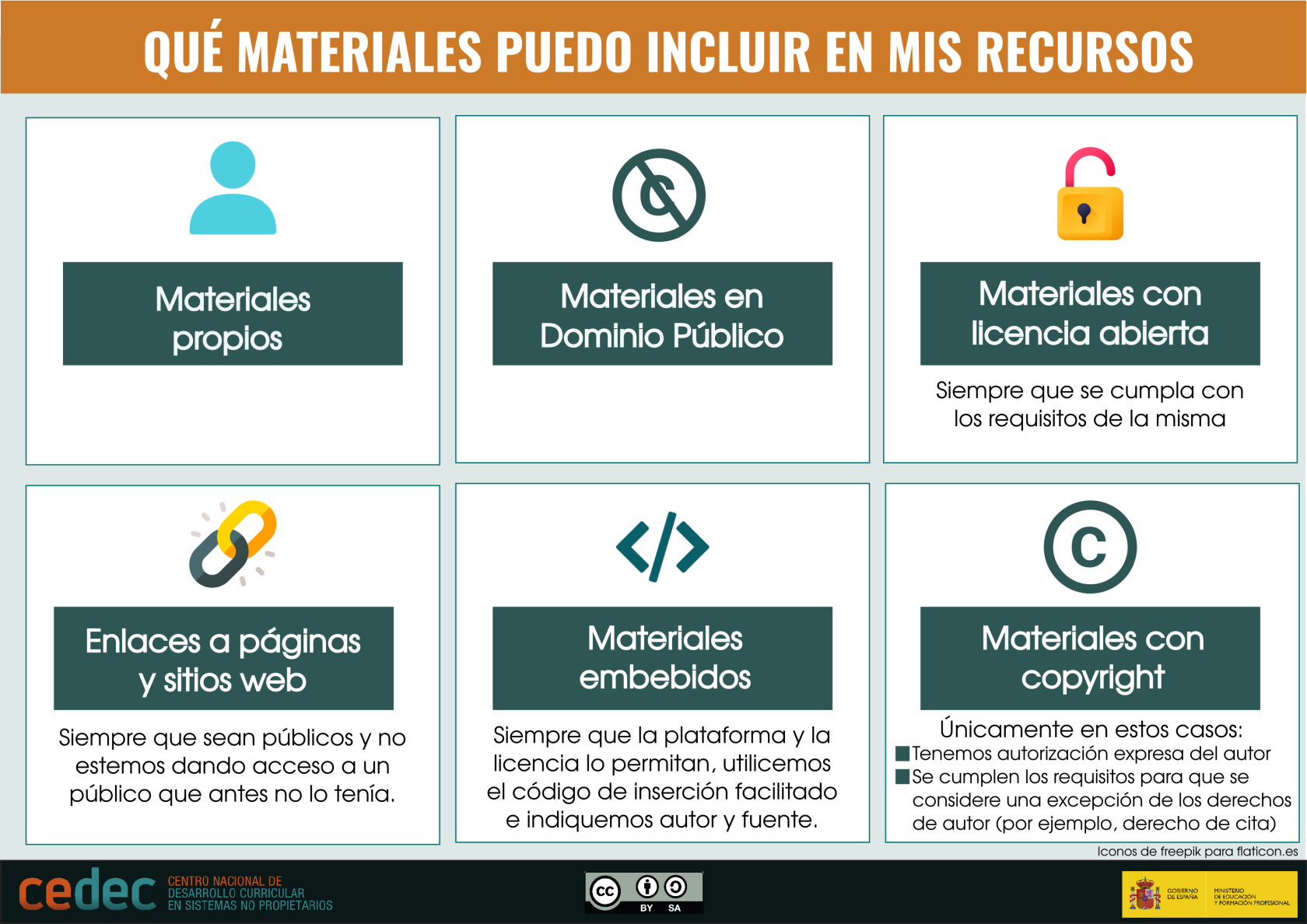
Cedec. [Materiales disponibles en la red ](http://descargas.intef.es/cedec/proyectoedia/guias/contenidos/guiadelicencias/qu_puedo_utilizar_como_docente.html)(CC BY-SA)
# 2. ¿Qué son los contenidos digitales?
Los contenidos digitales son aquellos ficheros que **poseen contenidos que pueden usarse con un fin educativo, aunque originalmente no hayan sido creados con ese fin**.
**Un videojuego es un contenido digital** que en un primer momento no se planifica para que tenga un fin educativo en la mayoría de los casos, pues **su fin es lúdico y de entretenimiento** pero, cuando se usa dicho videojuego como herramienta en el aula, este contenido se transforma.
[Pong GIF de GIPHY](https://giphy.com/gifs/pong-aTGwuEFyg6d8c?utm_source=iframe&utm_medium=embed&utm_campaign=Embeds&utm_term=https%3A%2F%2Flibros.catedu.es%2F)
Un ejemplo de ello lo tenemos en [Ideas para utilizar Minecraft en el aula](https://libros.catedu.es/attachments/28), blog en el que se explica cómo se usa el videojuego Minecraft para estudiar humanidades o para aprender sobre planificación urbana.
Si te interesa el tema de los videojuegos y el aula, te proponemos leer el artículo "[Videojuegos independientes en la enseñanza de teoría literaria](https://libros.catedu.es/attachments/29)" donde se usan diferentes tipos de videojuegos de corte independiente en el día a día del aula de Lengua y Literatura.
# 3. ¿Qué son los contenidos educativos digitales?
Por otro lado, los contenidos educativos digitales son **aquellos paquetes de contenidos estandarizados, identificados y catalogados para que se utilicen con un fin meramente educativo**.
Por ejemplo, los tipos de contenidos educativos digitales más solicitados son:
- **VÍDEO TUTORIALES**
Como los del canal de [@Profesordedibujo ](https://libros.catedu.es/attachments/30)
- **PODCAST**
Como los de la web [Educación 3.0](https://libros.catedu.es/attachments/31) o los de la [Academia de fotógrafos](https://libros.catedu.es/attachments/36)
- **eBOOKS Y PDFs**
Como los de la [Librería Catedu](https://libros.catedu.es/attachments/32)

- **sMOOCs y tMOOCs**
Como los del [Museo Reina Sofía](https://libros.catedu.es/attachments/33)
- **CURSOS ONLINE**
Como los que ofrecen plataformas de pago como [Dosmestika](https://libros.catedu.es/attachments/34) o gratuitos como los que ofrece [Catedu](https://libros.catedu.es/attachments/35)
# 4. ¿Qué son los REA?
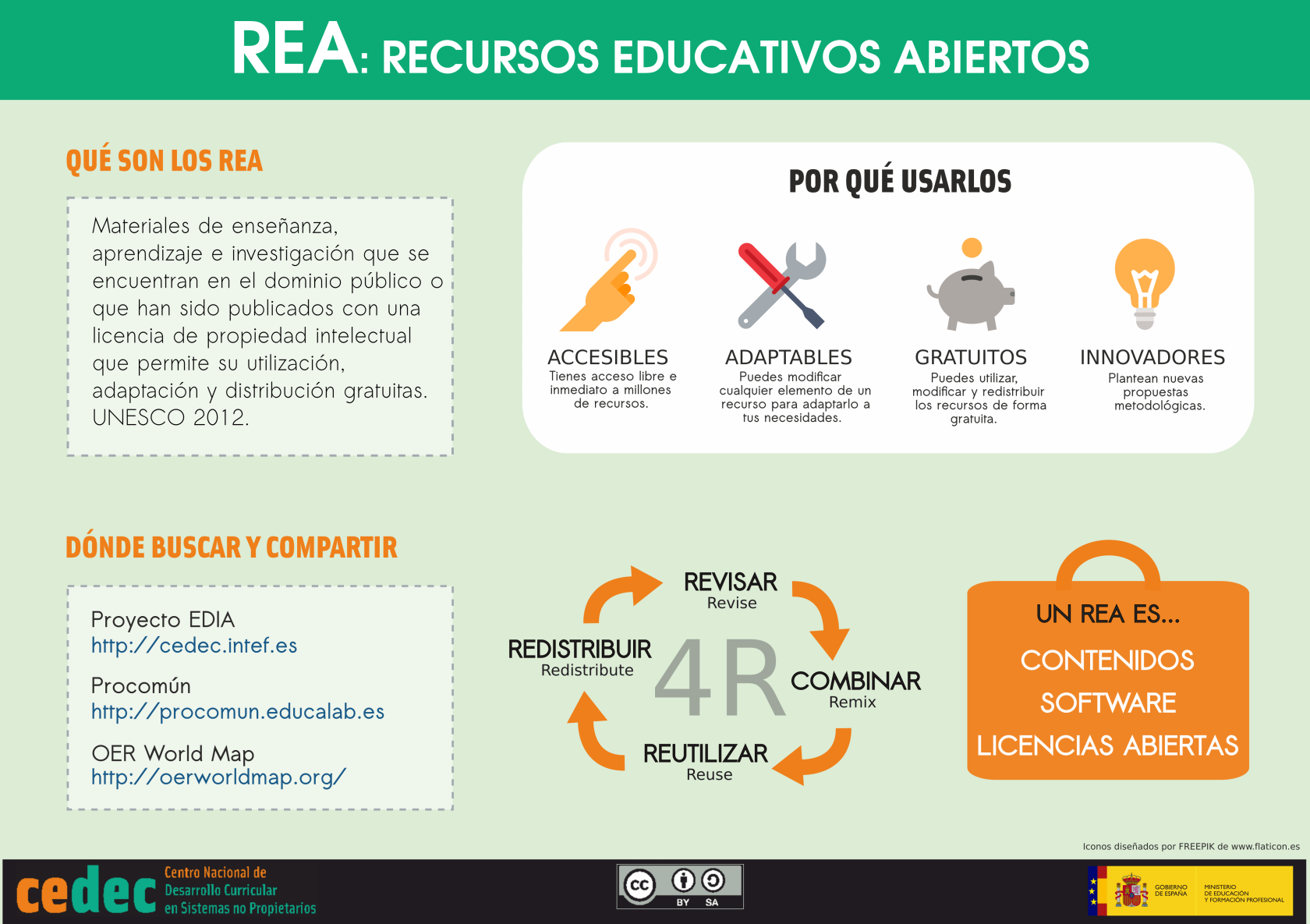
El término **Recursos Educativos Abiertos (REA)** designa a materiales de enseñanza, aprendizaje e investigación en cualquier soporte, digital o de otro tipo, que sean de dominio público o que hayan sido publicados con una **licencia abierta que permita el acceso gratuito a esos materiales, así como su uso, adaptación y redistribución por otros sin ninguna restricción o con restricciones limitadas** (UNESCO 2012). Para comprender mejor este concepto te invitamos a ver el siguiente vídeo en el que se aborda el tema de manera sencilla:
[CEDEC. Hay que ver... los REA](https://libros.catedu.es/attachments/42)
[](https://libros.catedu.es/uploads/images/gallery/2023-02/dQnimage.png)
[Cedec. Qué son los REA (CC BY-SA)](https://libros.catedu.es/attachments/43)
Según el [Instituto Nacional de Tecnologías Educativas y Formación del Profesorado](https://libros.catedu.es/attachments/44), los REA incluyen:
- **Contenidos de aprendizaje**: Cursos completos, materiales para cursos, módulos, contenidos, objetos de aprendizaje (ODE, que ahora definiremos también), etc.
- **Herramientas**: Software para la creación, entrega, uso y mejora del contenido de aprendizaje abierto, incluyendo búsqueda y organización de contenido, sistemas de gestión del aprendizaje (LMS), herramientas de desarrollo de contenidos, y comunidades de aprendizaje en línea.
- **Licencias abiertas.** Licencias de derechos de autor que promuevan la publicación abierta de materiales, principios de diseño y adaptación local de contenido.
# 5. Principales ventajas de los contenidos educativos digitales
[GIPHY](https://libros.catedu.es/attachments/46)
Las **principales ventajas que ofrece un buen contenido educativo digital** son:
- Su **ubicuidad**
- El **menor coste** que un contenido físico
- La **facilidad** a la hora de realizar búsquedas
- Las **múltiples opciones** en tiempo real
- La **infinidad de temas** disponibles
- La **actualización constante** de contenidos
- El acceso a **múltiples idiomas**
- O la posibilidad de **interacción** entre muchas otras